
Renewed Armed Clashes Erupt in Ethiopia's Tigray Region
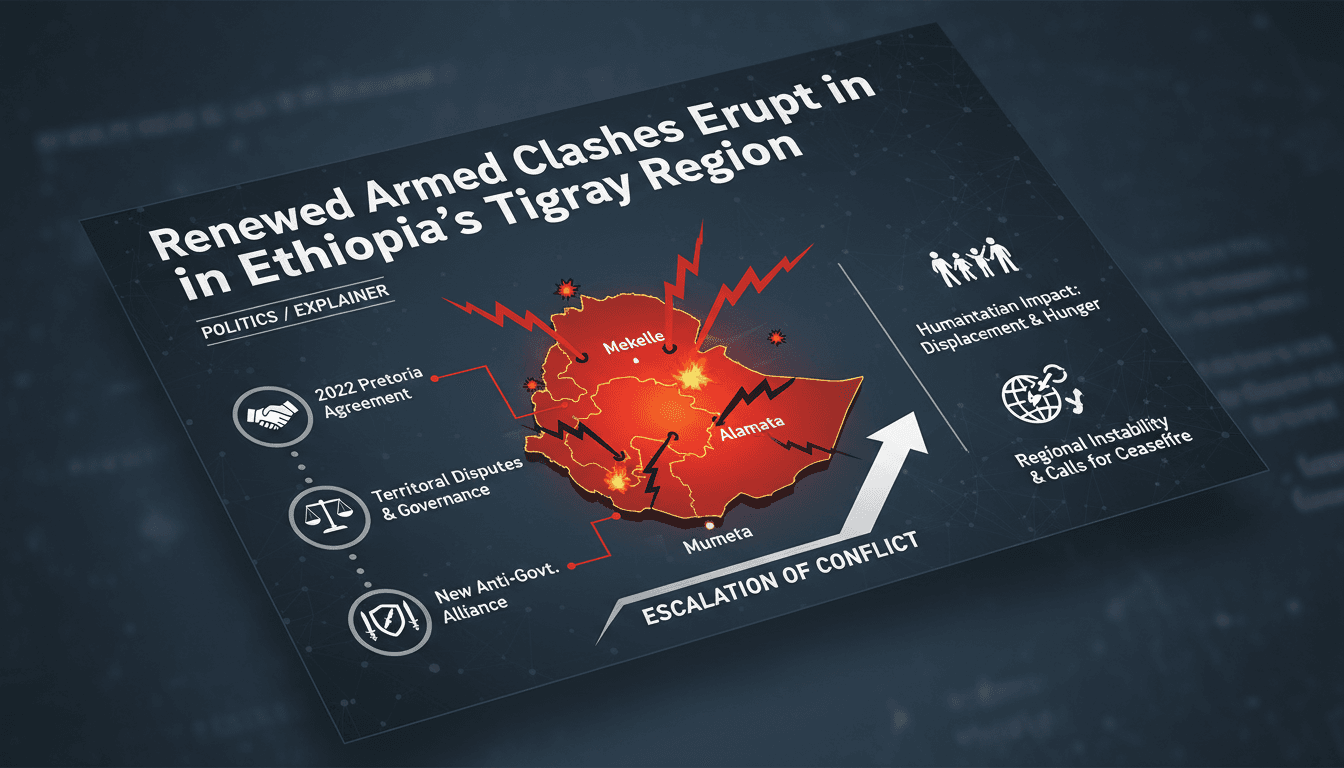
Why it matters
The renewed violence in Tigray threatens to destabilize not only Ethiopia but also the broader Horn of Africa, impacting regional trade and security.
What happened (in 30 seconds)
- Fighting erupted in Ethiopia's Tigray region on September 23, 2026, between Tigrayan forces and the Ethiopian National Defense Forces (ENDF).
- Clashes spread to the Afar and Amhara regions, leading to panic buying and internet disruptions among residents.
- Diplomatic calls for a ceasefire have been issued by the African Union and the United Nations amid fears of a return to full-scale civil war.
The context you actually need
- The 2020-2022 Tigray war resulted in an estimated 600,000 deaths, with unresolved issues from the 2022 Pretoria Agreement fueling current tensions.
- The Tigray People's Liberation Front (TPLF) has formed an alliance with other armed groups, intensifying the conflict against the federal government.
- Recent troop mobilizations and drone strikes have escalated hostilities, with both sides accusing each other of initiating the violence.
What's really happening
The situation in Tigray is a complex interplay of historical grievances, political power struggles, and unresolved agreements. The 2020-2022 Tigray war ended with the Pretoria Agreement, which aimed to bring peace but left critical issues unaddressed. Key among these are territorial disputes over western Tigray, the disarmament of TPLF forces, and governance challenges.
In the lead-up to the recent clashes, tensions had been simmering since 2025, marked by mutual accusations and military mobilizations. The TPLF's decision to reinstate its pre-war administration signaled a rejection of federal authority, further inflaming the situation. The formation of the Alliance for Survival, which includes the Amhara Fano militia, indicates a growing coalition against Prime Minister Abiy Ahmed's government, complicating the conflict landscape.
On September 23, Tigrayan forces launched a series of offensives, seizing airports in key cities like Mekelle and Aksum. The ENDF responded with drone strikes, claiming to inflict heavy casualties on Tigrayan forces. This escalation has led to significant disruptions in communications and commerce, with panic buying reported in Tigray as residents brace for potential blockades.
The African Union and United Nations have called for an immediate ceasefire, emphasizing the need for renewed dialogue. However, the entrenched positions of both the TPLF and the federal government make a peaceful resolution challenging. The international community is closely monitoring the situation, as further escalation could lead to a humanitarian crisis and destabilize the region.
Who feels it first (and how)
- Ethiopian civilians: Residents in Tigray and surrounding regions face immediate threats to safety, access to food, and basic services.
- Businesses and traders: Local markets are experiencing cash shortages and disruptions due to telecom blackouts and potential blockades.
- International organizations: NGOs and humanitarian agencies may struggle to deliver aid, impacting vulnerable populations recovering from previous conflicts.
What to watch next
- Ceasefire negotiations: Watch for any diplomatic efforts or agreements that could de-escalate tensions and restore stability.
- Humanitarian access: Monitor the ability of aid organizations to operate in Tigray and surrounding regions, as access is critical for affected populations.
- Regional military movements: Keep an eye on troop deployments and military actions from both the ENDF and Tigrayan forces, as these will indicate the likelihood of further conflict.
The Tigray conflict has reignited, with significant military engagements reported.
Continued international diplomatic efforts will be made to broker a ceasefire, though success is uncertain.
The long-term implications for Ethiopia's political landscape and regional stability remain uncertain as the situation evolves.
Frequently Asked Questions
- Why it matters?
- The renewed violence in Tigray threatens to destabilize not only Ethiopia but also the broader Horn of Africa, impacting regional trade and security.
- What happened (in 30 seconds)?
- Fighting erupted in Ethiopia's Tigray region on September 23, 2026, between Tigrayan forces and the Ethiopian National Defense Forces (ENDF). Clashes spread to the Afar and Amhara regions, leading to panic buying and internet disruptions among residents. Diplomatic calls for a ceasefire have been issued by the African Union and the United Nations amid fears of a return to full-scale civil war.
- What's really happening?
- The situation in Tigray is a complex interplay of historical grievances, political power struggles, and unresolved agreements. The 2020-2022 Tigray war ended with the Pretoria Agreement, which aimed to bring peace but left critical issues unaddressed. Key among these are territorial disputes over western Tigray, the disarmament of TPLF forces, and governance challenges. In the lead-up to the recent clashes, tensions had been simmering since 2025, marked by mutual accusations and military mobil
- Who feels it first (and how)?
- Ethiopian civilians: Residents in Tigray and surrounding regions face immediate threats to safety, access to food, and basic services. Businesses and traders: Local markets are experiencing cash shortages and disruptions due to telecom blackouts and potential blockades. International organizations: NGOs and humanitarian agencies may struggle to deliver aid, impacting vulnerable populations recovering from previous conflicts.
- What to watch next?
- Ceasefire negotiations: Watch for any diplomatic efforts or agreements that could de-escalate tensions and restore stability. Humanitarian access: Monitor the ability of aid organizations to operate in Tigray and surrounding regions, as access is critical for affected populations. Regional military movements: Keep an eye on troop deployments and military actions from both the ENDF and Tigrayan forces, as these will indicate the likelihood of further conflict.
International coverage of politics, culture, and current affairs.
"BBC News is widely regarded as a reputable international news organization, known for its impartial tone and public service mandate."
— A47 Editor
Are Ethiopians marching back to war in Tigray?
Tensions are escalating in Ethiopia as the Tigray People's Liberation Front (TPLF) has declared a 'full-blown war' against the national army, following accusations from both sides of launching military offensives. This situation arises amid fears of ...
News, politics, and cultural topics across the African continent.
"France 24 is viewed as a globally focused outlet with balanced coverage and a European perspective."
— A47 Editor
Ethiopia: renewed Tigray fighting raises fears of return to civil war
Renewed fighting in Ethiopia's northern region has escalated, with the Ethiopian army reporting the deaths of 272 Tigrayan fighters in Amhara. The Tigray People's Liberation Front (TPLF) has declared a 'full-blown war' against the government, raising...
International coverage from The Guardian's global desks.
"The Guardian is known for its progressive editorial stance and in-depth analysis."
— A47 Editor
Rebel offensive against Ethiopian army stokes fears of return to civil war
Fighting has intensified in Ethiopia as Tigrayan rebels have launched an offensive against the Ethiopian army, raising fears of a return to civil war. This escalation follows the formation of a new coalition of rebel groups aimed at overthrowing Prim...