
Delcy Rodríguez's UN Address Signals Venezuela's Shift Towards U.S. Alignment
Why it matters
This diplomatic thaw may redefine energy supply chains and investment flows, impacting global oil prices.
What happened (in 30 seconds)
- Delcy Rodríguez addressed the UN General Assembly as Venezuela's interim president after Nicolás Maduro's capture.
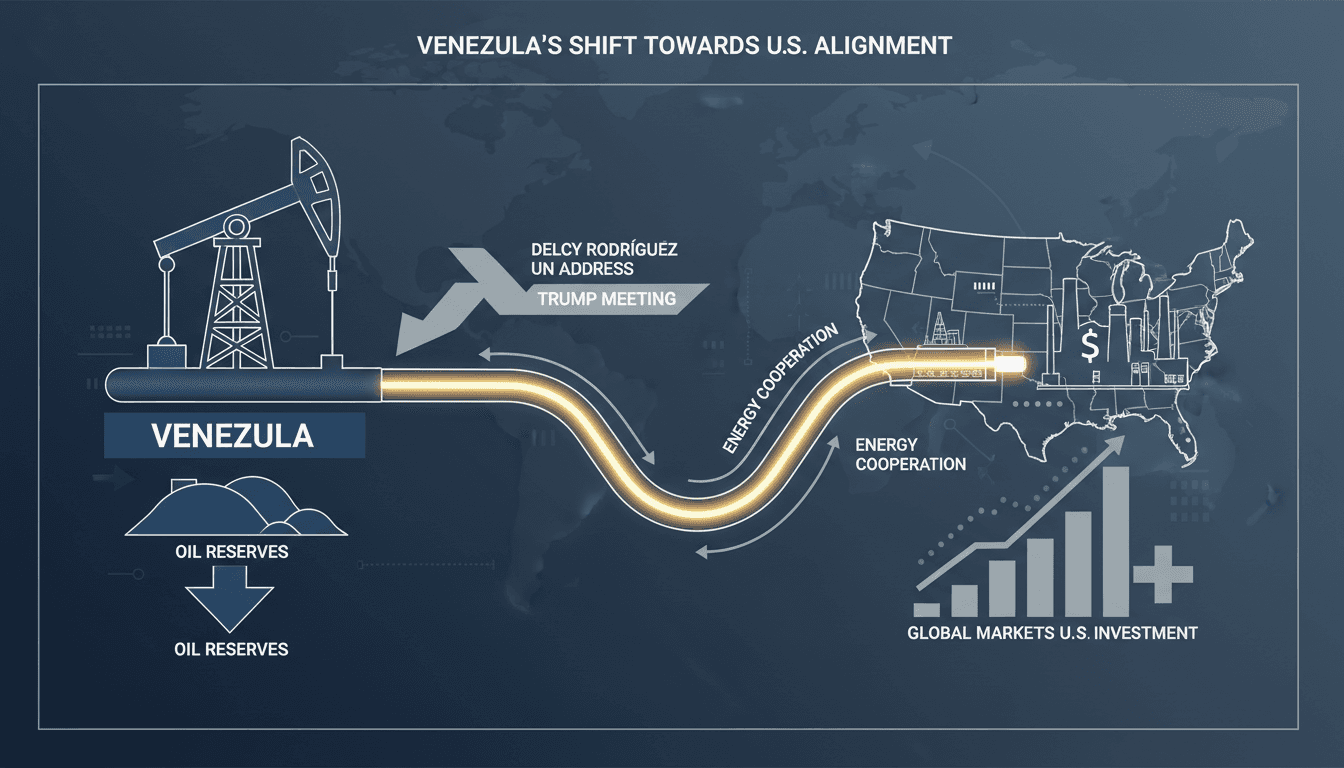
- Rodríguez met with President Donald Trump to discuss energy and security cooperation, focusing on Venezuela's vast oil reserves.
- Investment interest surged, with potential commitments of $100 billion in Venezuelan energy assets.
The context you actually need
- U.S.-Venezuela relations have been historically strained, marked by sanctions and diplomatic isolation under Maduro's regime.
- Rodríguez's rise follows Maduro's detention on narcoterrorism charges, positioning her as a U.S. ally in a strategic realignment.
- Venezuela's oil reserves are substantial, with over 65 billion barrels available under U.S.-backed concessions, making it a key player in global energy markets.
What's really happening
Delcy Rodríguez's recent appearance at the United Nations marks a significant pivot in Venezuela's political landscape and its relationship with the United States. Following the U.S. military capture of Nicolás Maduro in January 2026, Rodríguez, who served as Maduro's vice president, was recognized by Washington as the interim leader of Venezuela. This recognition is not merely symbolic; it reflects a broader strategic realignment that could have far-reaching implications for both nations and the global energy market.
Rodríguez's meeting with President Trump on September 22, 2026, was described as historic, focusing on energy deals that would grant U.S. companies access to Venezuela's vast oil reserves. The agreement, which involves over 65 billion barrels of proven crude oil reserves, is a critical component of the U.S. strategy to stabilize energy supplies amid fluctuating global markets. This shift is particularly relevant given the ongoing geopolitical tensions that have affected oil prices worldwide.
The implications of this realignment extend beyond mere energy access. Rodríguez's address at the UN highlighted her administration's intent to reintegrate Venezuela into multilateral forums and seek foreign investment, particularly in the energy sector. This move is seen as an effort to stabilize the Venezuelan economy, which has been in freefall due to years of mismanagement and sanctions. The potential for $100 billion in investments signals a renewed interest from international markets, which could lead to a gradual recovery of the Venezuelan economy.
However, this transition is not without its challenges. Venezuelan opposition figures have expressed skepticism regarding the sidelining of democratic processes, raising concerns about the legitimacy of Rodríguez's leadership. While U.S. officials tout the meeting as a foreign policy success, the internal dynamics within Venezuela remain complex and fraught with tension. The ongoing bilateral talks may yield significant economic benefits, but they also risk alienating segments of the population that demand a return to democratic governance.
In summary, the developments surrounding Rodríguez's leadership and her engagement with the U.S. represent a critical juncture for Venezuela. The potential for increased investment and energy cooperation could reshape the country's economic landscape, but the political ramifications will require careful navigation to ensure stability and legitimacy.
Who feels it first (and how)
- Energy sector professionals: Increased investment could lead to job creation and new opportunities in oil and gas.
- Venezuelan citizens: Economic recovery efforts may improve living conditions, but skepticism remains regarding political legitimacy.
- Global investors: Opportunities in Venezuelan energy assets may attract significant capital, impacting investment strategies.
What to watch next
- Investment announcements: Look for specific commitments from U.S. companies regarding Venezuelan energy projects, as these will signal confidence in the market.
- Political developments: Monitor any shifts in the Venezuelan opposition's response to Rodríguez's leadership and potential calls for democratic reforms.
- Oil price fluctuations: Changes in Venezuelan oil production and U.S. investment could influence global oil prices, affecting markets worldwide.
Delcy Rodríguez is recognized as Venezuela's interim president by the U.S.
Increased U.S. investment in Venezuelan energy assets will occur, potentially stabilizing the economy.
The long-term political stability of Rodríguez's administration and its impact on democratic processes in Venezuela.
Frequently Asked Questions
- Why it matters?
- This diplomatic thaw may redefine energy supply chains and investment flows, impacting global oil prices.
- What happened (in 30 seconds)?
- Delcy Rodríguez addressed the UN General Assembly as Venezuela's interim president after Nicolás Maduro's capture. Rodríguez met with President Donald Trump to discuss energy and security cooperation, focusing on Venezuela's vast oil reserves. Investment interest surged, with potential commitments of $100 billion in Venezuelan energy assets.
- What's really happening?
- Delcy Rodríguez's recent appearance at the United Nations marks a significant pivot in Venezuela's political landscape and its relationship with the United States. Following the U.S. military capture of Nicolás Maduro in January 2026, Rodríguez, who served as Maduro's vice president, was recognized by Washington as the interim leader of Venezuela. This recognition is not merely symbolic; it reflects a broader strategic realignment that could have far-reaching implications for both nations and th
- Who feels it first (and how)?
- Energy sector professionals: Increased investment could lead to job creation and new opportunities in oil and gas. Venezuelan citizens: Economic recovery efforts may improve living conditions, but skepticism remains regarding political legitimacy. Global investors: Opportunities in Venezuelan energy assets may attract significant capital, impacting investment strategies.
- What to watch next?
- Investment announcements: Look for specific commitments from U.S. companies regarding Venezuelan energy projects, as these will signal confidence in the market. Political developments: Monitor any shifts in the Venezuelan opposition's response to Rodríguez's leadership and potential calls for democratic reforms. Oil price fluctuations: Changes in Venezuelan oil production and U.S. investment could influence global oil prices, affecting markets worldwide.
Global political, business, and cultural coverage from WSJ international desks.
"The Wall Street Journal offers extensive international reporting with a reputation for financial insight and a center-right editorial stance."
— A47 Editor
From ‘Dictator’ Deputy to Trump Ally, Venezuela’s Leader Takes World Stage
Delcy Rodriguez, Venezuela's interim president, made a significant appearance at the United Nations, compelling foreign leaders to engage with her government, which is characterized by its authoritarian leanings and ties to Washington. This event und...
Global markets, investing, and macroeconomics from a premier financial newsroom.
"Bloomberg is respected for in-depth financial reporting and data-driven analysis."
— A47 Editor
Venezuelan Leader Rodríguez Vows ‘Orderly’ Return to Democracy
Venezuela's acting President Delcy Rodríguez announced at the United Nations that the country is on a path toward free elections, signaling a potential shift in governance following the capture of Nicolás Maduro.
International coverage from The Guardian's global desks.
"The Guardian is known for its progressive editorial stance and in-depth analysis."
— A47 Editor
Delcy Rodríguez poses with Trump in New York as Maduro languishes in jail nearby
Delcy Rodríguez, Venezuela’s interim president, met with Donald Trump in New York, celebrating what she termed a 'historic meeting' during the UN General Assembly, while her predecessor Nicolás Maduro remains imprisoned nearby. This encounter took pl...