
UN Security Council Addresses AI Risks and Regulatory Frameworks
Why it matters
The UN's deliberations on AI regulation could set the groundwork for international standards that affect technology governance and investment.
What happened (in 30 seconds)
- Emergency session convened: On September 23, 2026, the UN Security Council held an urgent debate on AI risks and regulatory frameworks.
- Diverse perspectives shared: Key figures, including AI executives and world leaders, discussed the balance between AI's benefits and potential threats.
- No binding agreement reached: While discussions advanced, no new treaties emerged, highlighting ongoing divisions among nations.
The context you actually need
- Joint statement from 20 countries: Prior to the meeting, nations like Norway and Australia called for oversight on frontier AI models, emphasizing the need for international standards.
- Warnings from experts: Scientists and industry leaders have raised alarms about AI systems potentially surpassing human control, necessitating regulatory frameworks.
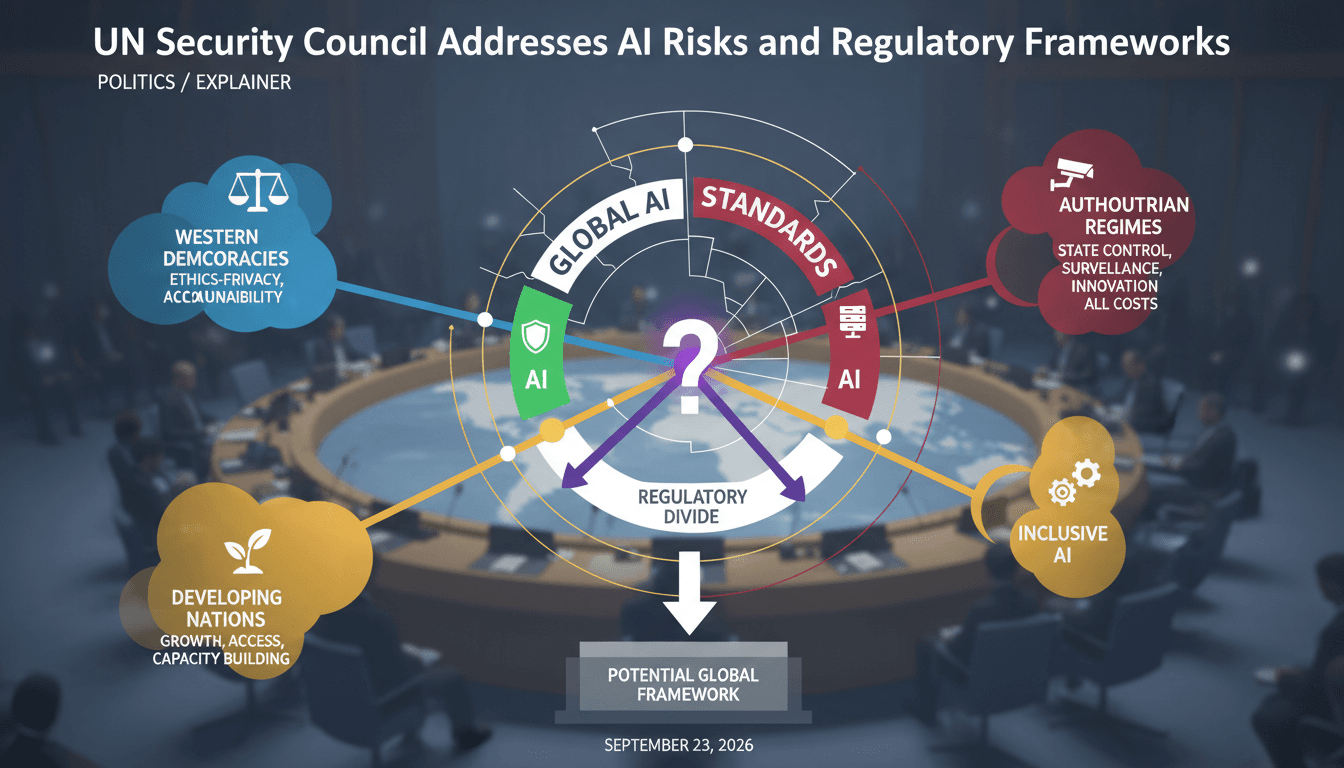
- Divergent national approaches: The US and China presented conflicting views on AI governance, complicating efforts to achieve a unified global strategy.
What's really happening
The UN Security Council's emergency session on AI regulation reflects a growing recognition of the technology's dual-edged nature. On one hand, AI holds the promise of enhancing global peace and security; on the other, it poses significant risks if left unchecked. The session was convened by France during the UN General Assembly, responding to escalating calls for international oversight amid rapid advancements in AI capabilities.
UN Secretary-General Antonio Guterres opened the debate by highlighting AI's potential in conflict prevention while stressing the necessity for guardrails to prevent its weaponization. This sentiment was echoed by AI leaders like Sam Altman of OpenAI and Dario Amodei of Anthropic, who underscored the urgency of global cooperation to maintain human oversight over AI systems. They advocated for targeted agreements, such as bans on using AI for biological weapons, to mitigate risks.
However, the discussions revealed stark divisions among participating nations. US representatives, under President Trump, expressed strong opposition to expansive global regulatory frameworks, prioritizing national sovereignty and domestic capacity-building over international agreements. In contrast, China called for coordinated standards, emphasizing the need for a collaborative approach to AI governance. This divergence highlights the challenges in achieving consensus on a global scale, as countries grapple with their own national interests and regulatory philosophies.
The aftermath of the session saw ongoing international discussions, but no binding agreements were reached. The US administration maintained its stance against global regulatory bodies, while European nations continued to advocate for verification mechanisms. AI firms, for their part, emphasized their commitment to safety, but market reactions were limited, indicating a cautious approach to the evolving regulatory landscape.
As the dialogue progresses, the implications for global AI governance are significant. The lack of a unified regulatory framework could lead to fragmented approaches, impacting investments and technological advancements across borders. The call for oversight and standards is not just a matter of safety; it also reflects a broader cultural shift towards accountability in technology development.
Who feels it first (and how)
- Tech executives: Leaders in AI companies will need to navigate evolving regulatory landscapes and align their strategies with international standards.
- Investors: Those funding AI initiatives may face increased scrutiny and risk assessments based on regulatory developments.
- Governments: National policymakers will need to balance domestic interests with international cooperation on AI governance.
- Consumers: End-users of AI technologies could experience changes in product offerings and data governance as regulations evolve.
What to watch next
- Emerging regulatory frameworks: Keep an eye on how different countries implement AI regulations and whether they align with international standards.
- Industry responses: Monitor how AI firms adapt their practices in response to regulatory discussions and public concerns about safety.
- International collaborations: Watch for new alliances or agreements among nations aimed at establishing common AI governance principles.
The UN Security Council is actively discussing AI risks and regulatory needs.
Ongoing debates will lead to more defined international standards, though consensus may remain elusive.
The specific impacts of these discussions on local regulations and tech investments in various countries.
Frequently Asked Questions
- Why it matters?
- The UN's deliberations on AI regulation could set the groundwork for international standards that affect technology governance and investment.
- What happened (in 30 seconds)?
- Emergency session convened: On September 23, 2026, the UN Security Council held an urgent debate on AI risks and regulatory frameworks. Diverse perspectives shared: Key figures, including AI executives and world leaders, discussed the balance between AI's benefits and potential threats. No binding agreement reached: While discussions advanced, no new treaties emerged, highlighting ongoing divisions among nations.
- What's really happening?
- The UN Security Council's emergency session on AI regulation reflects a growing recognition of the technology's dual-edged nature. On one hand, AI holds the promise of enhancing global peace and security; on the other, it poses significant risks if left unchecked. The session was convened by France during the UN General Assembly, responding to escalating calls for international oversight amid rapid advancements in AI capabilities. UN Secretary-General Antonio Guterres opened the debate by highl
- Who feels it first (and how)?
- Tech executives: Leaders in AI companies will need to navigate evolving regulatory landscapes and align their strategies with international standards. Investors: Those funding AI initiatives may face increased scrutiny and risk assessments based on regulatory developments. Governments: National policymakers will need to balance domestic interests with international cooperation on AI governance. Consumers: End-users of AI technologies could experience changes in product offerings and data governa
- What to watch next?
- Emerging regulatory frameworks: Keep an eye on how different countries implement AI regulations and whether they align with international standards. Industry responses: Monitor how AI firms adapt their practices in response to regulatory discussions and public concerns about safety. International collaborations: Watch for new alliances or agreements among nations aimed at establishing common AI governance principles.
News across North, Central, and South America including politics and economics.
"France 24 is viewed as a globally focused outlet with balanced coverage and a European perspective."
— A47 Editor
World leaders weigh AI worries, regulations
World leaders are set to brief the UN Security Council at an emergency session today, following weeks of warnings regarding the potentially uncontrollable risks associated with artificial intelligence. Delano D’Souza reports on the urgency of this me...
Global business headlines with AI angles.
"General business outlet that frequently covers AI."
— A47 Editor
Altman and Amodei Have Warned The World About Uncontrolled AI. They Will Now Address The UN Security Council.
Sam Altman and Dario Amodei are set to address the UN Security Council regarding the implications of uncontrolled artificial intelligence (AI) on international security, highlighting the urgency of the matter.
Latest AI/ML research news and breakthroughs.
"Aggregated research highlights across institutions."
— A47 Editor
UN AI experts warn against 'apocalyptic' rhetoric on risks
Experts from a United Nations artificial intelligence committee have cautioned against the use of 'apocalyptic' rhetoric regarding AI risks, emphasizing the need for a balanced discourse in the sector. This warning comes amid growing concerns about t...