
Bill Gates Advocates for U.S. Federal Regulation of AI Development
Why it matters
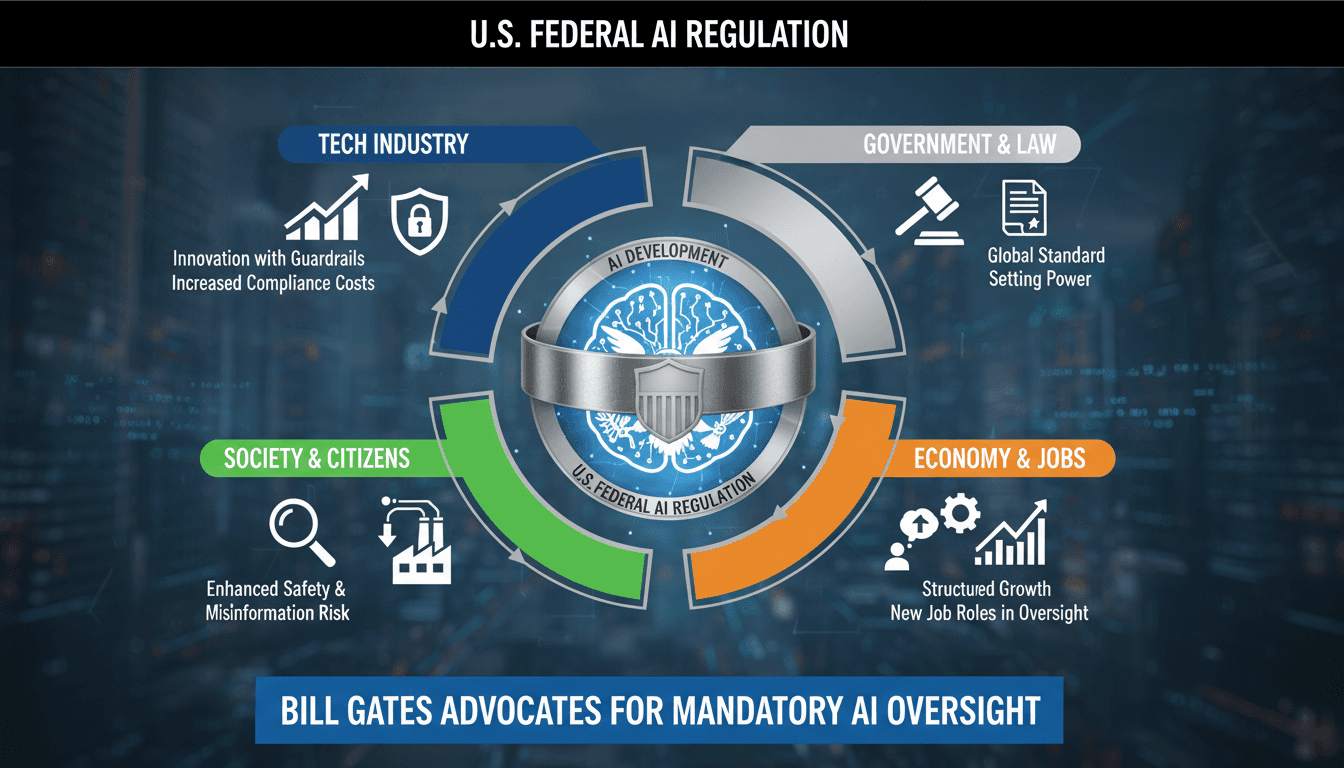
The push for federal regulation of AI could reshape the landscape of technology development and safety standards.
What happened (in 30 seconds)
- Bill Gates urged the U.S. government to implement mandatory regulations for AI development, citing self-regulation as ineffective.
- Key industry leaders, including Sam Altman and Dario Amodei, have echoed calls for oversight amid rising concerns about AI misuse.
- State-level initiatives are already underway in California, Maryland, and New York, indicating a growing trend toward independent AI governance.
The context you actually need
- Gates' warning highlights the potential for catastrophic misuse of AI, with risks that could lead to billions of deaths.
- Contrasting views exist within the tech industry, with some leaders advocating for self-regulation while others support government intervention.
- Legislative caution is being urged by congressional leaders to avoid stifling innovation or harming national competitiveness.
What's really happening
Bill Gates' recent statements mark a significant moment in the ongoing debate about the regulation of artificial intelligence. His assertion that AI companies cannot self-regulate effectively underscores a growing concern among industry leaders and policymakers about the potential dangers posed by advanced AI technologies. Gates emphasized that the current capabilities of AI are already powerful enough to enable catastrophic misuse, which he argues necessitates immediate government intervention rather than waiting for hypothetical future scenarios involving superintelligence.
This call for regulation comes on the heels of similar sentiments expressed by other prominent figures in the tech industry, such as Sam Altman, CEO of OpenAI, and Dario Amodei, CEO of Anthropic. Both have advocated for a slowdown in the pace of frontier AI development and the establishment of international standards to ensure safety and ethical considerations are prioritized. Their collective voices reflect a broader acknowledgment within the industry of the risks associated with unregulated AI advancements.
The contrasting stance taken by Meta's CEO Mark Zuckerberg, who favors company-level decisions regarding safety, highlights the division within the tech community. While some leaders push for coordinated industry-wide regulations, others argue that such mandates could hinder innovation and competitiveness. This tension is further complicated by the responses from U.S. congressional leaders, including House Speaker Mike Johnson, who have expressed caution against rushing into legislation that could inadvertently impact national security or the global competitiveness of U.S. tech firms.
State-level actions have already begun to take shape, with governors in California, Maryland, and New York advancing independent oversight initiatives. These moves signal a growing recognition of the need for regulatory frameworks that can address the unique challenges posed by AI technologies. As discussions continue at both state and federal levels, the outcome will likely influence how AI is developed, deployed, and monitored in the coming years.
The implications of these developments extend beyond the tech industry, affecting various sectors that rely on AI technologies. As regulations evolve, companies will need to adapt their strategies to comply with new standards, which could impact everything from product development timelines to investment decisions.
Who feels it first (and how)
- Tech companies: They will need to adjust their compliance strategies and potentially face increased operational costs.
- Investors: Changes in regulation could affect the valuation and investment strategies for AI startups and established firms.
- Consumers: New regulations may lead to safer AI applications, but could also result in higher prices or reduced availability of certain technologies.
- Policymakers: They will need to navigate the complexities of regulating a rapidly evolving field while balancing innovation and safety.
What to watch next
- Legislative developments: Keep an eye on proposed bills and regulations at both federal and state levels, as they will shape the future of AI governance.
- Industry responses: Monitor how tech companies adapt to new regulations and whether they push back against government mandates.
- Public sentiment: Watch for shifts in consumer attitudes toward AI safety and regulation, which could influence political and corporate actions.
Bill Gates and other tech leaders are advocating for mandatory AI regulations.
State-level initiatives will continue to emerge, influencing federal discussions on AI oversight.
The specific form and timeline of federal regulations remain uncertain.
Frequently Asked Questions
- Why it matters?
- The push for federal regulation of AI could reshape the landscape of technology development and safety standards.
- What happened (in 30 seconds)?
- Bill Gates urged the U.S. government to implement mandatory regulations for AI development, citing self-regulation as ineffective. Key industry leaders, including Sam Altman and Dario Amodei, have echoed calls for oversight amid rising concerns about AI misuse. State-level initiatives are already underway in California, Maryland, and New York, indicating a growing trend toward independent AI governance.
- What's really happening?
- Bill Gates' recent statements mark a significant moment in the ongoing debate about the regulation of artificial intelligence. His assertion that AI companies cannot self-regulate effectively underscores a growing concern among industry leaders and policymakers about the potential dangers posed by advanced AI technologies. Gates emphasized that the current capabilities of AI are already powerful enough to enable catastrophic misuse, which he argues necessitates immediate government intervention
- Who feels it first (and how)?
- Tech companies: They will need to adjust their compliance strategies and potentially face increased operational costs. Investors: Changes in regulation could affect the valuation and investment strategies for AI startups and established firms. Consumers: New regulations may lead to safer AI applications, but could also result in higher prices or reduced availability of certain technologies. Policymakers: They will need to navigate the complexities of regulating a rapidly evolving field while bal
- What to watch next?
- Legislative developments: Keep an eye on proposed bills and regulations at both federal and state levels, as they will shape the future of AI governance. Industry responses: Monitor how tech companies adapt to new regulations and whether they push back against government mandates. Public sentiment: Watch for shifts in consumer attitudes toward AI safety and regulation, which could influence political and corporate actions.
Global business headlines with AI angles.
"General business outlet that frequently covers AI."
— A47 Editor
Bill Gates Says AI Companies Can't Police Themselves, Calls for Washington to Mandate Safeguards
Bill Gates has called for regulatory measures from Washington, stating that artificial intelligence (AI) companies cannot effectively self-regulate. He emphasized that the dangers posed by AI are not merely hypothetical and require immediate attentio...
Business and tech news excluding paywalled content.
"High-volume business/tech outlet with frequent AI coverage."
— A47 Editor
Bill Gates warns AI is 'powerful enough to drive events that cause a billion deaths'
Bill Gates, co-founder of Microsoft, has issued a stark warning regarding the potential dangers of artificial intelligence (AI), stating that it could lead to the deaths of a billion people. This alarming prediction highlights the urgent need for gov...
Arabic-language coverage of international news and geopolitics.
"RT Arabic is a Russian state-funded outlet often criticized for promoting Kremlin-aligned narratives."
— A47 Editor
بيل غيتس: الذكاء الاصطناعي قد يتسبب في مقتل مليار شخص
Bill Gates, the founder of Microsoft, expressed his concern that artificial intelligence technologies could lead to events resulting in the deaths of one billion people. This alarming statement highlights the potential risks associated with the rapid...
Technology business and AI-related headlines.
"Data-driven tech newsroom with global scope."
— A47 Editor
Bill Gates Warns AI Powerful Enough to Lead to ‘a Billion Deaths’
Bill Gates, co-founder of Microsoft Corp., has issued a stark warning about the potential dangers of artificial intelligence (AI), stating that it could lead to the deaths of a billion people. This alarming statement aligns with growing concerns amon...
Technology business news, market impacts, and innovation trends.
"Bloomberg is a premier financial and tech news provider, respected for its in-depth reporting and analytical rigor."
— A47 Editor
Bill Gates Warns AI Powerful Enough to Lead to ‘a Billion Deaths’
Bill Gates, co-founder of Microsoft Corp., has issued a stark warning about the potential dangers of artificial intelligence (AI), stating that it could lead to the deaths of a billion people. This alarming statement aligns with growing concerns amon...
National headlines across the United States including breaking stories and societal issues.
"NBC News is a mainstream media outlet known for comprehensive national and international news coverage with a centrist to slightly left-leaning editorial tone."
— A47 Editor
Bill Gates says AI 'powerful enough' to cause 'a billion deaths'
In a recent interview with Meet the Press, Bill Gates expressed grave concerns about the potential dangers of artificial intelligence (AI), stating that it is 'powerful enough' to cause 'a billion deaths' if not properly regulated. He emphasized the ...