
US Supreme Court Allows Trump Administration to Use Expanded SAVE Database for Voter Citizenship Verification
Why it matters
This ruling could significantly influence voter turnout and the integrity of electoral processes in the U.S. ahead of the midterms.
What happened (in 30 seconds)
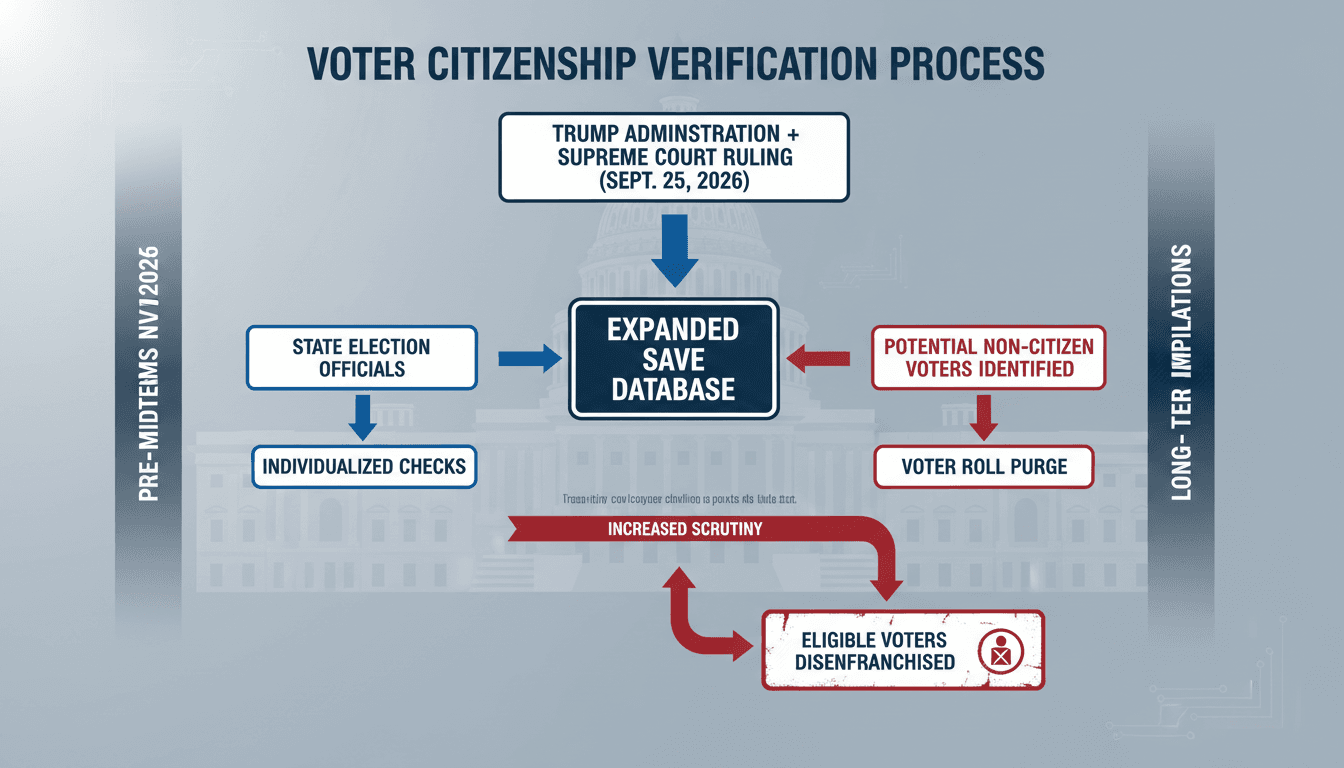
- On September 25, 2026, the U.S. Supreme Court allowed the Trump administration to use an expanded database for checking voter citizenship status.
- The ruling permits states to conduct individualized inquiries using the Systematic Alien Verification for Entitlements (SAVE) system, despite dissent from three justices.
- Critics warn that this could lead to erroneous flags on eligible voters, potentially disenfranchising U.S. citizens.
The context you actually need
- The SAVE system was modified following a March 2025 executive order by President Trump to include U.S.-born citizen records for voter verification.
- A June 2026 ruling by a federal district court blocked the expanded use of the database, citing privacy law violations, but the Supreme Court intervened.
- The ruling limits application to individualized checks due to federal restrictions on mass voter purges close to elections.
What's really happening
The Supreme Court's decision to lift the injunction on the SAVE database reflects a complex interplay of legal authority, political strategy, and voter rights advocacy. The ruling is rooted in a 1996 law that allows the Department of Homeland Security (DHS) to share citizenship data with states, emphasizing the government's obligation to respond to verification requests. This legal framework has been leveraged by the Trump administration to bolster its voter integrity efforts, particularly as the November 2026 midterms approach.
However, the ruling is not without constraints. The National Voter Registration Act imposes strict limitations on pre-election purges, which means that while states can utilize the SAVE system for individualized checks, they cannot engage in mass purges of voter rolls. This creates a dual-edged sword: states can verify citizenship status but must tread carefully to avoid disenfranchising eligible voters.
The dissenting opinion from Justices, led by Ketanji Brown Jackson, raises critical concerns about privacy and the potential for wrongful disenfranchisement. They argue that the expanded use of the SAVE database could lead to eligible voters being flagged erroneously, thus undermining the democratic process. This concern is amplified by the fact that some states have already employed the system with documented error rates in previous applications.
As states begin to implement this ruling, the implications for voter turnout and electoral integrity will be closely monitored. The decision provides a limited win for the Trump administration's voter integrity agenda, but the timing and legal restrictions on bulk actions may temper its impact. The ruling also highlights the ongoing tensions between voter rights advocates and those pushing for stricter verification measures, setting the stage for further legal battles and public discourse leading up to the midterms.
Who feels it first (and how)
- Voter Rights Advocates: Increased scrutiny and potential legal challenges regarding voter disenfranchisement.
- State Election Officials: Need to navigate new verification processes while ensuring compliance with federal laws.
- Eligible Voters: Risk of being incorrectly flagged as non-citizens, impacting their ability to vote.
- Political Campaigns: Adjust strategies based on anticipated voter turnout and verification challenges.
What to watch next
- State Implementation: Monitor how different states choose to utilize the SAVE system and the resulting impact on voter rolls.
- Legal Challenges: Watch for potential lawsuits from voter rights groups contesting the use of the SAVE database.
- Voter Turnout Trends: Analyze voter participation rates in the upcoming midterms to assess the ruling's impact.
The Supreme Court ruling allows for individualized citizenship checks using the SAVE database.
States will begin implementing the SAVE system, leading to varied impacts on voter turnout.
The long-term effects on voter rights and electoral integrity as legal challenges unfold.
Frequently Asked Questions
- Why it matters?
- This ruling could significantly influence voter turnout and the integrity of electoral processes in the U.S. ahead of the midterms.
- What happened (in 30 seconds)?
- On September 25, 2026, the U.S. Supreme Court allowed the Trump administration to use an expanded database for checking voter citizenship status. The ruling permits states to conduct individualized inquiries using the Systematic Alien Verification for Entitlements (SAVE) system, despite dissent from three justices. Critics warn that this could lead to erroneous flags on eligible voters, potentially disenfranchising U.S. citizens.
- What's really happening?
- The Supreme Court's decision to lift the injunction on the SAVE database reflects a complex interplay of legal authority, political strategy, and voter rights advocacy. The ruling is rooted in a 1996 law that allows the Department of Homeland Security (DHS) to share citizenship data with states, emphasizing the government's obligation to respond to verification requests. This legal framework has been leveraged by the Trump administration to bolster its voter integrity efforts, particularly as th
- Who feels it first (and how)?
- Voter Rights Advocates: Increased scrutiny and potential legal challenges regarding voter disenfranchisement. State Election Officials: Need to navigate new verification processes while ensuring compliance with federal laws. Eligible Voters: Risk of being incorrectly flagged as non-citizens, impacting their ability to vote. Political Campaigns: Adjust strategies based on anticipated voter turnout and verification challenges.
- What to watch next?
- State Implementation: Monitor how different states choose to utilize the SAVE system and the resulting impact on voter rolls. Legal Challenges: Watch for potential lawsuits from voter rights groups contesting the use of the SAVE database. Voter Turnout Trends: Analyze voter participation rates in the upcoming midterms to assess the ruling's impact.
International coverage of politics, culture, and current affairs.
"BBC News is widely regarded as a reputable international news organization, known for its impartial tone and public service mandate."
— A47 Editor
Supreme Court allows Trump to use controversial database to check voter citizenship
The U.S. Supreme Court has authorized the Trump administration to utilize a controversial database for verifying voter citizenship, a decision that has raised alarms about the potential for wrongful removals of U.S. citizens from electoral rolls. Cri...
24/7 international news from a French perspective in multiple languages.
"France 24 is viewed as a globally focused outlet with balanced coverage and a European perspective."
— A47 Editor
US Supreme Court allows Trump to use controversial voter 'verification' system
The US Supreme Court has ruled that the Trump administration can implement a controversial federal database intended to verify voter citizenship in the upcoming elections. Critics argue that this move is based on exaggerated claims regarding non-citi...
Editor-curated FT homepage stories spanning markets, business, world, and opinion.
"The Financial Times is a globally respected business publication with a centrist/center-left tone and strong markets focus."
— A47 Editor
US Supreme Court lets Trump vet voters’ immigration status
The US Supreme Court has ruled in favor of allowing former President Donald Trump to vet voters' immigration status, a decision that supports his initiatives to reshape election rules ahead of the midterm elections. This ruling is seen as a significa...
U.S. political news and right-leaning commentary.
"Fox News is a highly influential conservative news outlet known for right-leaning political commentary and coverage."
— A47 Editor
Trump scores Supreme Court win in election integrity fight as states gain new voter roll tool
The U.S. Supreme Court has issued a temporary order allowing the Trump administration to implement a mass voter verification system, which is seen as a significant step in the administration's efforts to enhance election integrity. This decision come...