
Iran Pursues Diplomatic Resolution After U.S. Rejects Hormuz Reopening Proposal
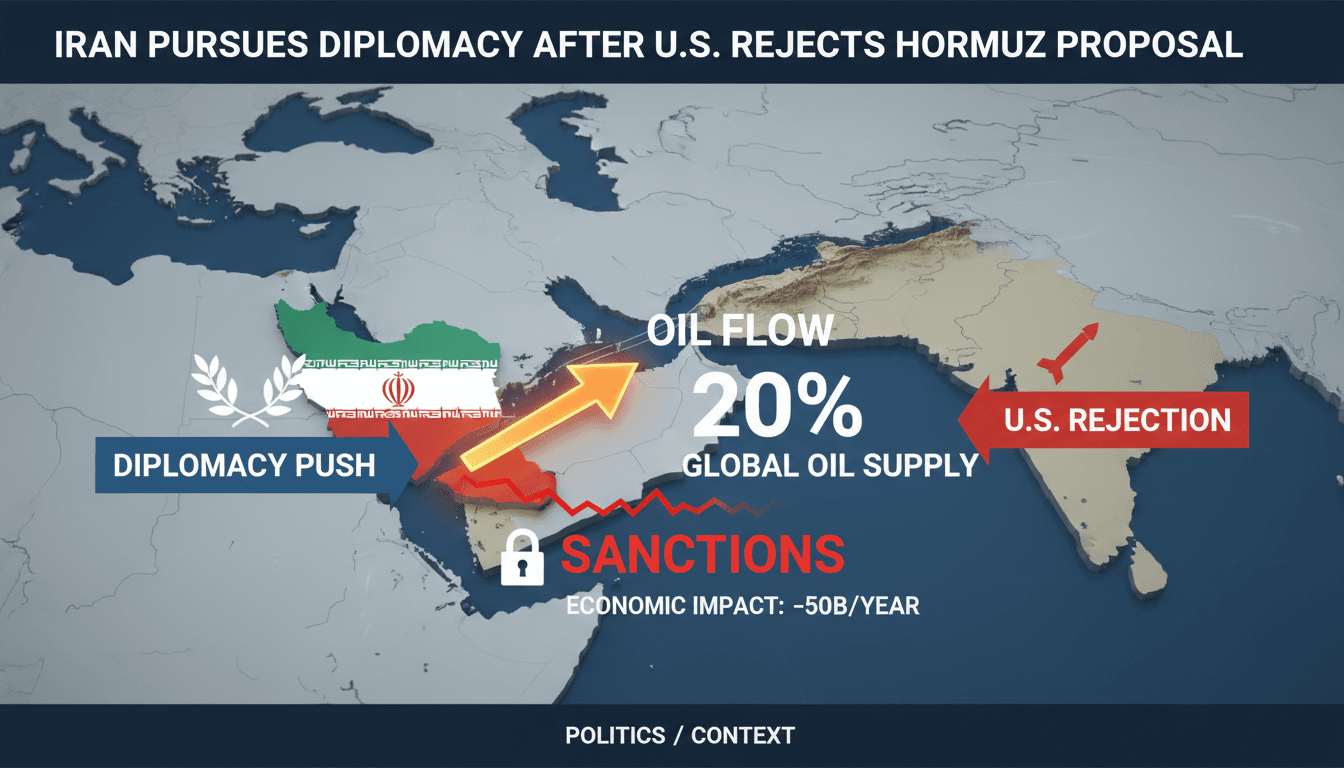
What happened
Iran proposed a diplomatic plan to reopen the Strait of Hormuz, which was publicly rejected by U.S. President Donald Trump.
The Context
- Diplomatic Stalemate: Iran's proposal aimed to ease regional hostilities and was contingent on U.S. actions, including lifting sanctions and releasing $12 billion in frozen assets.
- Ongoing Conflict: The situation stems from a multi-month conflict involving the U.S., Israel, and Iran, disrupting vital oil flows through the Strait of Hormuz.
- Market Sensitivity: Global oil prices have been volatile due to disruptions in the region, impacting economic stability and trade routes, particularly in Dubai.
The Number
— the estimated value of Iranian frozen assets that could be released under the proposed terms, highlighting the financial stakes involved in the negotiations.
Takeaway
As diplomatic efforts continue, the potential for renewed tensions remains, which could further influence global oil markets and economic conditions.
Macro commentary, policy analysis, growth/inflation themes, and global outlooks.
"Contextual macro coverage that complements day-to-day market headlines."
— A47 Editor
Iran insists on diplomacy after Trump rejects Hormuz peace plan
Iran has reaffirmed its commitment to a diplomatic resolution following President Trump's rejection of a peace plan aimed at reopening the crucial Strait of Hormuz. This rejection highlights ongoing tensions between the two nations, particularly as I...
Regional coverage and analysis focused on politics, diplomacy, and business across the Middle East.
"Al-Monitor is known for analytical reporting on Middle East politics and policy developments."
— A47 Editor
Iran insists on diplomatic solution after Trump rejects peace plan
Iran has reiterated its stance that only diplomatic negotiations can resolve its ongoing conflict with the United States and Israel, following President Donald Trump's rejection of Iran's proposal to reopen the Strait of Hormuz and cease hostilities....
European coverage of Middle East politics and security issues.
"France 24 offers international reporting with a European editorial perspective."
— A47 Editor
Trump rejects Iran’s seven-day plan to reopen Strait of Hormuz
U.S. President Donald Trump has rejected an Iranian proposal to reopen the strategically vital Strait of Hormuz within seven days, which was presented by Iran's Foreign Minister Abbas Araghchi to U.S. envoy Steve Witkoff during discussions at the UN ...
Coverage of current events and conflicts in the Middle East.
"France 24 is viewed as a globally focused outlet with balanced coverage and a European perspective."
— A47 Editor
Trump rejects Iran’s seven-day plan to reopen Strait of Hormuz
U.S. President Donald Trump has rejected an Iranian proposal to reopen the strategically vital Strait of Hormuz within seven days, which was presented by Iran's Foreign Minister Abbas Araghchi to U.S. envoy Steve Witkoff during discussions at the UN ...
Arabic-language coverage of international news and geopolitics.
"RT Arabic is a Russian state-funded outlet often criticized for promoting Kremlin-aligned narratives."
— A47 Editor
ترامب يرفض مقترح إيران بهدنة الـ 7 أيام لفتح مضيق هرمز ويتوقع استئناف القصف بعد انتخابات نوفمبر
U.S. President Donald Trump has rejected an Iranian proposal for a seven-day ceasefire aimed at reopening the Strait of Hormuz, as reported by The Wall Street Journal. This decision comes amid ongoing tensions and military actions in the region.
Arabic-language coverage of international news and geopolitics.
"RT Arabic is a Russian state-funded outlet often criticized for promoting Kremlin-aligned narratives."
— A47 Editor
إيران تقدم لواشنطن خطة من7 أيام تنتهي بإعادة فتح مضيق هرمز
Iran has presented a seven-day plan to the Trump administration aimed at ending hostilities and reopening the Strait of Hormuz, coinciding with the United Nations General Assembly.