
Italy Enacts Nationwide Ban on Burqas and Niqabs in Schools with Language Cap for Foreign Students
Why it matters
This decree reflects broader European trends in immigration and integration, impacting educational frameworks and social cohesion.
What happened (in 30 seconds)
- On September 24, 2026, Italy's Council of Ministers approved a decree banning burqas and niqabs in schools.
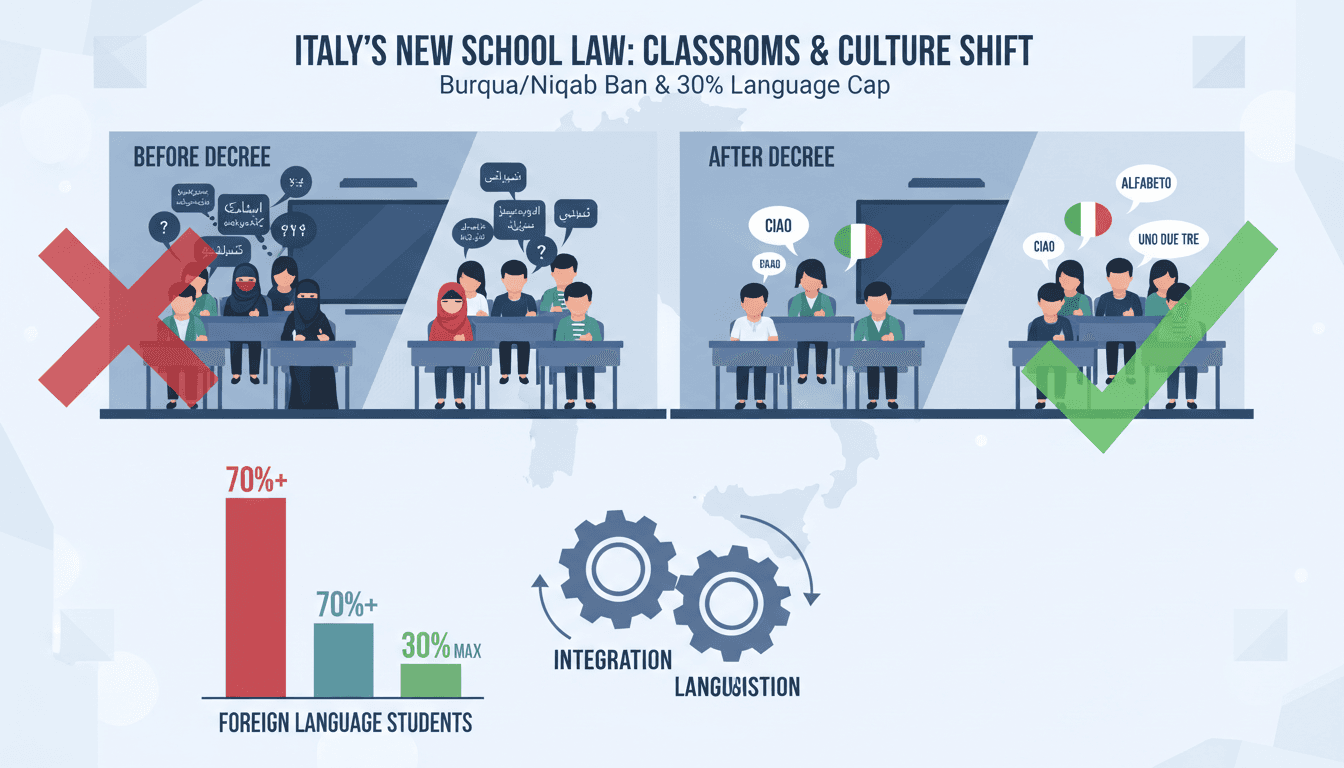
- A 30% cap on non-Italian-speaking pupils in first-year classes was also introduced to promote integration.
- Fines of €200–€1,000 will be imposed for violations, with the decree requiring parliamentary ratification within 60 days.
The context you actually need
- Italy's historical guidance since 2010 has recommended a 30% limit on non-Italian-citizen pupils to aid integration.
- Similar bans have been enacted in other European countries, including France and Denmark, indicating a regional shift towards stricter immigration policies.
- Prime Minister Meloni's government is responding to ongoing debates about migration and social cohesion, particularly as Italy remains a key entry point for migrants.
What's really happening
The recent decree from Italy's government is a strategic move aimed at addressing the challenges of integration within the educational system. By banning face coverings like burqas and niqabs, the government seeks to ensure that students can be easily identified during school activities, which is framed as a matter of security and integration. This aligns with Prime Minister Giorgia Meloni's broader agenda to promote national identity and social cohesion amid rising concerns about immigration.
The introduction of a 30% cap on non-Italian-speaking pupils in first-year classes is particularly significant. This measure is designed to prevent the formation of classes with high concentrations of foreign students, which could hinder language acquisition and integration. The cap is set to take effect in the 2027/28 school year, allowing time for schools to adapt and implement necessary support systems for language learning.
Critics of the decree, including opposition parties and educational organizations, argue that these measures could create unequal categories of students and complicate the educational landscape. They express concerns about the potential for increased segregation and the challenges of implementing such policies effectively. Local authorities will have some flexibility to make exceptions and provide additional language support, but the overall framework is likely to create a more rigid educational environment.
The decree also reflects a growing trend across Europe, where countries are increasingly adopting policies that restrict the visibility of cultural and religious symbols in public spaces. This trend is often justified by arguments surrounding national security and social integration, but it raises important questions about the balance between cultural diversity and national identity.
As Italy prepares for the 2027 general election, these measures may serve to solidify Meloni's support among constituents who prioritize integration and security. However, the long-term implications for Italy's educational system and social fabric remain to be seen, particularly as the country continues to grapple with the complexities of migration and integration.
Who feels it first (and how)
- Students: Those wearing burqas or niqabs will be directly affected by the ban.
- Teachers: Educators will need to adapt to new classroom dynamics and potentially face challenges in implementing the cap on non-Italian-speaking pupils.
- Local authorities: They will have to navigate the complexities of enforcing the decree and providing necessary language support.
- Parents: Families of non-Italian-speaking students may experience increased pressure regarding their children's education and integration.
What to watch next
- Parliamentary ratification: The outcome of the parliamentary vote within 60 days will determine the decree's long-term viability.
- Implementation challenges: Monitor how schools adapt to the new regulations and the effectiveness of language support programs.
- Public response: Watch for reactions from civil society and educational organizations, which may influence future policy discussions.
The decree has been adopted and is effective immediately pending parliamentary approval.
There will be challenges in implementing the cap on non-Italian-speaking pupils and enforcing the ban on face coverings.
The long-term impact on Italy's educational system and social cohesion remains uncertain.
Frequently Asked Questions
- Why it matters?
- This decree reflects broader European trends in immigration and integration, impacting educational frameworks and social cohesion.
- What happened (in 30 seconds)?
- On September 24, 2026, Italy's Council of Ministers approved a decree banning burqas and niqabs in schools. A 30% cap on non-Italian-speaking pupils in first-year classes was also introduced to promote integration. Fines of €200–€1,000 will be imposed for violations, with the decree requiring parliamentary ratification within 60 days.
- What's really happening?
- The recent decree from Italy's government is a strategic move aimed at addressing the challenges of integration within the educational system. By banning face coverings like burqas and niqabs, the government seeks to ensure that students can be easily identified during school activities, which is framed as a matter of security and integration. This aligns with Prime Minister Giorgia Meloni's broader agenda to promote national identity and social cohesion amid rising concerns about immigration.
- Who feels it first (and how)?
- Students: Those wearing burqas or niqabs will be directly affected by the ban. Teachers: Educators will need to adapt to new classroom dynamics and potentially face challenges in implementing the cap on non-Italian-speaking pupils. Local authorities: They will have to navigate the complexities of enforcing the decree and providing necessary language support. Parents: Families of non-Italian-speaking students may experience increased pressure regarding their children's education and integra
- What to watch next?
- Parliamentary ratification: The outcome of the parliamentary vote within 60 days will determine the decree's long-term viability. Implementation challenges: Monitor how schools adapt to the new regulations and the effectiveness of language support programs. Public response: Watch for reactions from civil society and educational organizations, which may influence future policy discussions.
RT is a Russian state-funded network covering global events from a Russian perspective.
"RT is widely criticized for promoting pro-Kremlin narratives and is considered by many to be a state propaganda outlet."
— A47 Editor
Italy bans burqas in schools
Italy has enacted a ban on the wearing of burqas and niqabs in schools, a decision supported by Prime Minister Giorgia Meloni, who describes it as a measure to promote integration. This ban is part of a broader initiative that includes a cap on the n...
International coverage from The Guardian's global desks.
"The Guardian is known for its progressive editorial stance and in-depth analysis."
— A47 Editor
Meloni accused of ‘running scared’ with cap on foreign children in classrooms
The Italian government, led by Prime Minister Giorgia Meloni, has enacted a decree that limits the number of foreign children in classrooms and bans the burqa and niqab in schools. Critics argue that these measures reflect a strategy to appeal to far...
Global news coverage with extensive reporting on Middle Eastern conflicts and geopolitics.
"Al Jazeera is a Qatar-based broadcaster known for wide regional coverage and alternative perspectives."
— A47 Editor
Meloni government bans burqas, caps foreign students in Italian schools
The Meloni government in Italy has announced a ban on the wearing of burqas and niqabs in schools, alongside capping the number of foreign students in Italian educational institutions. This decision comes amid rising concerns over migration and integ...
International coverage of politics, culture, and current affairs.
"BBC News is widely regarded as a reputable international news organization, known for its impartial tone and public service mandate."
— A47 Editor
Italy ministers agree to ban burqa and niqab in school and cap foreigners in class
Italian ministers have reached an agreement to ban the wearing of burqas and niqabs in schools, a decision described by Prime Minister Giorgia Meloni as a common-sense tool aimed at fostering integration. Additionally, the government plans to limit t...