
Italy Enacts Nationwide Ban on Burqas and Niqabs in Schools Amid Integration Efforts
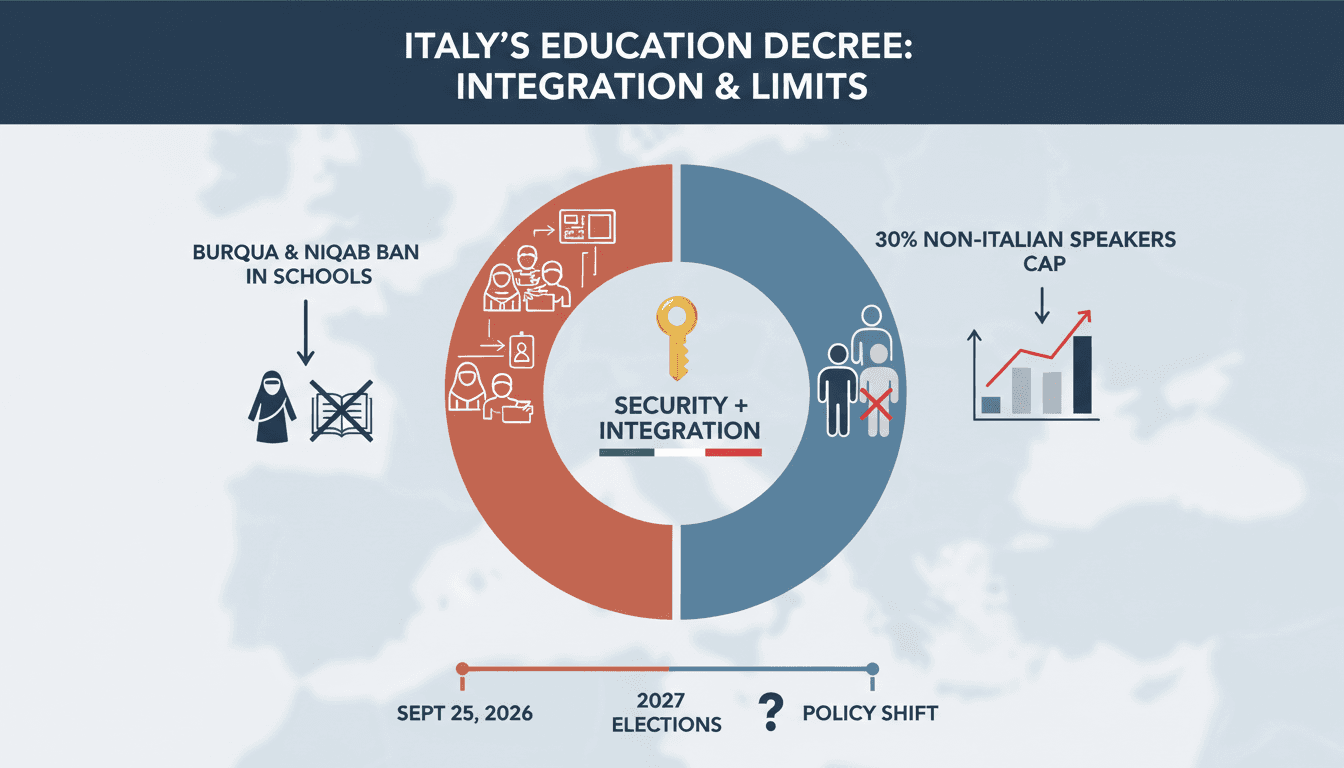
The Vibe
Italy's recent decree banning burqas and niqabs in schools, alongside a cap on non-Italian speaking pupils, signals a significant shift in the country's approach to integration amid rising migration.
What it signals
This move reflects a broader European trend towards stricter integration policies. It highlights the tension between cultural identity and national security, impacting how educational institutions shape future workforces. As countries grapple with migration, these policies may influence labor market dynamics, particularly in sectors reliant on diverse talent.
Why it's happening now
1. The ongoing migration crisis has intensified debates around integration, prompting governments to take decisive action. 2. Italy's position as a frontline migration country necessitates immediate measures to address integration challenges in schools. 3. The upcoming 2027 elections create pressure for the ruling party to demonstrate commitment to national security and cultural cohesion.
Who it's for (and who it leaves out)
The primary beneficiaries of this decree are Italian students and families seeking a cohesive educational environment. Conversely, it marginalizes non-Italian speaking students, potentially creating a divide in educational quality and access.
What to watch next
1. Monitor parliamentary discussions and potential amendments to the decree, which could reshape its impact. 2. Observe reactions from educational institutions and NGOs, as they may influence future integration policies and funding allocations.
The decree has been adopted but requires parliamentary approval to remain in force.
The integration measures will face opposition from educational and humanitarian organizations.
The long-term effects on student demographics and educational outcomes remain to be seen.
RT is a Russian state-funded network covering global events from a Russian perspective.
"RT is widely criticized for promoting pro-Kremlin narratives and is considered by many to be a state propaganda outlet."
— A47 Editor
Italy bans burqas in schools
Italy has enacted a ban on the wearing of burqas and niqabs in schools, a decision supported by Prime Minister Giorgia Meloni, who describes it as a measure to promote integration. This ban is part of a broader initiative that includes a cap on the n...
International coverage from The Guardian's global desks.
"The Guardian is known for its progressive editorial stance and in-depth analysis."
— A47 Editor
Meloni accused of ‘running scared’ with cap on foreign children in classrooms
The Italian government, led by Prime Minister Giorgia Meloni, has enacted a decree that limits the number of foreign children in classrooms and bans the burqa and niqab in schools. Critics argue that these measures reflect a strategy to appeal to far...
International coverage of politics, culture, and current affairs.
"BBC News is widely regarded as a reputable international news organization, known for its impartial tone and public service mandate."
— A47 Editor
Italy ministers agree to ban burqa and niqab in school and cap foreigners in class
Italian ministers have reached an agreement to ban the wearing of burqas and niqabs in schools, a decision described by Prime Minister Giorgia Meloni as a common-sense tool aimed at fostering integration. Additionally, the government plans to limit t...