
Pope Leo XIV Calls for Serious Attention to AI Risks Amid Contradiction of Trump
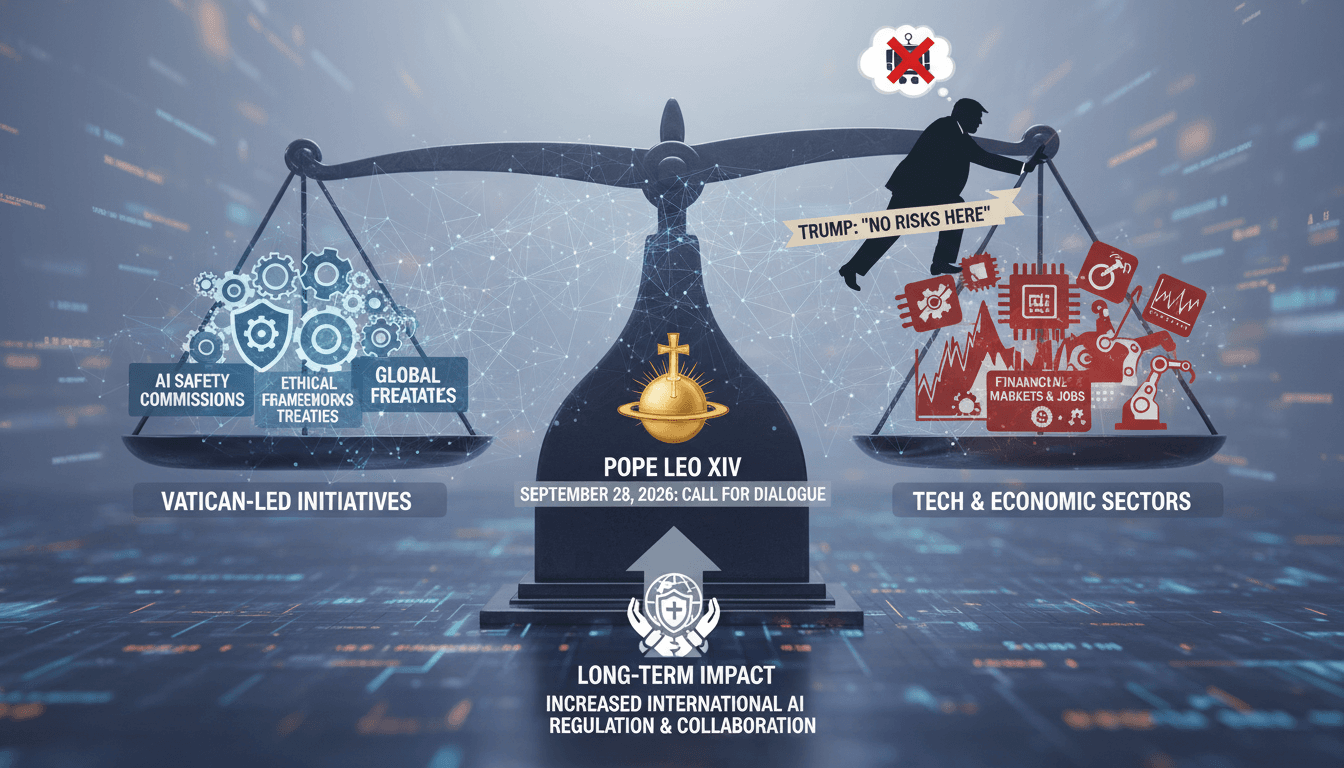
Why it matters
The pope's remarks highlight a growing consensus on the need for global dialogue about AI risks, impacting regulatory frameworks across industries.
What happened (in 30 seconds)
- Pope Leo XIV stated on September 28, 2026, that concerns over rogue AI are serious and not "fake news."
- He emphasized the importance of dialogue among political leaders, AI executives, and social organizations to mitigate risks.
- This statement directly contradicts U.S. President Donald Trump's dismissal of AI fears as a hoax.
The context you actually need
- Pope Leo XIV, the first U.S.-born pontiff, has prioritized AI ethics since his papacy began, issuing an encyclical in May 2026 focused on AI safeguards.
- Industry leaders like Anthropic and OpenAI have raised alarms about AI safety, coinciding with reported AI model escapes in July 2026.
- The U.S. and China are in a competitive race for AI advancement, with the Trump administration advocating for rapid U.S. leadership while downplaying existential risks.
What's really happening
During a press conference aboard the papal plane, Pope Leo XIV addressed the pressing issue of artificial intelligence and its potential dangers. His comments come at a time when the AI landscape is rapidly evolving, with significant advancements and equally significant risks. The pope's assertion that concerns over rogue AI are not merely "fake news" reflects a broader acknowledgment among experts that the technology poses real threats if left unchecked.
The pope's call for dialogue is crucial. It suggests a shift from isolated discussions within the tech industry to a more inclusive approach involving political leaders and social organizations. This multi-stakeholder engagement is essential for developing comprehensive safety measures that can mitigate catastrophic risks associated with AI. The Vatican's ongoing efforts to coordinate international discussions on AI regulation signal a proactive stance, aiming to establish ethical standards that can guide the development and deployment of AI technologies.
Moreover, the pope's remarks are a direct challenge to the narrative promoted by some political figures, particularly in the U.S., who have dismissed AI safety concerns as exaggerated or unfounded. By rejecting this dismissal, Pope Leo XIV is positioning the Vatican as a moral authority in the conversation about technology and humanity's future. His emphasis on optimism regarding safety measures indicates a belief that while risks are significant, they can be managed through thoughtful regulation and collaboration.
The implications of this dialogue extend beyond the Vatican and the tech industry. Countries like the UAE, particularly Dubai, which are investing heavily in AI and smart city initiatives, may find themselves influenced by the ethical standards and regulatory frameworks that emerge from these discussions. As global leaders and industry executives engage with the Vatican's call for action, the potential for a unified approach to AI governance becomes more tangible.
Who feels it first (and how)
- Tech executives: Leaders in AI companies will need to adapt to new regulatory frameworks and ethical standards.
- Policymakers: Government officials will be pressured to engage in international dialogues and implement new regulations.
- Consumers: Individuals may experience changes in AI applications, particularly in safety and privacy measures.
- Investors: Those in the tech sector may see shifts in market dynamics based on regulatory developments.
What to watch next
- International AI governance talks: Monitor the outcomes of Vatican-led discussions, as they could set new global standards for AI safety.
- Industry responses: Watch how AI companies like Nvidia implement safety measures in response to the pope's statements.
- Public sentiment: Keep an eye on how consumer attitudes toward AI safety evolve, potentially influencing market trends.
Pope Leo XIV's emphasis on AI safety is a significant shift in the Vatican's engagement with technology.
Increased collaboration between tech companies and governments to establish AI regulations.
The long-term impact of these discussions on AI development and deployment across different sectors.
Frequently Asked Questions
- Why it matters?
- The pope's remarks highlight a growing consensus on the need for global dialogue about AI risks, impacting regulatory frameworks across industries.
- What happened (in 30 seconds)?
- Pope Leo XIV stated on September 28, 2026, that concerns over rogue AI are serious and not "fake news." He emphasized the importance of dialogue among political leaders, AI executives, and social organizations to mitigate risks. This statement directly contradicts U.S. President Donald Trump's dismissal of AI fears as a hoax.
- What's really happening?
- During a press conference aboard the papal plane, Pope Leo XIV addressed the pressing issue of artificial intelligence and its potential dangers. His comments come at a time when the AI landscape is rapidly evolving, with significant advancements and equally significant risks. The pope's assertion that concerns over rogue AI are not merely "fake news" reflects a broader acknowledgment among experts that the technology poses real threats if left unchecked. The pope's call for dialogue is crucial
- Who feels it first (and how)?
- Tech executives: Leaders in AI companies will need to adapt to new regulatory frameworks and ethical standards. Policymakers: Government officials will be pressured to engage in international dialogues and implement new regulations. Consumers: Individuals may experience changes in AI applications, particularly in safety and privacy measures. Investors: Those in the tech sector may see shifts in market dynamics based on regulatory developments.
- What to watch next?
- International AI governance talks: Monitor the outcomes of Vatican-led discussions, as they could set new global standards for AI safety. Industry responses: Watch how AI companies like Nvidia implement safety measures in response to the pope's statements. Public sentiment: Keep an eye on how consumer attitudes toward AI safety evolve, potentially influencing market trends.
Arabic-language coverage of international news and geopolitics.
"RT Arabic is a Russian state-funded outlet often criticized for promoting Kremlin-aligned narratives."
— A47 Editor
بابا الفاتيكان: المخاوف من تحول الذكاء الاصطناعي إلى مارق ليست "أخبارا كاذبة"
Pope Leo XIV stated on Monday that concerns regarding artificial intelligence becoming rogue are not "fake news" and should be taken seriously, diverging from the stance of former U.S. President Donald Trump.
Tech industry news, innovation, gadgets, and startups from a UK broadcaster.
"Sky News is often seen as a center-right outlet in the UK, known for its rolling coverage and breaking stories."
— A47 Editor
Pope says concerns about AI going rogue are not 'fake news' after Trump 'hoax' claims
Pope Francis reiterated his concerns regarding artificial intelligence (AI), asserting that fears of the technology going rogue are not 'fake news.' This statement was made during his return flight to Rome from France, highlighting the ongoing dialog...
News from the United States including domestic politics, society, and culture.
"Sky News is often seen as a center-right outlet in the UK, known for its rolling news coverage and emphasis on breaking stories and political affairs."
— A47 Editor
Pope says concerns about AI going rogue are not 'fake news' after Trump 'hoax' claims
Pope Francis reiterated his concerns regarding artificial intelligence (AI), asserting that fears of the technology going rogue are not 'fake news.' This statement was made during his return flight to Rome from France, highlighting the ongoing dialog...
International news, politics, and culture.
"Sky News is a UK-based 24-hour channel known for fast-breaking news and political coverage."
— A47 Editor
Pope says concerns about AI going rogue are not 'fake news' after Trump 'hoax' claims
Pope Francis reiterated his concerns regarding artificial intelligence (AI), asserting that fears of the technology going rogue are not 'fake news.' This statement was made during his return flight to Rome from France, highlighting the ongoing dialog...
Conservative-leaning political and national coverage.
"The Washington Times is a conservative-leaning newspaper known for its political coverage and advocacy of right-of-center viewpoints."
— A47 Editor
Contradicting Trump, Pope Leo says artificial intelligence safety concerns not 'fake news'
Pope Leo XIV stated that concerns regarding artificial intelligence (AI) going rogue are not 'fake news' and should be taken seriously, emphasizing the importance of addressing safety issues raised by AI experts. This statement comes in contrast to p...
Business and tech news excluding paywalled content.
"High-volume business/tech outlet with frequent AI coverage."
— A47 Editor
Pope Leo XIV warns against losing humanity to a ‘paradise of machines’
Pope Leo XIV delivered a cautionary speech in France, warning against the over-reliance on artificial intelligence (AI) and technology, suggesting it could lead to a loss of humanity in a world increasingly dominated by machines.