
UN Human Rights Office Expands Database of Companies Linked to Israeli Settlements
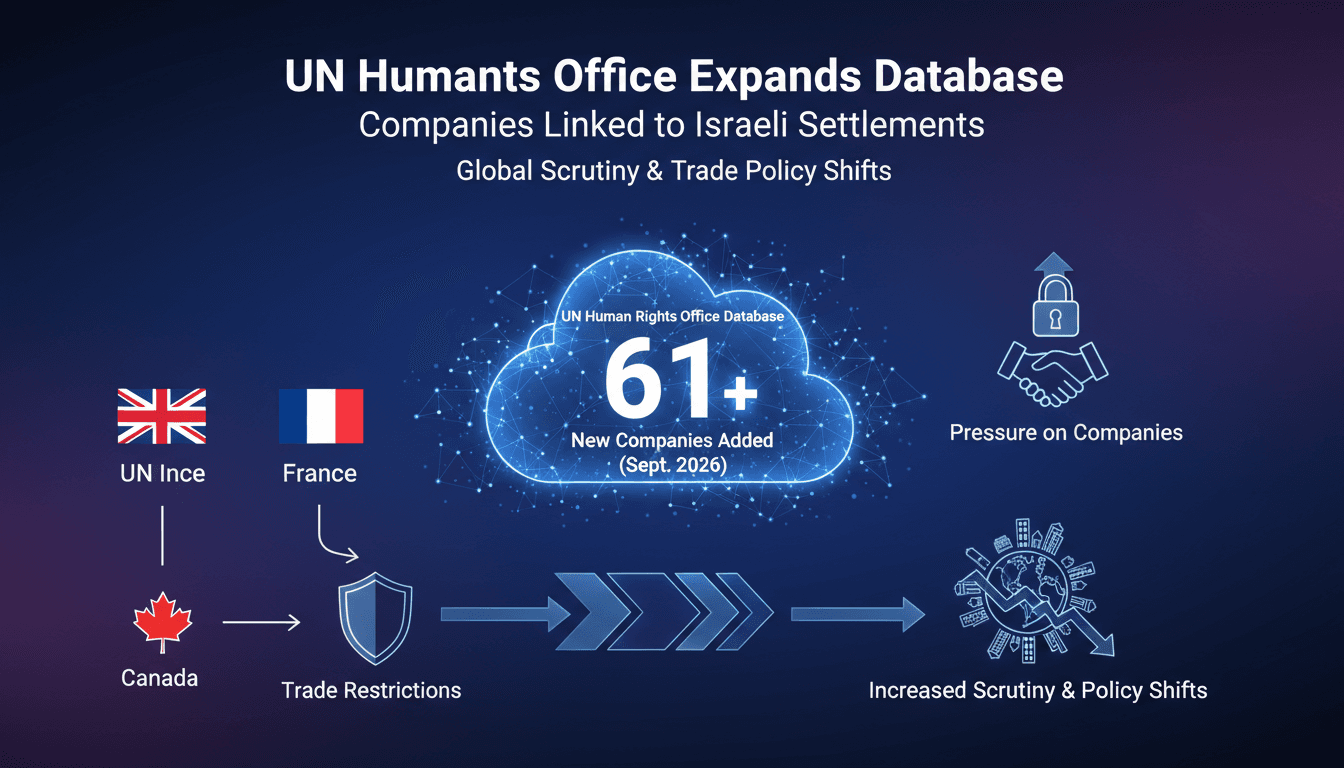
Why it matters
This expansion of the UN database signals increasing international scrutiny and potential trade restrictions on companies operating in contested territories.
What happened (in 30 seconds)
- On September 26, 2026, the UN Human Rights Office added 61 companies to its database linked to Israeli settlements, raising the total to 214.
- The database, originating from a 2016 resolution, aims to identify businesses involved in activities deemed illegal under international law.
- Israel has rejected the findings, labeling the list a politically motivated attack on lawful business practices.
The context you actually need
- The database was first published in 2020 and is intended as a transparency tool rather than a punitive measure, focusing on companies engaged in settlement-related operations.
- Settlements in the West Bank house over 500,000 Israelis and have expanded amid ongoing conflict, raising human rights concerns and prompting international responses.
- Recent trade restrictions from countries like the UK, France, and Canada reflect a growing trend of limiting economic ties with entities linked to these settlements.
What's really happening
The UN Human Rights Office's recent update to its database of companies linked to Israeli settlements is a significant move in the ongoing Israeli-Palestinian conflict. This expansion, which now includes 214 firms, is rooted in a 2016 UN Human Rights Council resolution aimed at promoting accountability and transparency regarding business activities in occupied territories. The latest assessment involved a review of 126 companies, leading to the addition of 61 firms while removing five from the previous list of 158.
The sectors affected by this update include energy, food, hospitality, transport, agriculture, and logistics. Notable additions to the list include Israeli pesticide manufacturer ADAMA, real estate firm Alony Hetz, and Spanish logistics company Salvat Logistica. The UN office provided these companies with the opportunity to respond to their inclusion, emphasizing a due diligence approach rather than outright sanctions.
Israel's government has categorically rejected the database, arguing that it unfairly targets legitimate business activities and is politically motivated. This rejection reflects a broader narrative in which Israel seeks to defend its settlement policies and maintain economic ties with international partners. The diplomatic mission in Geneva has called on allies to disregard the list, indicating a potential rift between Israel and countries that support the UN's findings.
The expansion of the database comes amid heightened international scrutiny of Israeli settlements, particularly as Western governments have begun implementing trade restrictions against companies operating in these areas. This trend suggests a growing recognition of the human rights implications associated with settlement activities, which many international bodies deem illegal under international law.
As the situation evolves, the implications for businesses linked to these settlements could be significant. Companies may face increased pressure from consumers and investors to demonstrate ethical practices and compliance with international standards. The UN database serves as a tool for transparency, but it also raises questions about the responsibilities of businesses operating in contested regions.
Who feels it first (and how)
- International companies involved in sectors like logistics and agriculture may face reputational risks and compliance challenges.
- Investors in firms listed may reconsider their portfolios due to ethical concerns and potential regulatory impacts.
- Consumers increasingly demand transparency and ethical practices, influencing purchasing decisions related to companies on the list.
What to watch next
- Increased trade restrictions: Monitor how countries respond to the database and whether more governments impose trade limitations on listed companies.
- Corporate responses: Watch for how companies on the list react, including potential changes in business practices or public relations strategies.
- Public sentiment: Keep an eye on consumer attitudes towards companies linked to Israeli settlements, as this could drive market shifts.
The UN database now includes 214 companies linked to Israeli settlements.
Increased scrutiny and potential trade restrictions from Western governments on companies involved in settlement activities.
The long-term financial impact on the companies listed and how they will adapt to the changing landscape.
Frequently Asked Questions
- Why it matters?
- This expansion of the UN database signals increasing international scrutiny and potential trade restrictions on companies operating in contested territories.
- What happened (in 30 seconds)?
- On September 26, 2026, the UN Human Rights Office added 61 companies to its database linked to Israeli settlements, raising the total to 214. The database, originating from a 2016 resolution, aims to identify businesses involved in activities deemed illegal under international law. Israel has rejected the findings, labeling the list a politically motivated attack on lawful business practices.
- What's really happening?
- The UN Human Rights Office's recent update to its database of companies linked to Israeli settlements is a significant move in the ongoing Israeli-Palestinian conflict. This expansion, which now includes 214 firms, is rooted in a 2016 UN Human Rights Council resolution aimed at promoting accountability and transparency regarding business activities in occupied territories. The latest assessment involved a review of 126 companies, leading to the addition of 61 firms while removing five from the p
- Who feels it first (and how)?
- International companies involved in sectors like logistics and agriculture may face reputational risks and compliance challenges. Investors in firms listed may reconsider their portfolios due to ethical concerns and potential regulatory impacts. Consumers increasingly demand transparency and ethical practices, influencing purchasing decisions related to companies on the list.
- What to watch next?
- Increased trade restrictions: Monitor how countries respond to the database and whether more governments impose trade limitations on listed companies. Corporate responses: Watch for how companies on the list react, including potential changes in business practices or public relations strategies. Public sentiment: Keep an eye on consumer attitudes towards companies linked to Israeli settlements, as this could drive market shifts.
UK and international business news, economics, and corporate coverage.
"The Guardian’s business section covers finance and markets with a progressive editorial tone."
— A47 Editor
UN adds 61 firms to settlements blacklist over alleged human rights violations against Palestinians
The United Nations has added 61 companies to its blacklist for alleged involvement in human rights violations against Palestinians, particularly through business ties to Israeli settlements in the occupied West Bank. This update brings the total numb...
International coverage from The Guardian's global desks.
"The Guardian is known for its progressive editorial stance and in-depth analysis."
— A47 Editor
UN adds 61 firms to settlements blacklist over alleged human rights violations against Palestinians
The United Nations has added 61 companies to its blacklist for alleged involvement in human rights violations against Palestinians, particularly through business ties to Israeli settlements in the occupied West Bank. This update brings the total numb...
Global news coverage with extensive reporting on Middle Eastern conflicts and geopolitics.
"Al Jazeera is a Qatar-based broadcaster known for wide regional coverage and alternative perspectives."
— A47 Editor
UN expands list of firms involved in illegal Israeli settlement activities
The United Nations has expanded its list of companies involved in illegal Israeli settlement activities, adding 61 firms to the existing roster, which now totals 214 businesses across 11 countries, predominantly Israeli. This move underscores ongoing...
Comprehensive coverage of Middle Eastern and global issues.
"Al Jazeera is a prominent voice from the Global South, especially the Middle East, with an emphasis on underreported stories."
— A47 Editor
UN expands list of firms involved in illegal Israeli settlement activities
The United Nations has expanded its list of companies involved in illegal Israeli settlement activities, adding 61 firms to the existing roster, which now totals 214 businesses across 11 countries, predominantly Israeli. This move underscores ongoing...
UAE-based English-language newspaper covering regional politics, economics, and global affairs.
"The National reflects Emirati policy perspectives while maintaining international editorial standards."
— A47 Editor
UN list of companies involved in West Bank settlements grows by a third
The United Nations has expanded its list of companies involved in Israeli settlement activities in the West Bank, increasing the number of listed firms by a third to a total of 214. This expansion includes 61 new firms, predominantly Israeli, and hig...
Regional coverage and analysis focused on politics, diplomacy, and business across the Middle East.
"Al-Monitor is known for analytical reporting on Middle East politics and policy developments."
— A47 Editor
UN expands list of companies linked to Israeli settlements
The United Nations human rights office has expanded its database of companies linked to Israeli settlements in the West Bank, adding 61 firms to the existing list, which now totals 214. The UN considers these settlements illegal under international l...