
Mecca Agreement Chiefs of Staff Meet in Riyadh to Strengthen Collective Defense
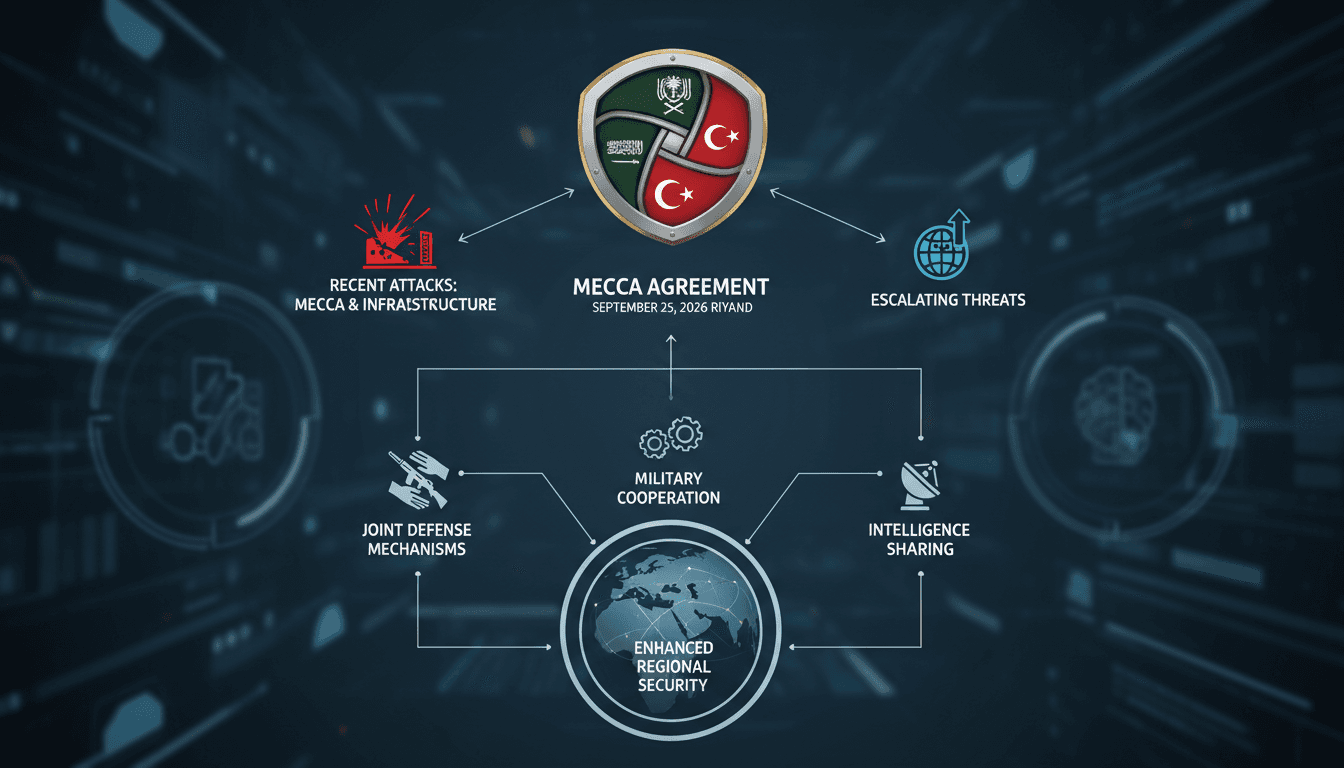
Why it matters
The Mecca Agreement's activation reflects a strategic shift in defense collaboration among key regional players, impacting security and economic stability.
What happened (in 30 seconds)
- On September 25, 2026, military leaders from Saudi Arabia, Pakistan, and Turkey met in Riyadh to discuss security threats.
- Participants condemned recent attacks on Mecca and critical infrastructure, emphasizing collective defense commitments.
- No immediate joint actions were announced, but discussions focused on enhancing military coordination and intelligence sharing.
The context you actually need
- The Mecca Agreement, signed on August 7, 2026, establishes a collective defense framework similar to NATO's Article 5.
- Heightened regional tensions, particularly from Houthi attacks, prompted the need for stronger military collaboration.
- The initial strategic committee meeting in Istanbul on August 31, 2026, set the stage for ongoing discussions about defense mechanisms.
What's really happening
The recent meeting in Riyadh marks a significant step in the institutionalization of the Mecca Agreement for Joint Defense, which was established to counteract rising security threats in the region. The agreement, signed by Saudi Crown Prince Mohammed bin Salman, Turkish President Recep Tayyip Erdoğan, and Pakistani Prime Minister Shahbaz Sharif, is designed to ensure that an armed attack on one signatory is treated as an attack on all. This collective defense principle is crucial in a region where geopolitical tensions are escalating, particularly due to ongoing conflicts and threats from non-state actors.
During the Riyadh meeting, military leaders reviewed the security landscape, focusing on recent assaults targeting Mecca and Saudi infrastructure. The participants praised the professionalism of the Saudi armed forces, which has been on high alert due to these threats. The discussions centered on how to effectively implement the collective defense clause of the agreement, which includes enhancing intelligence sharing, military coordination, and capability integration among the signatory states.
However, any joint defensive measures will require careful evaluation by the involved parties, particularly the state under threat. This assessment will consider the nature of the attack, the level of threat, and the necessity of a coordinated response. The emphasis on mutual evaluation reflects a cautious approach to military collaboration, ensuring that actions taken are appropriate and justified.
The meeting also highlighted the importance of translating commitments into tangible military cooperation while respecting existing bilateral relationships among the countries involved. This careful balancing act is essential for maintaining regional stability and fostering trust among the signatories. As the situation evolves, the effectiveness of this agreement will depend on the ability of these nations to work together seamlessly in the face of shared threats.
Who feels it first (and how)
- Military sectors in Saudi Arabia, Pakistan, and Turkey will experience immediate operational changes.
- Security analysts and defense contractors may see increased demand for services related to military coordination and intelligence sharing.
- Businesses in the Gulf region could benefit from enhanced stability, impacting trade and investment opportunities.
What to watch next
- Implementation of joint defense measures: Monitor announcements regarding specific military actions or collaborations that arise from this meeting, as they will indicate the agreement's effectiveness.
- Regional security developments: Keep an eye on any new threats or attacks in the region, particularly those targeting signatory states, as they could trigger collective responses.
- Economic impacts on Gulf markets: Watch for shifts in investor confidence and market stability in the Gulf region, which may be influenced by the perceived effectiveness of the Mecca Agreement.
The Mecca Agreement establishes a collective defense framework among Saudi Arabia, Pakistan, and Turkey.
Enhanced military cooperation and intelligence sharing will occur as a result of the recent meeting.
The specific nature and timing of joint military actions or responses to future threats remain uncertain.
Frequently Asked Questions
- Why it matters?
- The Mecca Agreement's activation reflects a strategic shift in defense collaboration among key regional players, impacting security and economic stability.
- What happened (in 30 seconds)?
- On September 25, 2026, military leaders from Saudi Arabia, Pakistan, and Turkey met in Riyadh to discuss security threats. Participants condemned recent attacks on Mecca and critical infrastructure, emphasizing collective defense commitments. No immediate joint actions were announced, but discussions focused on enhancing military coordination and intelligence sharing.
- What's really happening?
- The recent meeting in Riyadh marks a significant step in the institutionalization of the Mecca Agreement for Joint Defense, which was established to counteract rising security threats in the region. The agreement, signed by Saudi Crown Prince Mohammed bin Salman, Turkish President Recep Tayyip Erdoğan, and Pakistani Prime Minister Shahbaz Sharif, is designed to ensure that an armed attack on one signatory is treated as an attack on all. This collective defense principle is crucial in a region wh
- Who feels it first (and how)?
- Military sectors in Saudi Arabia, Pakistan, and Turkey will experience immediate operational changes. Security analysts and defense contractors may see increased demand for services related to military coordination and intelligence sharing. Businesses in the Gulf region could benefit from enhanced stability, impacting trade and investment opportunities.
- What to watch next?
- Implementation of joint defense measures: Monitor announcements regarding specific military actions or collaborations that arise from this meeting, as they will indicate the agreement's effectiveness. Regional security developments: Keep an eye on any new threats or attacks in the region, particularly those targeting signatory states, as they could trigger collective responses. Economic impacts on Gulf markets: Watch for shifts in investor confidence and market stability in the Gulf region, whic
English-language reporting on Saudi politics, policy, and society.
"Saudi Gazette reflects mainstream Saudi institutional perspectives."
— A47 Editor
Saudi Arabia, Pakistan and Türkiye reaffirm collective defense under Makkah agreement
RIYADH — The chiefs of defense and general staff of Saudi Arabia, Pakistan and Türkiye met in Riyadh on Friday, reaffirming their commitment to collective defense and the immediate implementation of the Makkah Joint Defense Agreement.During the meeti...
English-language reporting focused on Saudi Arabia and regional affairs.
"Saudi Gazette provides English-language coverage that often aligns with mainstream Saudi news priorities."
— A47 Editor
Saudi Arabia, Pakistan and Türkiye reaffirm collective defense under Makkah agreement
RIYADH — The chiefs of defense and general staff of Saudi Arabia, Pakistan and Türkiye met in Riyadh on Friday, reaffirming their commitment to collective defense and the immediate implementation of the Makkah Joint Defense Agreement.During the meeti...
Arabic-language reporting focused on domestic developments in Saudi Arabia.
"Okaz is a mainstream Saudi newspaper that often reflects domestic priorities and official-facing coverage."
— A47 Editor
رؤساء أركان «اتفاق مكة».. بحث تفعيل الدفاع المشترك
A meeting was held in Riyadh involving the Chief of Defense and the Chiefs of Staff from the countries party to the Mecca Agreement on joint defense, including Saudi Arabia, Pakistan, and Turkey. The discussions focused on the security situation and ...
Arabic-language coverage of international news and geopolitics.
"RT Arabic is a Russian state-funded outlet often criticized for promoting Kremlin-aligned narratives."
— A47 Editor
خلال اجتماع في الرياض.. السعودية وباكستان وتركيا تتفق على البدء الفوري في ترجمة التزامات اتفاقية مكة
Saudi Arabia, Pakistan, and Turkey held a meeting in Riyadh on Friday, where military chiefs discussed support for Saudi Arabia amid escalating tensions with the Houthis in Yemen, agreeing to immediately begin translating the commitments of the Mecca...
Pan-Arab political news and analysis.
"Al-Quds Al-Arabi is a London-based Arabic newspaper known for political coverage."
— A47 Editor
اجتماع عاجل لرؤساء أركان السعودية وتركيا وباكستان بعد هجمات الحوثيين على المملكة
The Saudi Ministry of Foreign Affairs announced that the Chiefs of Staff of Saudi Arabia, Turkey, and Pakistan will hold an urgent meeting to discuss ways to support Saudi Arabia in light of the recent Houthi attacks. This meeting is in accordance wi...