
Signal Opposes UK Government's Device Scanning Proposal for Nude Images
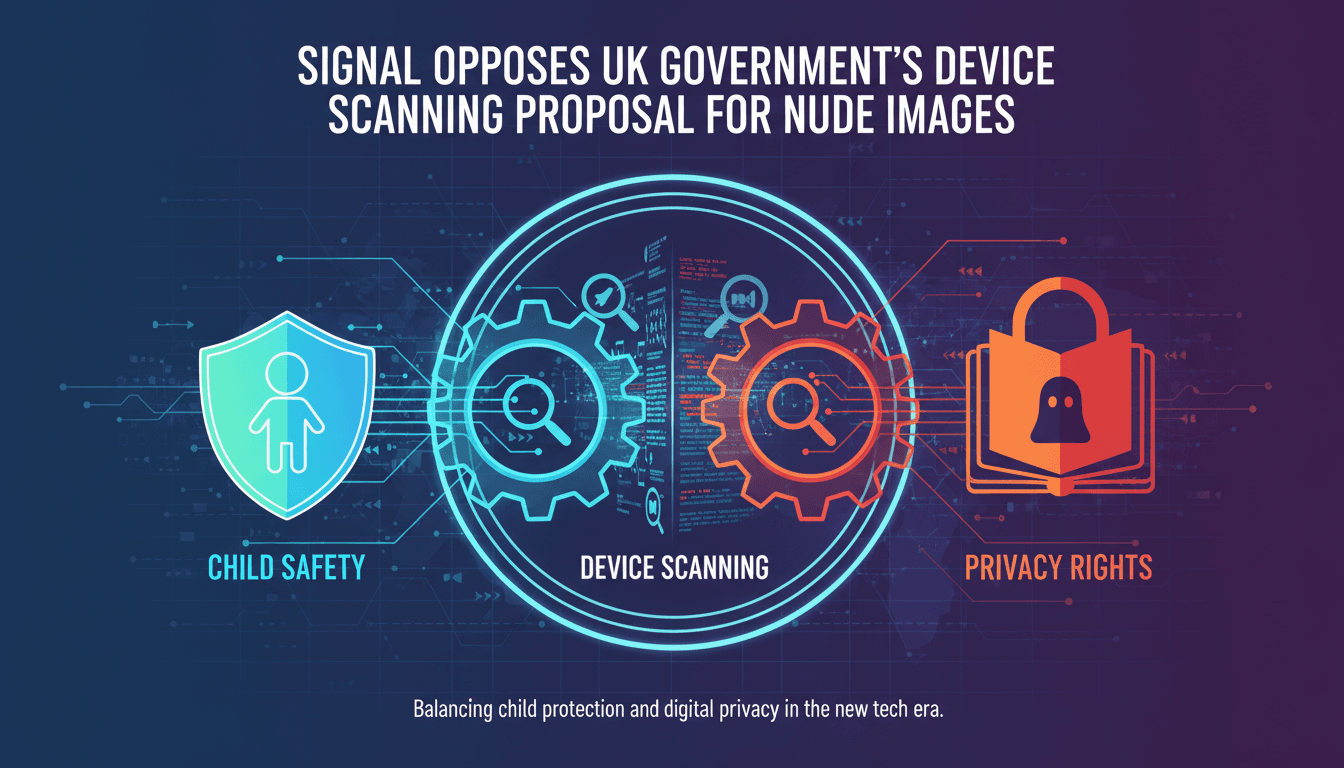
Here's what it means for you.
If you rely on technology for communication, this proposal could reshape privacy norms and regulatory landscapes.
Why it matters
This proposal raises critical questions about the balance between child safety and individual privacy rights in the digital age.
What happened (in 30 seconds)
- On June 8, 2026, the UK government announced a proposal to scan devices for nude images to protect children.
- Signal, an encrypted messaging platform, criticized the initiative, warning it could lead to mass surveillance.
- Privacy advocates are concerned about the implications for civil liberties and the feasibility of such technology.
The context you actually need
- Child exploitation concerns have prompted governments worldwide to consider stricter measures for online safety.
- Signal's response highlights a growing tension between privacy rights and government initiatives aimed at protecting minors.
- Technical feasibility of scanning devices is questioned, with experts suggesting it may create new vulnerabilities.
What's really happening
The UK government's proposal, announced by Prime Minister Keir Starmer, aims to implement device-level scanning to detect nude images, particularly focusing on protecting children from exploitation. This initiative is part of a broader strategy to enhance online safety, responding to increasing concerns about child exploitation and the circulation of explicit images among minors. However, the proposal has sparked significant backlash from privacy advocates, notably Signal, which argues that such measures could lead to a slippery slope of increased surveillance and censorship.
Signal's critique centers on the potential for the technology to be repurposed beyond its intended use, raising alarms about civil liberties. The company emphasizes that similar initiatives in the past have often expanded beyond their original intent, leading to broader surveillance practices that infringe on individual privacy rights. This concern is compounded by the fact that approximately 10% of devices worldwide do not support the latest iOS version required for effective content scanning, which raises questions about the practicality and effectiveness of the proposed measures.
Moreover, the proposal has implications for technology companies, which may face pressure to comply with government demands or risk legal repercussions. This creates a challenging environment for tech firms, as they must navigate the delicate balance between adhering to regulatory requirements and maintaining user trust. Experts have also pointed out that the scanning technology could introduce new security vulnerabilities, potentially exposing users to greater risks.
As the debate unfolds, it highlights the ongoing struggle to find a balance between child safety and privacy rights in an increasingly digital world. The implications of this proposal extend beyond the UK, resonating in regions like Dubai and the UAE, where similar concerns about privacy and surveillance are prevalent. The potential for increased regulation of technology companies could affect market dynamics and investor confidence in the region, making it a critical issue for stakeholders globally.
Who feels it first (and how)
- Privacy advocates: Concerned about the erosion of civil liberties.
- Tech companies: Facing pressure to comply with new regulations.
- Parents and guardians: Seeking effective measures to protect children online.
- Children and minors: Directly impacted by the potential for increased surveillance.
- Investors: Monitoring regulatory changes that could affect market dynamics.
What to watch next
- Public opinion: Monitor how citizens respond to the proposal and its implications for privacy.
- Legal challenges: Watch for potential lawsuits from privacy advocates against the government or tech companies.
- Technological developments: Keep an eye on advancements in scanning technology and its adoption by companies.
The proposal has been announced and is facing opposition from privacy advocates.
The debate will continue, with potential legal challenges arising.
The long-term impact on privacy rights and child safety measures remains uncertain.
Frequently Asked Questions
- Why it matters?
- This proposal raises critical questions about the balance between child safety and individual privacy rights in the digital age.
- What happened (in 30 seconds)?
- On June 8, 2026, the UK government announced a proposal to scan devices for nude images to protect children. Signal, an encrypted messaging platform, criticized the initiative, warning it could lead to mass surveillance. Privacy advocates are concerned about the implications for civil liberties and the feasibility of such technology.
- What's really happening?
- The UK government's proposal, announced by Prime Minister Keir Starmer, aims to implement device-level scanning to detect nude images, particularly focusing on protecting children from exploitation. This initiative is part of a broader strategy to enhance online safety, responding to increasing concerns about child exploitation and the circulation of explicit images among minors. However, the proposal has sparked significant backlash from privacy advocates, notably Signal, which argues that such
- Who feels it first (and how)?
- Privacy advocates: Concerned about the erosion of civil liberties. Tech companies: Facing pressure to comply with new regulations. Parents and guardians: Seeking effective measures to protect children online. Children and minors: Directly impacted by the potential for increased surveillance. Investors: Monitoring regulatory changes that could affect market dynamics.
- What to watch next?
- Public opinion: Monitor how citizens respond to the proposal and its implications for privacy. Legal challenges: Watch for potential lawsuits from privacy advocates against the government or tech companies. Technological developments: Keep an eye on advancements in scanning technology and its adoption by companies.
Tech news, hardware, and AI tools coverage.
"PC/tech site increasingly covering AI hardware and apps."
— A47 Editor
Signal attacks UK plan to scan devices for nude images as "mass surveillance"
UK Prime Minister Keir Starmer announced a controversial plan during London Tech Week, requiring tech companies like Apple and Google to activate features on devices that would scan for and block nude images on children's devices. This proposal has b...
Consumer tech news, reviews, and buying guides for gadgets and electronics.
"TechRadar is known for comprehensive buying advice, hardware reviews, and consumer tech news targeted at mainstream audiences."
— A47 Editor
‘Surveillance is not safety’ — UK’s device scanning order faces privacy backlash
UK Prime Minister Keir Starmer has mandated that tech providers implement software to scan and block explicit images on children's phones by September, aiming to enhance child safety online. Privacy advocates have raised concerns about the potential ...
Discoveries, research, environment, and health innovations.
"New Scientist is a well-respected publication offering accessible science news, commentary, and expert analysis."
— A47 Editor
Can Apple and Google stop children from sharing explicit images?
UK Prime Minister Keir Starmer has urged technology companies, including Apple and Google, to voluntarily develop tools aimed at preventing children from sharing explicit images. Experts, however, caution that implementing such measures may prove to ...
Tech coverage including AI and robotics.
"Accessible science/tech magazine with AI coverage."
— A47 Editor
Can Apple and Google stop children from sharing explicit images?
UK Prime Minister Keir Starmer has urged technology companies, including Apple and Google, to voluntarily implement measures to prevent children from sharing explicit images, emphasizing the need for 'device controls' to protect minors. Failure to ac...
Corporate news, economic trends, and markets with UK and global scope.
"BBC News is widely regarded as reputable and impartial, with a public service mandate."
— A47 Editor
Starmer tells Apple and Google to ban nude images on children's phones
UK Prime Minister Keir Starmer has urged major tech companies, including Apple and Google, to implement built-in features that prevent children from accessing nude images on their devices. This initiative aims to enhance internet safety for minors an...
Political developments, policy debates, elections, and government affairs in the UK.
"BBC News is widely regarded as a reputable international news organization, known for its impartial tone and public service mandate."
— A47 Editor
Starmer tells Apple and Google to ban nude images on children's phones
UK Prime Minister Keir Starmer has urged major tech companies, including Apple and Google, to implement built-in features that prevent children from accessing nude images on their devices. This initiative aims to enhance internet safety for minors an...
Curated tech headlines including AI stories.
"Influential aggregator surfacing the day’s top tech/AI links."
— A47 Editor
UK PM Keir Starmer says tech companies must introduce "device controls" that stop kids from sending and receiving nude images or face laws forcing them to do so (Reuters)
UK Prime Minister Keir Starmer has called on technology companies to implement 'device controls' to prevent children from sending and receiving nude images, warning that legislation may be introduced if they fail to act. This initiative aims to enhan...
Technology and innovation coverage, including consumer tech and digital transformation stories.
"Emirates 24|7 technology coverage often highlights practical tech developments with relevance to Gulf readers and businesses."
— A47 Editor
UK PM Starmer urges big tech to block nude image sharing by children UK PM Starmer urges big tech to block nude image sharing by children
UK Prime Minister Keir Starmer has urged major technology companies, including Apple and Google, to implement safety measures on children's devices to prevent the sharing of nude images, warning of potential legislation if they do not comply. The pro...
Top international stories selected by The Guardian editors.
"The Guardian is known for its progressive editorial stance and in-depth analysis."
— A47 Editor
Starmer gives tech firms ultimatum to block explicit images on children’s phones
UK Prime Minister Keir Starmer has issued an ultimatum to major tech companies, including Apple and Google, requiring them to implement software that blocks explicit images on children's mobile devices by September. This directive aims to enhance onl...
Tech culture, product news, and critical takes on the tech industry's social impact.
"The Guardian's tech coverage blends mainstream news, critical analysis, and cultural commentary on emerging technologies and digital trends."
— A47 Editor
Starmer gives tech firms ultimatum to block explicit images on children’s phones
UK Prime Minister Keir Starmer has issued an ultimatum to major tech companies, including Apple and Google, requiring them to implement software that blocks explicit images on children's mobile devices by September. This directive aims to enhance chi...