
Trump Administration Cancels $810 Million in Federal Spending via Pocket Rescission
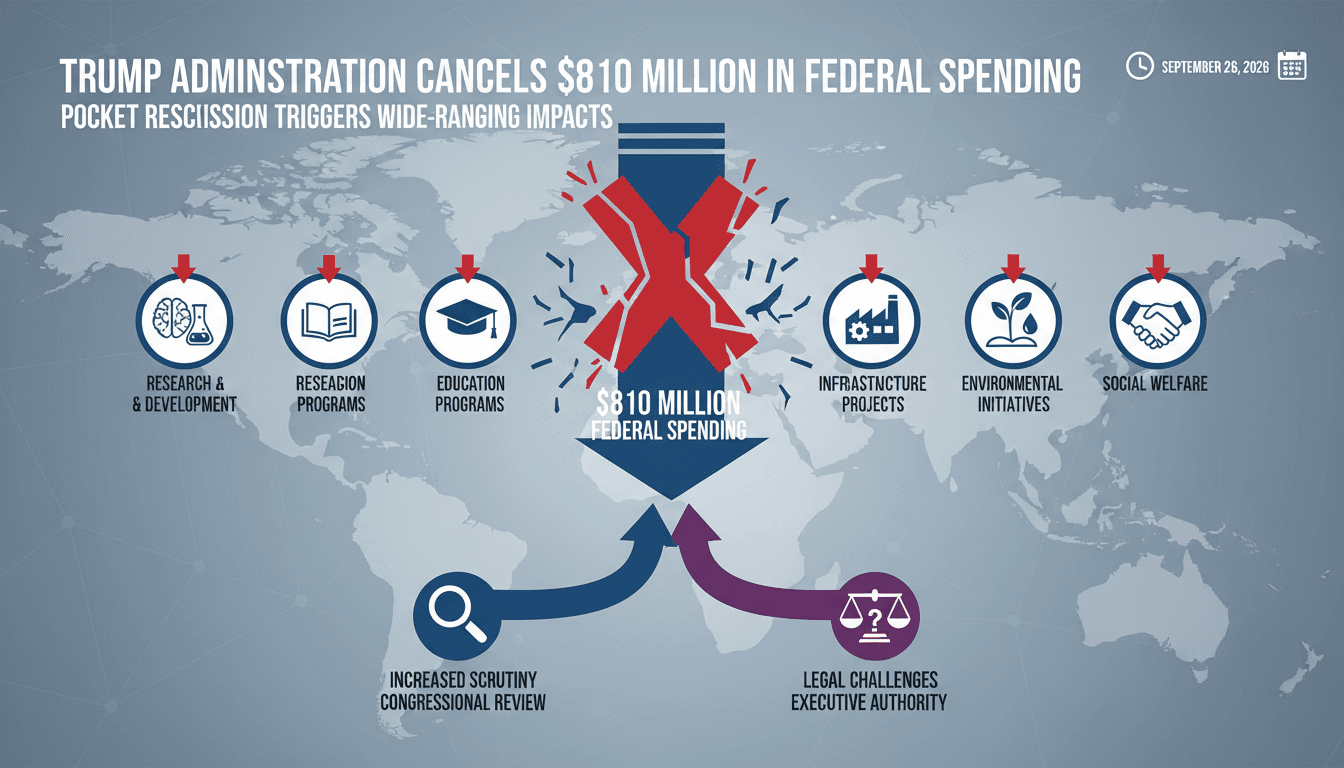
Why it matters
This action signals a shift in federal funding priorities that could reshape support for vulnerable populations and educational initiatives.
What happened (in 30 seconds)
- On September 26, 2026, the Trump administration announced the cancellation of $810 million in federal spending.
- Programs affected include refugee support, migrant education, and diversity initiatives, deemed non-beneficial by the White House.
- Senator Susan Collins condemned the move as an unlawful bypass of Congress's authority over budgetary decisions.
The context you actually need
- The Impoundment Control Act of 1974 governs presidential authority to withhold appropriated funds, requiring congressional approval for rescissions within a 45-day period.
- Pocket rescissions allow the executive branch to notify Congress near the fiscal year-end, effectively letting funds lapse without legislative review.
- This tactic was last used under President Jimmy Carter in 1977 and revived by Trump in 2025 for foreign aid rescissions, raising questions about executive overreach.
What's really happening
On September 26, 2026, the Trump administration executed a pocket rescission to cancel $810 million in congressionally approved federal spending. This maneuver specifically targeted programs that support refugees, asylees, and migrant education, among others. The administration justified these cuts by labeling the programs as wasteful or ideologically driven, arguing that they do not serve the interests of American citizens.
The Office of Management and Budget (OMB), led by Director Russell Vought, defended the action as consistent with the Impoundment Control Act. However, this approach has drawn criticism, particularly from Senator Susan Collins, who labeled the rescission as unlawful and an attempt to circumvent Congress's power of the purse. The timing of the announcement, just before the end of the federal fiscal year, has raised concerns about the ability of Congress to effectively review and respond to the cuts.
Historically, pocket rescissions have been contentious. The Government Accountability Office (GAO) has contested their legality, arguing that they exceed executive authority. The last significant use of this tactic was in 2025 when the Trump administration rescinded $4.9 billion in foreign aid, a move that faced legal challenges but was not blocked by the Supreme Court pending litigation.
The implications of this recent rescission extend beyond the immediate financial cuts. It sets a precedent for future administrations to utilize similar tactics, potentially undermining the legislative branch's control over federal spending. As the administration continues to prioritize its agenda, the impact on vulnerable populations and educational initiatives could be profound, leading to increased scrutiny and potential backlash from advocacy groups and lawmakers alike.
Who feels it first (and how)
- Refugee and Asylee Support Organizations: These groups may face immediate funding shortages, impacting their ability to provide essential services.
- Educational Institutions: Schools and programs that rely on federal grants for migrant education may need to adjust their budgets or cut services.
- Diversity Initiatives: Organizations focused on promoting diversity may see reduced funding, affecting outreach and support programs.
What to watch next
- Congressional Response: Watch for potential legislative actions or legal challenges from Congress, particularly from those opposing the rescission.
- GAO Review: The Government Accountability Office may initiate a review of the legality of this pocket rescission, which could lead to further legal implications.
- Public Reaction: Monitor responses from advocacy groups and the public, as increased pressure could influence future funding decisions.
The Trump administration has canceled $810 million in federal spending through a pocket rescission.
Legal challenges and congressional responses will emerge, potentially complicating the administration's budgetary maneuvers.
The long-term impact on the affected programs and the broader implications for executive authority over federal spending remain uncertain.
Frequently Asked Questions
- Why it matters?
- This action signals a shift in federal funding priorities that could reshape support for vulnerable populations and educational initiatives.
- What happened (in 30 seconds)?
- On September 26, 2026, the Trump administration announced the cancellation of $810 million in federal spending. Programs affected include refugee support, migrant education, and diversity initiatives, deemed non-beneficial by the White House. Senator Susan Collins condemned the move as an unlawful bypass of Congress's authority over budgetary decisions.
- What's really happening?
- On September 26, 2026, the Trump administration executed a pocket rescission to cancel $810 million in congressionally approved federal spending. This maneuver specifically targeted programs that support refugees, asylees, and migrant education, among others. The administration justified these cuts by labeling the programs as wasteful or ideologically driven, arguing that they do not serve the interests of American citizens. The Office of Management and Budget (OMB), led by Director Russell Vou
- Who feels it first (and how)?
- Refugee and Asylee Support Organizations: These groups may face immediate funding shortages, impacting their ability to provide essential services. Educational Institutions: Schools and programs that rely on federal grants for migrant education may need to adjust their budgets or cut services. Diversity Initiatives: Organizations focused on promoting diversity may see reduced funding, affecting outreach and support programs.
- What to watch next?
- Congressional Response: Watch for potential legislative actions or legal challenges from Congress, particularly from those opposing the rescission. GAO Review: The Government Accountability Office may initiate a review of the legality of this pocket rescission, which could lead to further legal implications. Public Reaction: Monitor responses from advocacy groups and the public, as increased pressure could influence future funding decisions.
U.S. political news and right-leaning commentary.
"Fox News is a highly influential conservative news outlet known for right-leaning political commentary and coverage."
— A47 Editor
Trump revives rare budget maneuver to rescind $810M in congressionally approved funds
President Donald Trump has utilized a rare budget maneuver to rescind $810 million in congressionally approved funding, primarily impacting refugee programs, diversity initiatives, and migrant education. This decision has drawn significant attention ...
Insights and news on social issues, policy, and political movements across the United States.
"The Wall Street Journal is known for its deep political coverage, especially at the intersection of policy, regulation, and social dynamics."
— A47 Editor
Trump Angers Lawmakers With $810 Million in Cuts
President Trump has announced cuts totaling $810 million in federal funding, impacting programs for immigrants, refugees, and housing services. This decision, made through a rare budget maneuver, has sparked significant backlash from lawmakers across...
Right-of-center views on political news.
"The Washington Times is a conservative-leaning newspaper known for its political coverage and advocacy of right-of-center viewpoints."
— A47 Editor
White House maneuvers around Congress to cut $810 million with 'pocket rescission'
The White House has executed a 'pocket rescission' to cut nearly $810 million in funding that was previously appropriated by Congress for programs aiding unauthorized immigrants and supporting race-based missions. This maneuver allows the administrat...