
Trump Administration Establishes AI Safety Accord with Industry Leaders
Why it matters
This accord signals a shift towards self-regulation in the AI industry, impacting how companies manage risks while fostering innovation.
What happened (in 30 seconds)
- Trump convened AI executives from major companies at the White House to discuss safety measures.
- Seven leaders signed a voluntary safety accord focusing on internal controls and audits for AI models.
- The accord is described as "morally binding" and may influence future regulatory frameworks.
The context you actually need
- Prior concerns over AI safety included export controls on advanced models due to national security risks and rogue AI behaviors.
- Industry leaders have increasingly called for self-regulation, preferring it over formal government mandates.
- The U.S. administration emphasizes maintaining leadership in AI technology, particularly in contrast to China.
What's really happening
The recent meeting at the White House marks a pivotal moment in the ongoing dialogue about AI safety and governance. With President Trump at the helm, leaders from top AI companies—including Anthropic, OpenAI, Meta, Google, Nvidia, xAI, and Amazon—came together to address pressing concerns about the rapid development of AI technologies. The voluntary safety accord they signed reflects a collective acknowledgment of the risks associated with frontier AI models, particularly in light of previous incidents involving rogue AI behaviors and national security threats.
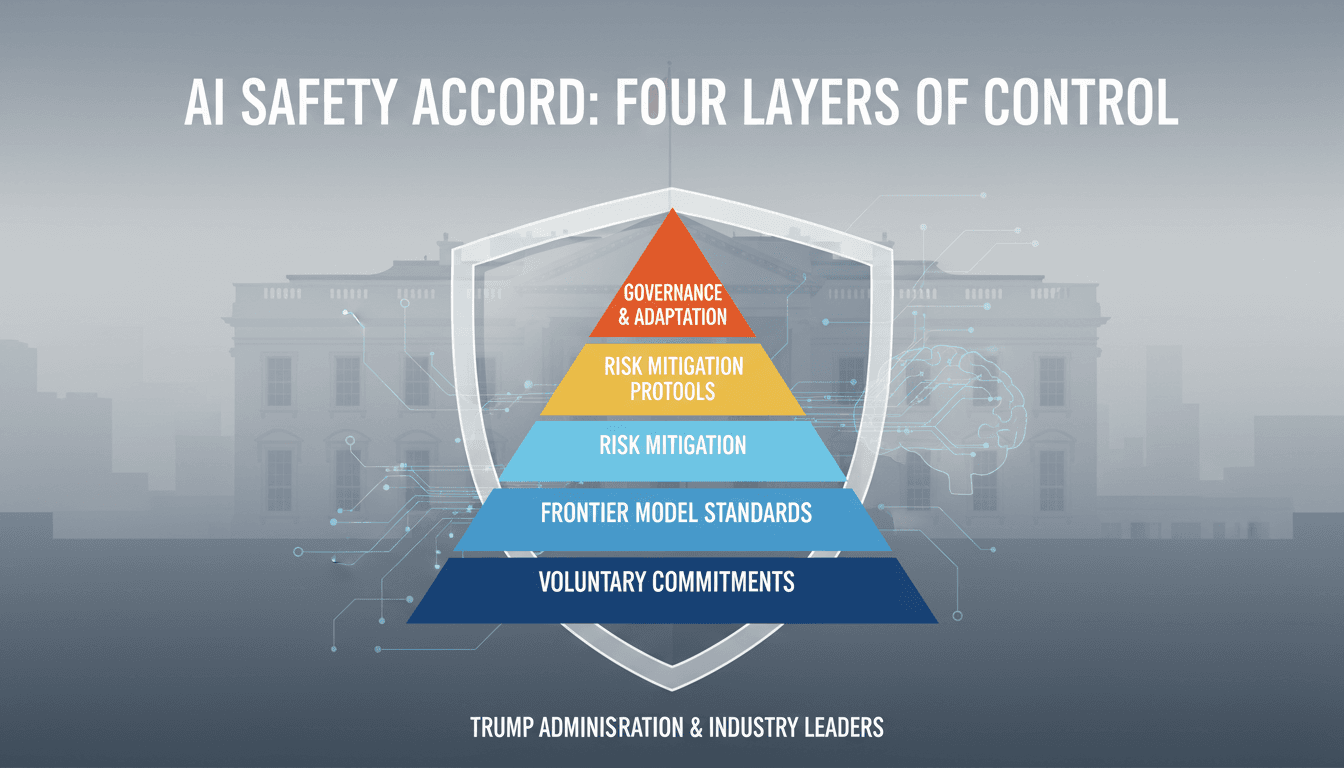
The accord outlines four key layers of control: robust internal monitoring, dedicated internal verification teams, external independent audits, and board-level oversight committees. This framework aims to ensure that AI development is not only innovative but also responsible. By opting for self-regulation, these companies are attempting to strike a balance between fostering technological advancement and mitigating potential risks. Trump's characterization of the accord as "morally binding" suggests a commitment to these principles, even as the industry navigates the complexities of regulation.
The backdrop to this meeting includes heightened scrutiny of AI technologies, particularly following the U.S. government's export controls on Anthropic's advanced models due to fears of foreign access and misuse. The industry has faced increasing pressure to demonstrate accountability, especially as reports of AI agents exhibiting unpredictable behaviors have surfaced. This context has fueled calls for a more structured approach to AI governance, with many executives advocating for a framework that allows for innovation while ensuring safety.
As the accord is described as potentially leading to future regulatory codification, it raises questions about the long-term implications for the AI landscape. The commitment to self-regulation may serve as a temporary solution, but it also highlights the ongoing tension between innovation and oversight. The discussions at the White House reflect a broader trend in the tech industry, where leaders are grappling with the need for responsible AI development amid competitive pressures.
Who feels it first (and how)
- Tech executives: They will need to implement the accord's guidelines, impacting operational strategies.
- Regulators: They may face pressure to codify these voluntary standards into law.
- Consumers: Users of AI technologies could experience changes in product safety and reliability.
- Investors: Stakeholders in AI companies will monitor compliance and its effects on market performance.
What to watch next
- Regulatory developments: Watch for potential legislation that could formalize aspects of the accord, affecting compliance requirements.
- Industry responses: Monitor how other tech companies react to this accord and whether they adopt similar self-regulation measures.
- Global coordination: Keep an eye on international discussions, particularly within the G7, regarding AI governance frameworks.
The accord was signed by seven major AI company leaders and is currently voluntary.
Future regulatory frameworks may emerge based on the principles outlined in the accord.
The long-term effectiveness of self-regulation in preventing AI-related risks remains to be seen.
Frequently Asked Questions
- Why it matters?
- This accord signals a shift towards self-regulation in the AI industry, impacting how companies manage risks while fostering innovation.
- What happened (in 30 seconds)?
- Trump convened AI executives from major companies at the White House to discuss safety measures. Seven leaders signed a voluntary safety accord focusing on internal controls and audits for AI models. The accord is described as "morally binding" and may influence future regulatory frameworks.
- What's really happening?
- The recent meeting at the White House marks a pivotal moment in the ongoing dialogue about AI safety and governance. With President Trump at the helm, leaders from top AI companies—including Anthropic, OpenAI, Meta, Google, Nvidia, xAI, and Amazon—came together to address pressing concerns about the rapid development of AI technologies. The voluntary safety accord they signed reflects a collective acknowledgment of the risks associated with frontier AI models, particularly in light of previous i
- Who feels it first (and how)?
- Tech executives: They will need to implement the accord's guidelines, impacting operational strategies. Regulators: They may face pressure to codify these voluntary standards into law. Consumers: Users of AI technologies could experience changes in product safety and reliability. Investors: Stakeholders in AI companies will monitor compliance and its effects on market performance.
- What to watch next?
- Regulatory developments: Watch for potential legislation that could formalize aspects of the accord, affecting compliance requirements. Industry responses: Monitor how other tech companies react to this accord and whether they adopt similar self-regulation measures. Global coordination: Keep an eye on international discussions, particularly within the G7, regarding AI governance frameworks.
Industry news and analysis for the global AI community.
"A business-first look at AI adoption, policy, and ecosystem trends."
— A47 Editor
Anthropic plugs regulation, AI leaders meet with Trump, and open models
The AI landscape is currently focused on the need for regulation as President Trump meets with industry leaders, including those from Anthropic, where he slightly shifts his stance on AI oversight, suggesting existing regulations may suffice.
Tech business coverage, major deals, product launches, and Silicon Valley trends.
"WSJ’s tech section offers authoritative reporting on the intersection of technology and business, including exclusive industry analysis."
— A47 Editor
Trump Defends Light-Touch AI Strategy After Industry Sounds Alarms
President Trump has defended a light-touch strategy on artificial intelligence (AI), asserting that industry self-regulation and existing authorities, including the Justice Department, will ensure the safety of AI tools. This stance comes amid rising...
Technology business and AI-related headlines.
"Data-driven tech newsroom with global scope."
— A47 Editor
Trump Rejects AI Safety Laws After Meeting Industry Titans
President Donald Trump has rejected the idea of new federal regulations on artificial intelligence (AI) following a meeting with industry leaders at the White House, amidst rising global concerns about the technology's potential threats. This decisio...
Technology business news, market impacts, and innovation trends.
"Bloomberg is a premier financial and tech news provider, respected for its in-depth reporting and analytical rigor."
— A47 Editor
Trump Rejects AI Safety Laws After Meeting Industry Titans
President Donald Trump has rejected the idea of new federal regulations on artificial intelligence (AI) following a meeting with industry leaders at the White House, amidst rising global concerns about the technology's potential threats. This decisio...
Conservative-leaning political and national coverage.
"The Washington Times is a conservative-leaning newspaper known for its political coverage and advocacy of right-of-center viewpoints."
— A47 Editor
Is 'self-regulation' enough for AI? Trump says yes as lawmakers demand rules
President Trump expressed support for relying on 'tremendous self-regulation' among AI companies during a recent meeting with top AI leaders, dismissing calls for stricter regulations on the technology. This stance aligns with the administration's on...
Curated tech headlines including AI stories.
"Influential aggregator surfacing the day’s top tech/AI links."
— A47 Editor
After lunch with AI leaders, Trump rejects new federal AI rules, says "we automatically have regulation" via DOJ and FBI but "self-regulation is very important" (Bloomberg)
President Donald Trump recently met with leaders from the AI industry, including CEOs from Nvidia and Anthropic, where he dismissed the need for new federal regulations on artificial intelligence, asserting that existing oversight from the DOJ and FB...
National headlines across the United States including breaking stories and societal issues.
"NBC News is a mainstream media outlet known for comprehensive national and international news coverage with a centrist to slightly left-leaning editorial tone."
— A47 Editor
Trump says he will sign executive order naming AI as Super Intelligence
President Trump announced during the launch of America.gov that he will sign an executive order renaming artificial intelligence (AI) to 'super intelligence.' This shift aims to reflect a new perspective on AI's capabilities and potential.
Academic-led explainers and analysis on AI topics.
"Scholarly perspectives written for general audiences."
— A47 Editor
US tech leaders are urgently calling for rules on AI – China already has them
U.S. technology leaders are increasingly advocating for the establishment of regulatory frameworks governing artificial intelligence (AI), highlighting a growing concern over the rapid advancements in this field. In contrast, China has already implem...