
US Denies Visa to Sudanese Military Leader Amid Ongoing Civil War and Foreign Mediation Efforts
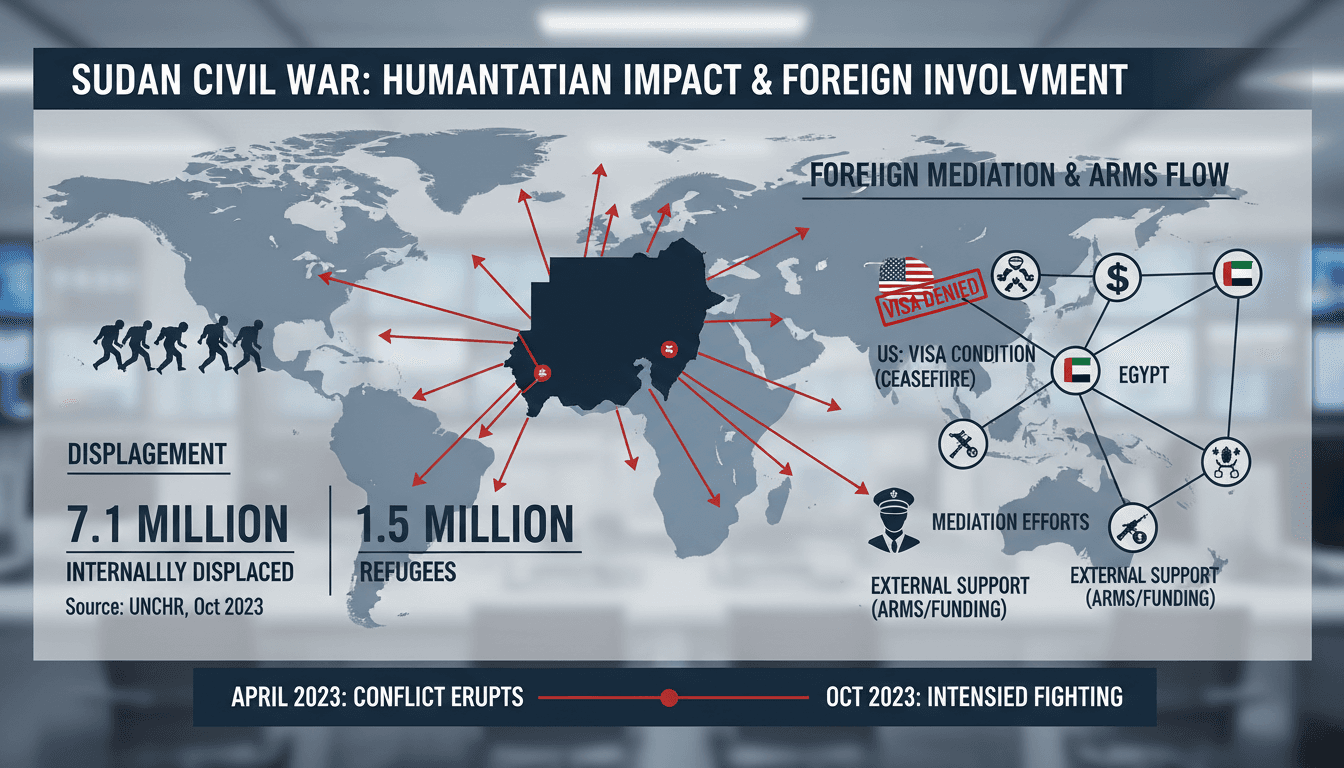
Why it matters
The conflict in Sudan is a critical flashpoint for foreign influence in the Red Sea region, affecting international relations and humanitarian efforts.
What happened (in 30 seconds)
- On September 28, 2026, the US withheld a visa for Sudanese military leader Gen. Abdel Fattah al-Burhan to attend the UN General Assembly.
- The visa denial was linked to a proposed 90-day humanitarian ceasefire amid escalating violence between Burhan's Sudanese Armed Forces (SAF) and the rival Rapid Support Forces (RSF).
- Foreign powers, including the US, Saudi Arabia, Egypt, and the UAE, are competing for influence in Sudan, complicating mediation efforts.
The context you actually need
- Sudan's civil war began in April 2023, stemming from a power struggle between Burhan and RSF leader Mohamed Hamdan Dagalo (Hemedti).
- Over 14 million people have been displaced, with more than 150,000 reported killed, creating one of the world's worst humanitarian crises.
- Foreign involvement has turned the conflict into a proxy war, with various nations supplying arms and support to both factions.
What's really happening
The recent US visa dispute with Gen. Abdel Fattah al-Burhan highlights the complexities of Sudan's ongoing civil war and the international community's attempts to mediate a resolution. The US State Department's decision to withhold Burhan's visa was predicated on his acceptance of a proposed 90-day ceasefire, which was intended to alleviate the humanitarian crisis affecting millions of Sudanese. However, Burhan's rejection of this conditionality underscores a broader narrative of national sovereignty and resistance to foreign intervention.
The civil war, which erupted from a power struggle following the 2021 coup, has seen both the SAF and RSF accused of committing atrocities against civilians. The humanitarian situation has deteriorated significantly, with widespread famine and displacement. The US, alongside its Quad partners—Saudi Arabia, Egypt, and the UAE—has sought to mediate a ceasefire and facilitate humanitarian access. Yet, the ongoing violence, fueled by external support for both factions, complicates these efforts.
Burhan's defiance in rejecting the visa conditions reflects a broader sentiment among Sudanese leaders who view foreign pressure as an infringement on their sovereignty. This stance is likely to prolong the conflict, as both sides remain entrenched in their positions. The US State Department's criticism of both factions for escalating hostilities indicates a recognition that neither side is willing to compromise, further complicating the mediation landscape.
The involvement of foreign powers has transformed the conflict into a strategic contest, with the UAE reportedly supporting the RSF while Egypt and Turkey back the SAF. This dynamic not only exacerbates the violence but also complicates the humanitarian response, as aid access remains severely constrained amid ongoing hostilities. The international community's focus on Sudan is critical, as the implications of this conflict extend beyond its borders, affecting regional stability and global humanitarian efforts.
Who feels it first (and how)
- Humanitarian organizations: Struggling to provide aid amid escalating violence and restricted access.
- Sudanese civilians: Facing displacement, famine, and violence as the conflict continues.
- Foreign governments: Navigating complex diplomatic relations and potential backlash from their involvement in the conflict.
What to watch next
- Ceasefire negotiations: Monitor any developments in the Quad's mediation efforts, as successful negotiations could alleviate humanitarian suffering.
- Foreign military support: Watch for changes in the level of external support for both SAF and RSF, which could shift the balance of power.
- Humanitarian access: Keep an eye on the evolving situation regarding aid access, as improvements could signal a potential easing of the crisis.
The civil war in Sudan has resulted in over 14 million displaced individuals and significant humanitarian crises.
Continued foreign involvement will prolong the conflict and complicate mediation efforts.
The potential for a successful ceasefire and its impact on the humanitarian situation remains uncertain.
Frequently Asked Questions
- Why it matters?
- The conflict in Sudan is a critical flashpoint for foreign influence in the Red Sea region, affecting international relations and humanitarian efforts.
- What happened (in 30 seconds)?
- On September 28, 2026, the US withheld a visa for Sudanese military leader Gen. Abdel Fattah al-Burhan to attend the UN General Assembly. The visa denial was linked to a proposed 90-day humanitarian ceasefire amid escalating violence between Burhan's Sudanese Armed Forces (SAF) and the rival Rapid Support Forces (RSF). Foreign powers, including the US, Saudi Arabia, Egypt, and the UAE, are competing for influence in Sudan, complicating mediation efforts.
- What's really happening?
- The recent US visa dispute with Gen. Abdel Fattah al-Burhan highlights the complexities of Sudan's ongoing civil war and the international community's attempts to mediate a resolution. The US State Department's decision to withhold Burhan's visa was predicated on his acceptance of a proposed 90-day ceasefire, which was intended to alleviate the humanitarian crisis affecting millions of Sudanese. However, Burhan's rejection of this conditionality underscores a broader narrative of national sovere
- Who feels it first (and how)?
- Humanitarian organizations: Struggling to provide aid amid escalating violence and restricted access. Sudanese civilians: Facing displacement, famine, and violence as the conflict continues. Foreign governments: Navigating complex diplomatic relations and potential backlash from their involvement in the conflict.
- What to watch next?
- Ceasefire negotiations: Monitor any developments in the Quad's mediation efforts, as successful negotiations could alleviate humanitarian suffering. Foreign military support: Watch for changes in the level of external support for both SAF and RSF, which could shift the balance of power. Humanitarian access: Keep an eye on the evolving situation regarding aid access, as improvements could signal a potential easing of the crisis.
Conservative-leaning coverage of current events.
"Fox News is a highly influential conservative news outlet known for right-leaning political commentary and coverage."
— A47 Editor
US visa clash exposes Sudan’s forgotten war as foreign powers compete for strategic foothold
Abdel Fattah al-Burhan, the leader of Sudan, expressed defiance after the United States withheld his visa amid ongoing disputes regarding a proposed 90-day humanitarian truce in the country. This situation highlights the complexities of international...
English-language reporting on Saudi politics, policy, and society.
"Saudi Gazette reflects mainstream Saudi institutional perspectives."
— A47 Editor
Drone strikes hit Sudan cities as army chief defies pressure for ceasefire
Drone strikes targeted two Sudanese cities on Sunday, as army chief Abdel Fattah Al-Burhan reaffirmed his commitment to continue the ongoing conflict against the Rapid Support Forces, despite increasing calls for a ceasefire. This escalation follows ...
UAE-based English-language newspaper covering regional politics, economics, and global affairs.
"The National reflects Emirati policy perspectives while maintaining international editorial standards."
— A47 Editor
US visa row shines spotlight on Al Burhan’s legitimacy, Sudan expert says
The United States has denied a visa to Sudanese leader Abdel Fattah al-Burhan for attending the United Nations General Assembly, highlighting ongoing tensions between Sudan's government and international entities amid a backdrop of instability in the...