
Netherlands imposes trade ban on Israeli settlement goods prompting Israeli diplomatic response
Why it matters
This diplomatic conflict highlights the growing divide in international relations regarding Israel's settlement policies and their implications for global trade.
What happened (in 30 seconds)
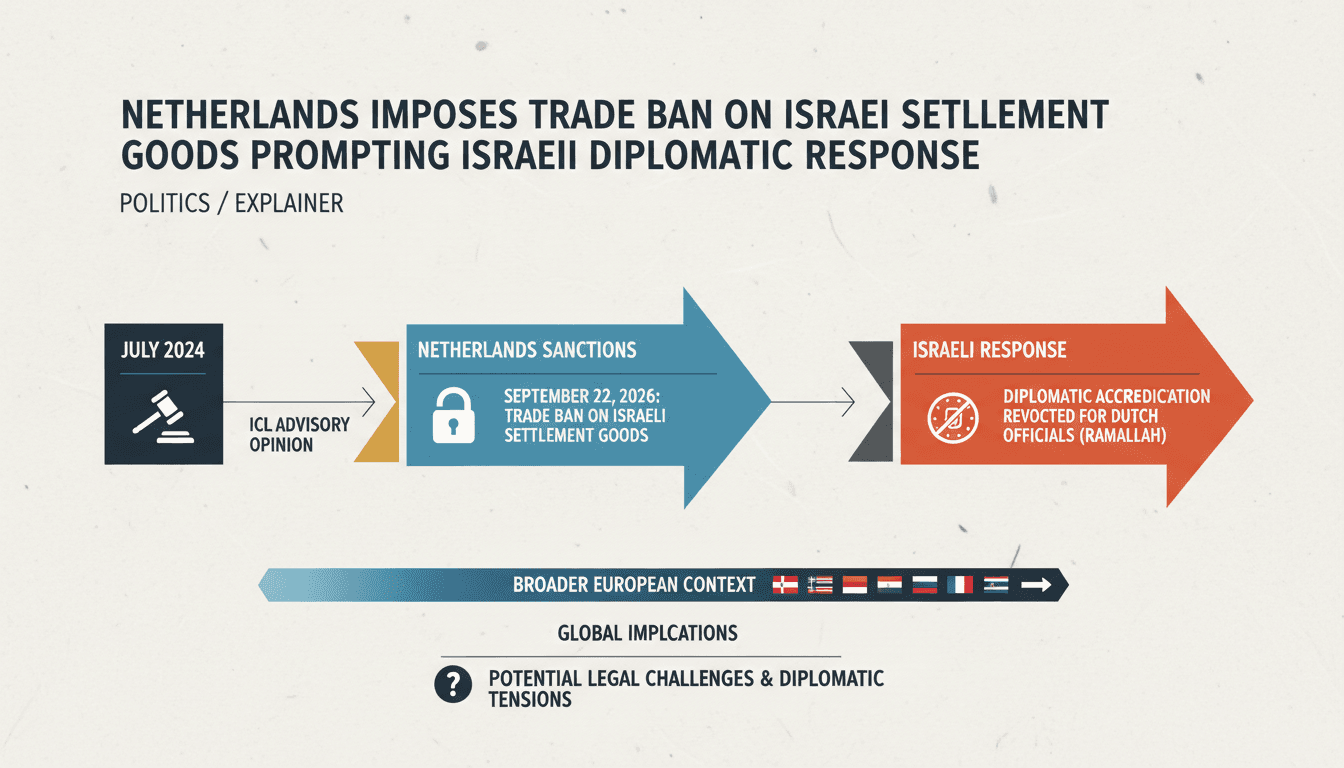
- The Netherlands imposed a trade ban on goods from Israeli settlements effective September 22, 2026, citing international law obligations.
- Israel retaliated by revoking diplomatic accreditation for Dutch officials in Ramallah, labeling the sanctions as hostile.
- The situation escalated with a seven-day compliance deadline for Dutch diplomats, reflecting broader tensions in European-Israeli relations.
The context you actually need
- The 2024 ICJ advisory opinion deemed Israeli settlements unlawful, prompting European nations to reconsider their trade relations with Israel.
- The Netherlands acted unilaterally after failing to achieve consensus within the EU, following similar actions by Spain, Belgium, and Ireland.
- Israel's increasing isolation from Western allies over its settlement policies is becoming more pronounced, affecting its diplomatic standing.
What's really happening
The Netherlands' decision to ban goods from Israeli settlements is rooted in a broader European movement to enforce international law regarding occupied territories. Following the International Court of Justice's (ICJ) advisory opinion in July 2024, which declared these settlements unlawful, the Netherlands sought to take a stand against what it perceives as violations of international norms. The Temporary Sanctions Decree, which came into effect on September 22, 2026, prohibits the import, purchase, sale, and brokerage of products from designated settlements, utilizing EU postcode lists for enforcement.
This move is significant as it reflects a growing trend among European nations to differentiate between Israel proper and its settlements in occupied territories. The Netherlands' unilateral action comes after attempts to reach a consensus within the EU failed, indicating a shift towards individual national policies in response to international law. The enforcement of these sanctions includes rigorous checks at airports, such as Schiphol, where luggage inspections will be conducted to ensure compliance.
Israel's response, which involved revoking the diplomatic status of Dutch officials in Ramallah, underscores the seriousness with which it views these sanctions. Israeli Foreign Minister Gideon Sa'ar's comments about the potential loss of regional influence for states that impose such measures highlight the diplomatic stakes involved. The Israeli government perceives these actions as not only hostile but also as a threat to its international standing.
The broader implications of this dispute extend beyond the Netherlands and Israel. Similar sanctions have been noted from other countries, including the UK, France, and Canada, suggesting a potential trend that could isolate Israel further on the international stage. The Dutch sanctions could set a precedent for other nations to follow suit, leading to increased legal challenges from importers and further complicating Israel's trade relationships.
As the situation unfolds, the potential for increased tensions in the region remains high. The Netherlands has expressed regret over Israel's diplomatic actions, indicating a desire to maintain dialogue despite the escalating conflict. However, the enforcement of these sanctions and the potential for retaliatory measures from Israel could lead to a protracted diplomatic standoff.
Who feels it first (and how)
- Dutch exporters: Facing immediate impacts on trade operations and potential legal repercussions.
- Israeli businesses: Particularly those involved in settlement goods, may experience market disruptions and legal challenges.
- European diplomats: Increased scrutiny and potential diplomatic isolation as countries reassess their positions on Israel.
What to watch next
- Compliance measures: Monitor how effectively the Netherlands enforces its sanctions and any legal challenges that arise.
- Diplomatic responses: Watch for further retaliatory actions from Israel and how other European nations respond to the sanctions.
- Market reactions: Observe any shifts in trade patterns or economic impacts on sectors involved in Israeli goods.
The Netherlands has implemented a trade ban on goods from Israeli settlements.
Other European nations may follow suit, leading to increased diplomatic tensions.
The long-term effects on Israel's international relations and trade dynamics remain uncertain.
Frequently Asked Questions
- Why it matters?
- This diplomatic conflict highlights the growing divide in international relations regarding Israel's settlement policies and their implications for global trade.
- What happened (in 30 seconds)?
- The Netherlands imposed a trade ban on goods from Israeli settlements effective September 22, 2026, citing international law obligations. Israel retaliated by revoking diplomatic accreditation for Dutch officials in Ramallah, labeling the sanctions as hostile. The situation escalated with a seven-day compliance deadline for Dutch diplomats, reflecting broader tensions in European-Israeli relations.
- What's really happening?
- The Netherlands' decision to ban goods from Israeli settlements is rooted in a broader European movement to enforce international law regarding occupied territories. Following the International Court of Justice's (ICJ) advisory opinion in July 2024, which declared these settlements unlawful, the Netherlands sought to take a stand against what it perceives as violations of international norms. The Temporary Sanctions Decree, which came into effect on September 22, 2026, prohibits the import, purc
- Who feels it first (and how)?
- Dutch exporters: Facing immediate impacts on trade operations and potential legal repercussions. Israeli businesses: Particularly those involved in settlement goods, may experience market disruptions and legal challenges. European diplomats: Increased scrutiny and potential diplomatic isolation as countries reassess their positions on Israel.
- What to watch next?
- Compliance measures: Monitor how effectively the Netherlands enforces its sanctions and any legal challenges that arise. Diplomatic responses: Watch for further retaliatory actions from Israel and how other European nations respond to the sanctions. Market reactions: Observe any shifts in trade patterns or economic impacts on sectors involved in Israeli goods.
Arabic-language coverage of political affairs and current events.
"Okaz political coverage typically follows mainstream Saudi framing on national and regional affairs."
— A47 Editor
عقوبات على منتجات المستوطنات تشعل خلافًا دبلوماسيًا بين إسرائيل وهولندا
The Netherlands expressed regret over Israel's decision to withdraw diplomatic accreditation from Dutch officials working in the West Bank, a move Israel stated was in response to Dutch sanctions targeting products from Israeli settlements in occupie...
Arabic-language coverage of international news and geopolitics.
"RT Arabic is a Russian state-funded outlet often criticized for promoting Kremlin-aligned narratives."
— A47 Editor
زلزال دبلوماسي.. إسرائيل تسحب الصفة الرسمية من بعثة هولندا برام الله وتمهلها 7 أيام للمغادرة
The diplomatic relations between Israel and the Netherlands have entered a severe crisis following a decision by the Israeli Ministry of Foreign Affairs to revoke the diplomatic status of Dutch diplomats in Ramallah, giving them a seven-day ultimatum...
Jordanian news and regional updates.
"Roya News is a Jordanian outlet focused on breaking news and local affairs."
— A47 Editor
هولندا تحظر منتجات المستوطنات وتفرض تفتيشا دقيقا على المسافرين القادمين من تل أبيب
The Dutch authorities have officially begun implementing a significant decision to ban products from Israeli settlements and impose strict inspections on travelers arriving from Tel Aviv. This move reflects a growing stance against the settlement pol...