
Abu Dhabi Court Awards Dh20,000 for Privacy Violation and Blackmail
Why it matters
This case underscores the UAE's commitment to enforcing privacy laws and protecting individuals from digital harassment.
What happened (in 30 seconds)
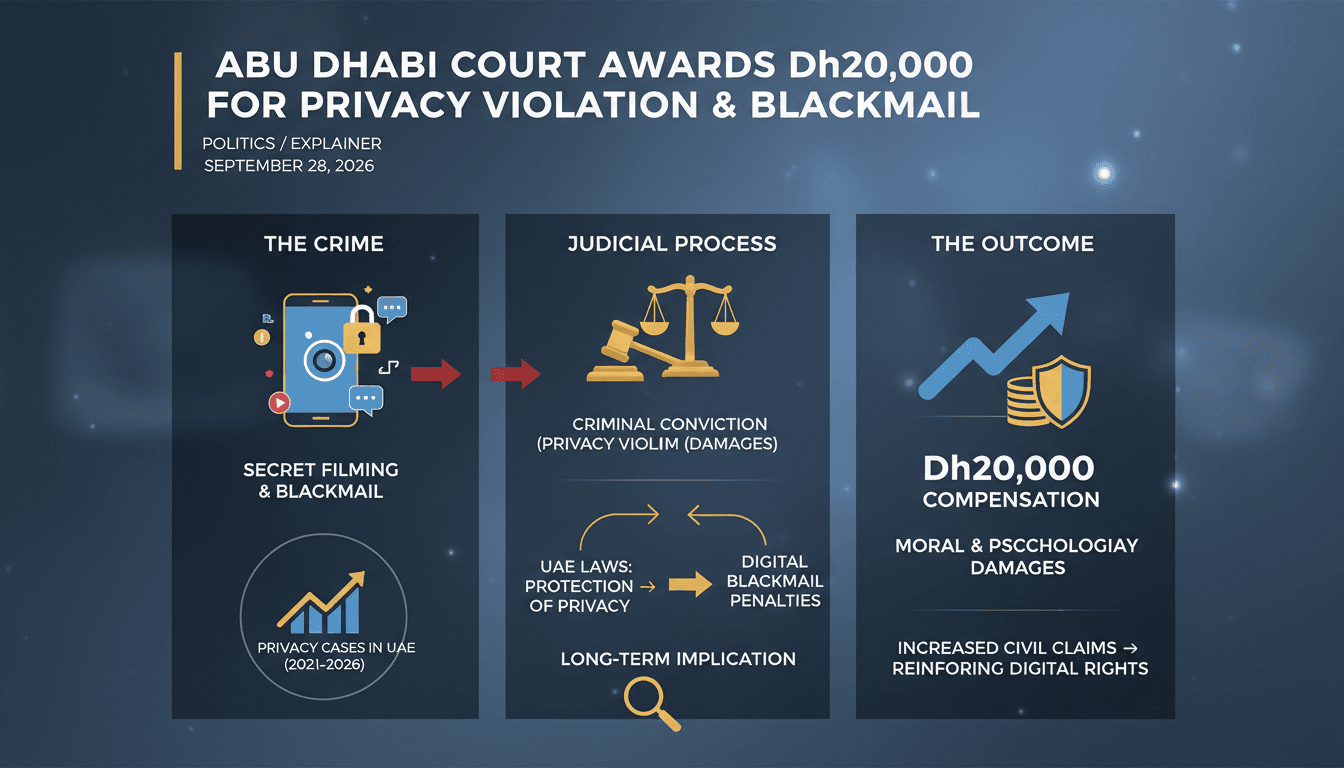
- Court ruling: On September 28, 2026, the Abu Dhabi Family, Civil and Administrative Court ordered two men to pay Dh20,000 for violating a woman's privacy.
- Criminal conviction: The defendants were previously convicted for secretly filming the woman and using the footage to blackmail her.
- Compensation awarded: The court awarded moral damages for psychological harm but rejected claims for material damages due to lack of evidence.
The context you actually need
- Legal framework: UAE laws protect personal privacy and prohibit blackmail, with specific provisions for compensation under the Federal Civil Transactions Law.
- Case background: The defendants filmed the plaintiff without consent and threatened to share the footage, leading to their criminal conviction and subsequent civil lawsuit.
- Judicial precedent: This ruling reinforces the application of civil liability principles in privacy cases, emphasizing the importance of psychological harm in compensation claims.
What's really happening
The ruling from the Abu Dhabi court reflects a growing recognition of the importance of personal privacy in the digital age. As technology evolves, so do the methods of harassment and blackmail, making it crucial for legal systems to adapt. The defendants' actions—secretly filming the plaintiff and using that footage to threaten her—highlight a disturbing trend where individuals exploit technology to invade privacy and exert control over others.
In this case, the court's decision to award Dh20,000 for moral and psychological damages signals a shift towards prioritizing emotional and psychological harm in legal judgments. The rejection of material damages claims due to insufficient evidence illustrates the court's insistence on substantiated claims, reinforcing the need for victims to provide clear evidence of financial loss alongside emotional distress.
This ruling is significant not only for the individuals involved but also for the broader societal implications. It sends a message that privacy violations will not be tolerated and that victims have recourse through the legal system. The emphasis on psychological harm aligns with global trends where courts increasingly recognize the impact of emotional distress in civil cases.
Moreover, the case illustrates the interconnectedness of criminal and civil law in the UAE. The civil court based its ruling on the binding criminal judgment, demonstrating how criminal convictions can influence civil liability. This interconnectedness may encourage more victims to pursue legal action, knowing that a criminal conviction can bolster their civil claims.
As digital interactions become more prevalent, the implications of this ruling extend beyond the courtroom. It may lead to increased awareness about privacy rights among residents, prompting individuals to take proactive measures to protect their personal information. Additionally, businesses operating in the UAE may need to reassess their policies regarding data privacy and employee conduct to mitigate potential legal risks.
Who feels it first (and how)
- Individuals: Victims of privacy violations and blackmail will feel empowered to seek justice.
- Legal professionals: Lawyers specializing in privacy and civil rights may see an uptick in cases.
- Businesses: Companies may need to enhance privacy policies to comply with evolving legal standards.
What to watch next
- Legal reforms: Monitor any proposed changes to privacy laws in the UAE that may arise from this ruling, as they could further strengthen protections.
- Case precedents: Watch for similar cases in the UAE that could establish new legal precedents regarding privacy violations and emotional damages.
- Public awareness: Observe shifts in public awareness about privacy rights, which may lead to increased reporting of violations and legal actions.
The court awarded Dh20,000 for moral damages in this case.
Increased awareness and reporting of privacy violations among residents.
The long-term impact on legal reforms and business practices regarding privacy in the UAE.
Frequently Asked Questions
- Why it matters?
- This case underscores the UAE's commitment to enforcing privacy laws and protecting individuals from digital harassment.
- What happened (in 30 seconds)?
- Court ruling: On September 28, 2026, the Abu Dhabi Family, Civil and Administrative Court ordered two men to pay Dh20,000 for violating a woman's privacy. Criminal conviction: The defendants were previously convicted for secretly filming the woman and using the footage to blackmail her. Compensation awarded: The court awarded moral damages for psychological harm but rejected claims for material damages due to lack of evidence.
- What's really happening?
- The ruling from the Abu Dhabi court reflects a growing recognition of the importance of personal privacy in the digital age. As technology evolves, so do the methods of harassment and blackmail, making it crucial for legal systems to adapt. The defendants' actions—secretly filming the plaintiff and using that footage to threaten her—highlight a disturbing trend where individuals exploit technology to invade privacy and exert control over others. In this case, the court's decision to award Dh20,
- Who feels it first (and how)?
- Individuals: Victims of privacy violations and blackmail will feel empowered to seek justice. Legal professionals: Lawyers specializing in privacy and civil rights may see an uptick in cases. Businesses: Companies may need to enhance privacy policies to comply with evolving legal standards.
- What to watch next?
- Legal reforms: Monitor any proposed changes to privacy laws in the UAE that may arise from this ruling, as they could further strengthen protections. Case precedents: Watch for similar cases in the UAE that could establish new legal precedents regarding privacy violations and emotional damages. Public awareness: Observe shifts in public awareness about privacy rights, which may lead to increased reporting of violations and legal actions.
English-language coverage focused on UAE news, government updates, and domestic affairs.
"Emirates 24|7 reflects a mainstream UAE editorial perspective with strong emphasis on official and domestic developments."
— A47 Editor
Abu Dhabi court awards woman Dh20,000 compensation in blackmail and privacy violation case
The Abu Dhabi Family, Civil and Administrative Court has ordered two young men to pay a woman Dh20,000 in compensation for moral and psychological damages after they were convicted of blackmailing her with private material they filmed without her con...
Arabic-language local coverage focused on UAE domestic issues, civic affairs, and community reporting.
"Emarat Al Youm local coverage emphasizes UAE institutions, public services, and community-level developments."
— A47 Editor
شابان يصوران امرأة سرّاً ويهددان بفضحها أمام أسرتها وطليقها شابان يصوران امرأة سرّاً ويهددان بفضحها أمام أسرتها وطليقها
A court in Abu Dhabi has ordered two young men to jointly pay 20,000 dirhams in compensation to a woman after they secretly filmed her and threatened to expose her to her family and ex-husband. This ruling follows a criminal conviction against the tw...
Arabic-language local coverage focused on UAE domestic issues, civic affairs, and community reporting.
"Emarat Al Youm local coverage emphasizes UAE institutions, public services, and community-level developments."
— A47 Editor
خدعة استيراد سيارة عبر «واتس أب» تكلّف شاباً 54.5 ألف درهم خدعة استيراد سيارة عبر «واتس أب» تكلّف شاباً 54.5 ألف درهم
A court in Abu Dhabi has ordered an individual to repay 54,583 dirhams to a young man after he was defrauded in a car import scam conducted via WhatsApp. The court also awarded a compensation of 10,000 dirhams to the victim.