
US B-1 Bombers Withdraw from RAF Fairford Amid Iran-Linked Threats
Why it matters
This event underscores the fragility of international security dynamics, particularly in relation to Iran's influence and its implications for global military operations.
What happened (in 30 seconds)
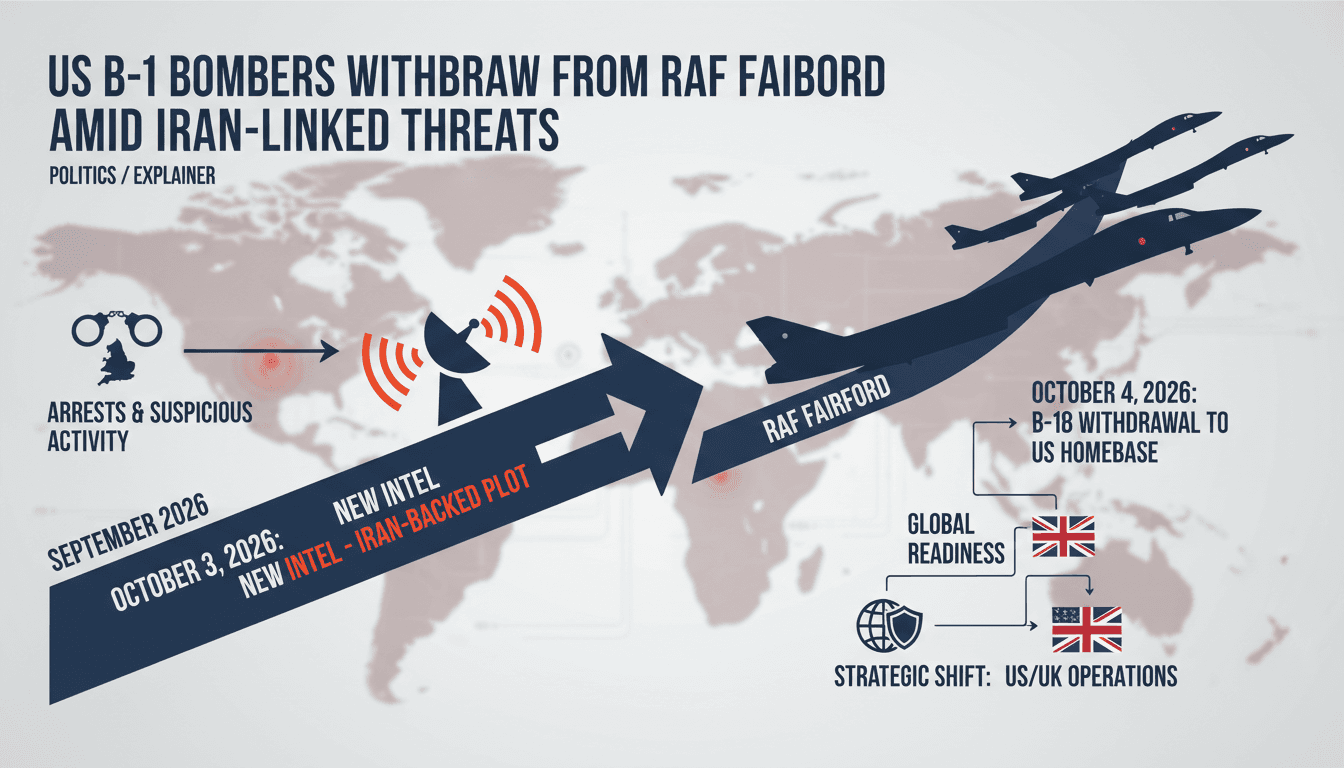
- On October 4, 2026, all 12 US B-1B Lancer bombers left RAF Fairford in a swift, unplanned withdrawal.
- The decision followed new intelligence regarding an Iran-backed plot targeting the airbase, prompting US officials to act with "abundance of caution."
- UK authorities confirmed the base's security but acknowledged ongoing threats, highlighting a tense security environment.
The context you actually need
- Operation Epic Fury: US B-1B and B-52 bombers were deployed to RAF Fairford in March 2026 to conduct operations against Iranian targets, shortening response times.
- Escalating Threats: Iran publicly designated UK bases as legitimate targets in July, and suspicious activities near RAF Fairford led to multiple arrests in late September.
- Intelligence Updates: Just before the withdrawal, US commanders received urgent intelligence about a potential attack, prompting immediate action.
What's really happening
The withdrawal of the B-1B bombers from RAF Fairford is a significant indicator of the evolving security landscape in Europe and the Middle East. The US military's decision to redeploy its assets stems from a combination of intelligence assessments and operational readiness protocols. The recent arrests of individuals near the airbase, coupled with Iran's explicit threats against UK military installations, created a precarious situation that necessitated a rapid response.
The Pentagon's characterization of the withdrawal as a precautionary measure reflects a broader strategy of maintaining operational flexibility in the face of emerging threats. This incident illustrates the delicate balance of power in the region, where Iranian influence continues to challenge Western military presence. The US has been actively engaged in operations against Iranian targets since early 2026, and the shift from offensive operations to a defensive posture indicates a potential recalibration of military strategy.
Moreover, the implications of this withdrawal extend beyond immediate military concerns. The US and UK governments are likely to reassess their counter-terrorism strategies and intelligence-sharing protocols in light of these developments. The ongoing threat from Iran could lead to increased military readiness and a potential escalation of tensions, impacting not only military operations but also international relations and economic stability.
As the situation unfolds, the focus will be on how the US and its allies adapt to these threats. The operational readiness of US forces will be critical, as will the cooperation between US and UK intelligence agencies. The withdrawal may also influence public perception of security in Europe, potentially affecting tourism and investment in the region.
Who feels it first (and how)
- Military Personnel: US and UK military forces stationed in Europe may face increased operational demands and heightened alert levels.
- Defense Contractors: Companies involved in military logistics and support may see shifts in contracts and operational priorities.
- Investors: Those in sectors sensitive to geopolitical stability, such as energy and defense, may experience market volatility.
- Local Communities: Residents near military bases may feel the impact of increased security measures and potential disruptions.
What to watch next
- Intelligence Reports: Keep an eye on updates regarding Iranian activities and any further threats to US and UK military installations.
- Military Deployments: Watch for changes in US military presence in Europe and the Middle East, which could indicate shifts in strategy.
- Market Reactions: Monitor how defense stocks and sectors sensitive to geopolitical tensions respond to ongoing developments.
The B-1B bombers have been redeployed to the US due to security threats.
Increased military readiness and operational adjustments from both US and UK forces in response to Iranian threats.
The long-term impact on US-Iran relations and how this will affect broader geopolitical stability.
Frequently Asked Questions
- Why it matters?
- This event underscores the fragility of international security dynamics, particularly in relation to Iran's influence and its implications for global military operations.
- What happened (in 30 seconds)?
- On October 4, 2026, all 12 US B-1B Lancer bombers left RAF Fairford in a swift, unplanned withdrawal. The decision followed new intelligence regarding an Iran-backed plot targeting the airbase, prompting US officials to act with "abundance of caution." UK authorities confirmed the base's security but acknowledged ongoing threats, highlighting a tense security environment.
- What's really happening?
- The withdrawal of the B-1B bombers from RAF Fairford is a significant indicator of the evolving security landscape in Europe and the Middle East. The US military's decision to redeploy its assets stems from a combination of intelligence assessments and operational readiness protocols. The recent arrests of individuals near the airbase, coupled with Iran's explicit threats against UK military installations, created a precarious situation that necessitated a rapid response. The Pentagon's charact
- Who feels it first (and how)?
- Military Personnel: US and UK military forces stationed in Europe may face increased operational demands and heightened alert levels. Defense Contractors: Companies involved in military logistics and support may see shifts in contracts and operational priorities. Investors: Those in sectors sensitive to geopolitical stability, such as energy and defense, may experience market volatility. Local Communities: Residents near military bases may feel the impact of increased security measures and poten
- What to watch next?
- Intelligence Reports: Keep an eye on updates regarding Iranian activities and any further threats to US and UK military installations. Military Deployments: Watch for changes in US military presence in Europe and the Middle East, which could indicate shifts in strategy. Market Reactions: Monitor how defense stocks and sectors sensitive to geopolitical tensions respond to ongoing developments.
United Kingdom-focused news including local politics, business, and social issues.
"BBC News is widely regarded as a reputable international news organization, known for its impartial tone and public service mandate."
— A47 Editor
What prompted the US bombers to leave RAF Fairford?
The U.S. Air Force has withdrawn all B-1 bombers from RAF Fairford in the UK, a decision prompted by heightened security concerns following the arrest of five individuals suspected of planning a terrorist act near the base. This mass evacuation refle...
English-language news from Qatar covering domestic and regional affairs.
"Gulf Times reflects Qatari perspectives on regional developments."
— A47 Editor
US withdraws all bomber planes from UK airbase: Pentagon
The Pentagon has confirmed the withdrawal of all B-1 bomber planes from the Royal Air Force Fairford in the UK, a decision prompted by heightened security concerns following the arrest of five individuals suspected of planning a terrorist act near th...
English-language reporting on Saudi politics, policy, and society.
"Saudi Gazette reflects mainstream Saudi institutional perspectives."
— A47 Editor
Pentagon removes all B-1 bombers from RAF Fairford base in UK
The Pentagon has confirmed the withdrawal of all B-1 bombers from the Royal Air Force base at Fairford, UK, following a series of arrests linked to a suspected terrorist plot. This decision comes in the wake of heightened security concerns after five...