
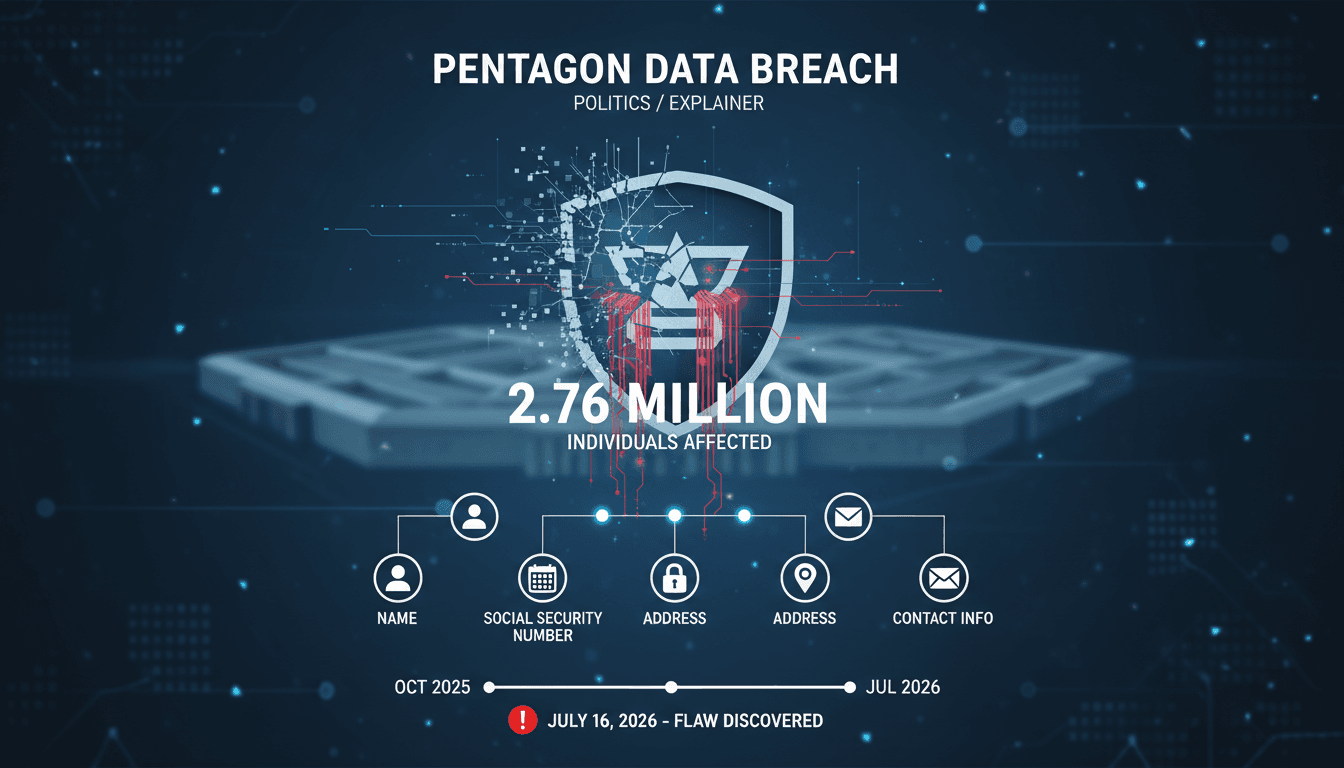
Pentagon data breach exposes personal information of 2.76 million individuals
Why it matters
The breach highlights vulnerabilities in federal data security systems, raising concerns about the protection of sensitive personal information.
What happened (in 30 seconds)
- Unauthorized access: Between October 2025 and July 16, 2026, a small number of unauthorized users exploited a vulnerability in a DMDC file-sharing system.
- Data exposed: The breach compromised unencrypted personally identifiable information (PII) of 2.76 million living individuals and 294,000 deceased individuals.
- Immediate response: The vulnerability was patched on July 16, 2026, and notifications were sent to affected individuals on September 18, 2026.
The context you actually need
- DMDC's role: The Defense Manpower Data Center (DMDC) is the central repository for over 60 million personnel records related to the U.S. military and Department of Defense.
- Recent trends: This breach is part of a broader pattern of data security incidents involving federal employee and contractor data reported in 2025–2026.
- No misuse detected: As of now, the Department of Defense has reported no indications of data misuse following the breach.
What's really happening
The Pentagon's Defense Manpower Data Center (DMDC) experienced a significant data breach that exposed the personally identifiable information (PII) of 2.76 million living individuals. This incident occurred due to a vulnerability in a file-sharing system that remained unaddressed for nearly nine months, from October 2025 until its discovery on July 16, 2026. The breach allowed unauthorized users to access unencrypted files containing sensitive data, including Social Security numbers, names, dates of birth, and military occupational specialties.
The DMDC is responsible for maintaining comprehensive records for military personnel, civilians, contractors, retirees, veterans, and their families. Given the sensitive nature of this data, the breach raises serious concerns about the security protocols in place to protect such information. The immediate response from the DMDC involved patching the vulnerability and notifying affected individuals, but the long-term implications of this breach are still unfolding.
The breach has sparked discussions about counterintelligence risks, particularly due to the combination of Social Security numbers and military occupational specialty data. Such information could potentially be exploited for identity theft or other malicious activities. While the Department of Defense has confirmed that no misuse of the data has been detected to date, the mere exposure of such sensitive information poses a risk to the individuals involved.
Moreover, the incident has prompted a reevaluation of cybersecurity measures within federal agencies. The DMDC's swift action to remediate the vulnerability and offer credit monitoring services to affected individuals indicates an awareness of the potential fallout from such breaches. However, the lack of attribution to specific threat actors raises questions about the effectiveness of current cybersecurity strategies and the need for enhanced protective measures.
As the digital landscape continues to evolve, the importance of robust cybersecurity protocols becomes increasingly critical. This breach serves as a reminder that even the most secure systems can be vulnerable, and the implications of such vulnerabilities can extend far beyond the immediate incident.
Who feels it first (and how)
- Military personnel: Active and retired service members whose data was exposed may face increased risks of identity theft.
- Federal contractors: Individuals working with the Department of Defense could experience heightened scrutiny and potential impacts on their employment.
- Families of service members: Dependents of military personnel may also be affected, as their information is included in the compromised data.
What to watch next
- Increased cybersecurity measures: Watch for potential enhancements in federal cybersecurity protocols as agencies respond to this breach.
- Identity theft trends: Monitor reports of identity theft cases linked to this breach, which could emerge as affected individuals react to the exposure of their data.
- Legislative responses: Keep an eye on any new legislation aimed at strengthening data protection laws in response to this incident.
The breach exposed PII of 2.76 million living individuals and 294,000 deceased individuals.
Federal agencies will implement stricter cybersecurity measures to prevent future breaches.
The long-term impact on affected individuals and whether any misuse of the data will eventually be detected.
Frequently Asked Questions
- Why it matters?
- The breach highlights vulnerabilities in federal data security systems, raising concerns about the protection of sensitive personal information.
- What happened (in 30 seconds)?
- Unauthorized access: Between October 2025 and July 16, 2026, a small number of unauthorized users exploited a vulnerability in a DMDC file-sharing system. Data exposed: The breach compromised unencrypted personally identifiable information (PII) of 2.76 million living individuals and 294,000 deceased individuals. Immediate response: The vulnerability was patched on July 16, 2026, and notifications were sent to affected individuals on September 18, 2026.
- What's really happening?
- The Pentagon's Defense Manpower Data Center (DMDC) experienced a significant data breach that exposed the personally identifiable information (PII) of 2.76 million living individuals. This incident occurred due to a vulnerability in a file-sharing system that remained unaddressed for nearly nine months, from October 2025 until its discovery on July 16, 2026. The breach allowed unauthorized users to access unencrypted files containing sensitive data, including Social Security numbers, names, date
- Who feels it first (and how)?
- Military personnel: Active and retired service members whose data was exposed may face increased risks of identity theft. Federal contractors: Individuals working with the Department of Defense could experience heightened scrutiny and potential impacts on their employment. Families of service members: Dependents of military personnel may also be affected, as their information is included in the compromised data.
- What to watch next?
- Increased cybersecurity measures: Watch for potential enhancements in federal cybersecurity protocols as agencies respond to this breach. Identity theft trends: Monitor reports of identity theft cases linked to this breach, which could emerge as affected individuals react to the exposure of their data. Legislative responses: Keep an eye on any new legislation aimed at strengthening data protection laws in response to this incident.
Consumer tech news, reviews, and buying guides for gadgets and electronics.
"TechRadar is known for comprehensive buying advice, hardware reviews, and consumer tech news targeted at mainstream audiences."
— A47 Editor
Massive Pentagon hack sees records of 2.7 million US military personnel leaked during months-long data breach — names, military service records and Social Security numbers all revealed
A significant data breach at the Pentagon has resulted in the exposure of sensitive records belonging to 2.7 million US military personnel, including names, military service records, and Social Security numbers. This breach was facilitated by a bug i...
Tech news, hardware, and AI tools coverage.
"PC/tech site increasingly covering AI hardware and apps."
— A47 Editor
A hack of Pentagon personnel data went undetected for nine months, exposing 3 million people
A significant data breach at the Pentagon has revealed that personnel data was compromised for nine months, affecting approximately 3 million individuals. The breach involved the Defense Manpower Data Center (DMDC), which oversees personnel records f...
Conservative-leaning coverage of current events.
"Fox News is a highly influential conservative news outlet known for right-leaning political commentary and coverage."
— A47 Editor
Pentagon data breach exposes Social Security numbers, personal info of 2.76M US military, civilian personnel
A significant data breach at the Pentagon has resulted in the exposure of personal information, including Social Security numbers, of approximately 2.76 million U.S. military and civilian personnel, both living and deceased. This incident raises seri...
Startup news with frequent AI coverage.
"Covers launches, funding, and product updates in AI."
— A47 Editor
Hackers stole millions of US military personnel records during months-long data breach
The Department of Defense has informed millions of current and former U.S. military personnel that their personal information was compromised during a prolonged data breach. This incident highlights significant vulnerabilities in the security of sens...
RT is a Russian state-funded network covering global events from a Russian perspective.
"RT is widely criticized for promoting pro-Kremlin narratives and is considered by many to be a state propaganda outlet."
— A47 Editor
Pentagon breach exposed data on over 3 million people – media
A significant breach of a Pentagon personnel system has reportedly exposed sensitive data, including Social Security numbers and military job details, affecting over 3 million individuals. This incident raises serious concerns about data security wit...
English-language digital publication covering business, politics, technology, and current affairs.
"The Arabian Post mixes original and syndicated-style coverage with a broad regional and global business-news orientation."
— A47 Editor
Pentagon confirms breach affecting more than three million
The Pentagon has confirmed a significant breach of the Defense Manpower Data Center information system, exposing sensitive personal information of over three million individuals, including 2.76 million living people and approximately 294,000 deceased...