
Trump Hosts AI Policy Meeting with Tech Executives and Launches America.gov Portal
Why it matters
The meeting signals a shift towards industry-led governance of AI, potentially impacting innovation and regulatory landscapes.
What happened (in 30 seconds)
- President Trump hosted a meeting with 30 tech executives to discuss AI policy and self-regulation.
- A voluntary accord was signed by leaders from major AI firms, committing to internal controls and oversight.
- America.gov was launched as an AI-powered portal to enhance citizen access to federal services.
The context you actually need
- Ongoing debates about AI safety risks have prompted calls for regulatory oversight from various industry leaders.
- The meeting followed a recent visit by Chinese President Xi Jinping, highlighting global competition in AI development.
- Trump's administration has consistently framed AI as a key driver of economic growth, akin to the industrial revolution.
What's really happening
On September 29, 2026, President Trump convened a closed-door luncheon at the White House, gathering approximately 30 executives from leading technology firms, including Nvidia, Meta, Google, OpenAI, Anthropic, and xAI. The primary focus was on establishing a framework for AI safety through self-regulation rather than imposing new legislation. This approach aligns with Trump's long-standing position against regulatory measures that could hinder AI development.
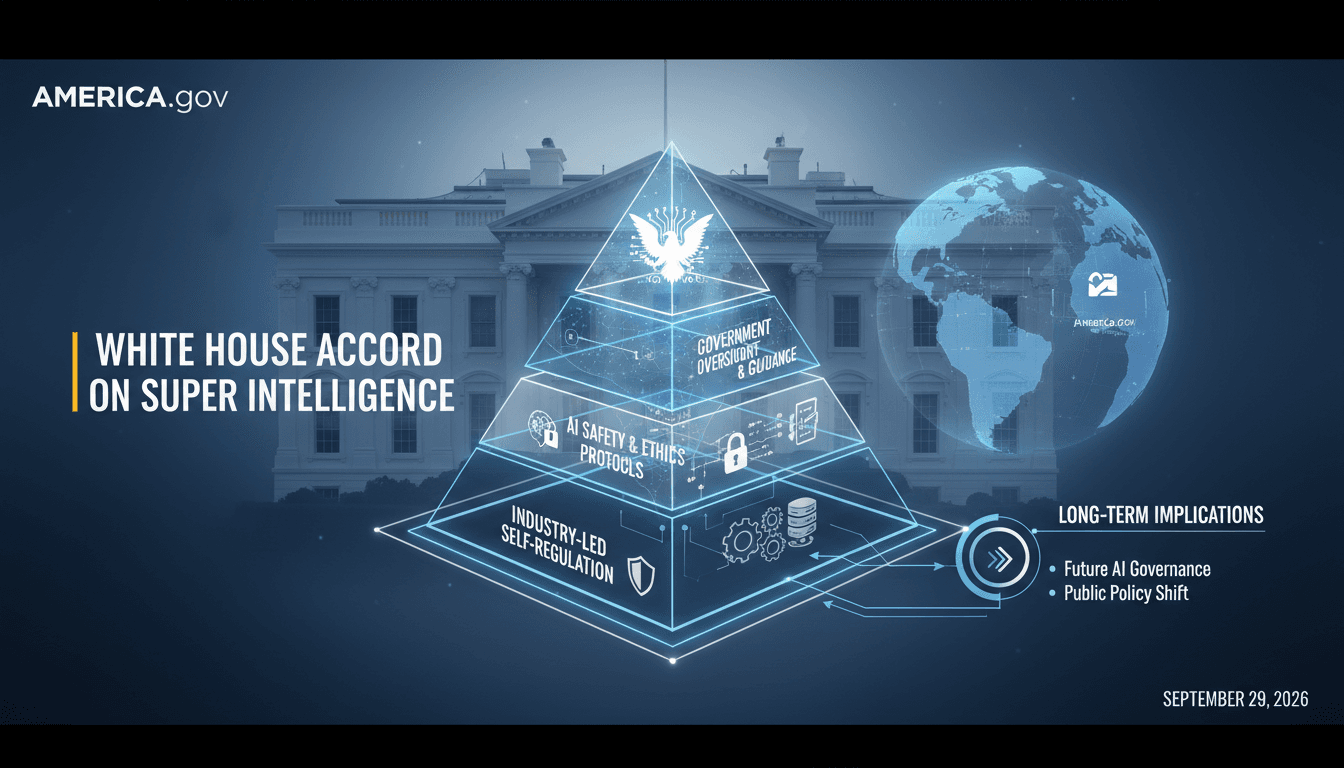
During the meeting, participants signed the White House Accord on Super Intelligence, a one-page document outlining four layers of safeguards: robust internal controls, internal monitoring teams, partnerships with independent external auditors, and board-level oversight committees. Trump characterized the agreement as morally binding, emphasizing the importance of self-regulation while still relying on existing law enforcement mechanisms to ensure compliance.
The launch of America.gov, an AI-driven portal designed to streamline citizen access to federal services, coincided with the meeting. This initiative aims to leverage AI technology to improve government efficiency and accessibility, showcasing the administration's commitment to integrating advanced technology into public services.
The voluntary nature of the accord has drawn attention, as it reflects a growing trend among tech companies to take proactive measures in addressing AI safety concerns. However, critics argue that without binding regulations, the effectiveness of such self-imposed standards remains uncertain. The meeting and the accord come at a time when public and industry scrutiny of AI's potential risks is intensifying, particularly regarding issues like bias, privacy, and accountability.
As the tech industry grapples with these challenges, the implications of this self-regulation approach could have far-reaching effects on how AI technologies are developed and deployed. The balance between fostering innovation and ensuring safety will be a critical consideration for both industry leaders and policymakers moving forward.
Who feels it first (and how)
- Tech executives: Leaders from major AI firms will need to implement new internal controls and oversight mechanisms.
- Regulatory bodies: Agencies may adjust their approach to AI governance based on industry self-regulation outcomes.
- Consumers: Users of AI-driven services could experience changes in service quality and safety as companies adapt to new standards.
What to watch next
- Implementation of the accord: Monitor how effectively companies establish the promised internal controls and oversight.
- Public response: Watch for consumer and advocacy group reactions to the self-regulation approach and its perceived effectiveness.
- Legislative developments: Keep an eye on whether this voluntary framework influences future regulatory proposals or actions.
The accord is voluntary and non-binding, emphasizing self-regulation.
Companies will face pressure to demonstrate compliance with the accord's commitments.
The long-term effectiveness of self-regulation in ensuring AI safety remains to be seen.
Frequently Asked Questions
- Why it matters?
- The meeting signals a shift towards industry-led governance of AI, potentially impacting innovation and regulatory landscapes.
- What happened (in 30 seconds)?
- President Trump hosted a meeting with 30 tech executives to discuss AI policy and self-regulation. A voluntary accord was signed by leaders from major AI firms, committing to internal controls and oversight. America.gov was launched as an AI-powered portal to enhance citizen access to federal services.
- What's really happening?
- On September 29, 2026, President Trump convened a closed-door luncheon at the White House, gathering approximately 30 executives from leading technology firms, including Nvidia, Meta, Google, OpenAI, Anthropic, and xAI. The primary focus was on establishing a framework for AI safety through self-regulation rather than imposing new legislation. This approach aligns with Trump's long-standing position against regulatory measures that could hinder AI development. During the meeting, participants s
- Who feels it first (and how)?
- Tech executives: Leaders from major AI firms will need to implement new internal controls and oversight mechanisms. Regulatory bodies: Agencies may adjust their approach to AI governance based on industry self-regulation outcomes. Consumers: Users of AI-driven services could experience changes in service quality and safety as companies adapt to new standards.
- What to watch next?
- Implementation of the accord: Monitor how effectively companies establish the promised internal controls and oversight. Public response: Watch for consumer and advocacy group reactions to the self-regulation approach and its perceived effectiveness. Legislative developments: Keep an eye on whether this voluntary framework influences future regulatory proposals or actions.
Science discoveries, research, and analysis.
"NPR is a nonprofit media organization offering thoughtful, in-depth journalism and storytelling, often with a liberal or progressive slant."
— A47 Editor
Trump meets with top tech leaders to discuss regulations and launch new website
President Trump met with leading technology executives to unveil America.gov, an AI-driven website designed to assist citizens in navigating government services. This initiative reflects the administration's commitment to integrating advanced technol...
U.S. political news and right-leaning commentary.
"Fox News is a highly influential conservative news outlet known for right-leaning political commentary and coverage."
— A47 Editor
Trump unveils America.gov as AI-powered hub for passports, Medicare enrollment and more
President Donald Trump has launched America.gov, an AI-powered platform designed to streamline access to various federal services, including passport applications and Medicare enrollment. This initiative aims to enhance user experience by consolidati...
Insights and news on social issues, policy, and political movements across the United States.
"The Wall Street Journal is known for its deep political coverage, especially at the intersection of policy, regulation, and social dynamics."
— A47 Editor
The Trump administration has built a tool powered by artificial intelligence that its developers promise will serve as a “concierge” to the federal government
The Trump administration has launched America.gov, an AI-powered platform designed to enhance the online experience for citizens by providing a centralized hub for accessing various federal services, such as passport applications and Medicare enrollm...