
Netanyahu Ignored Warnings from UAE and Egypt Before October 7 Attack
Why it matters
This incident highlights vulnerabilities in regional security cooperation, which could affect international investments and stability in the Middle East.
What happened (in 30 seconds)
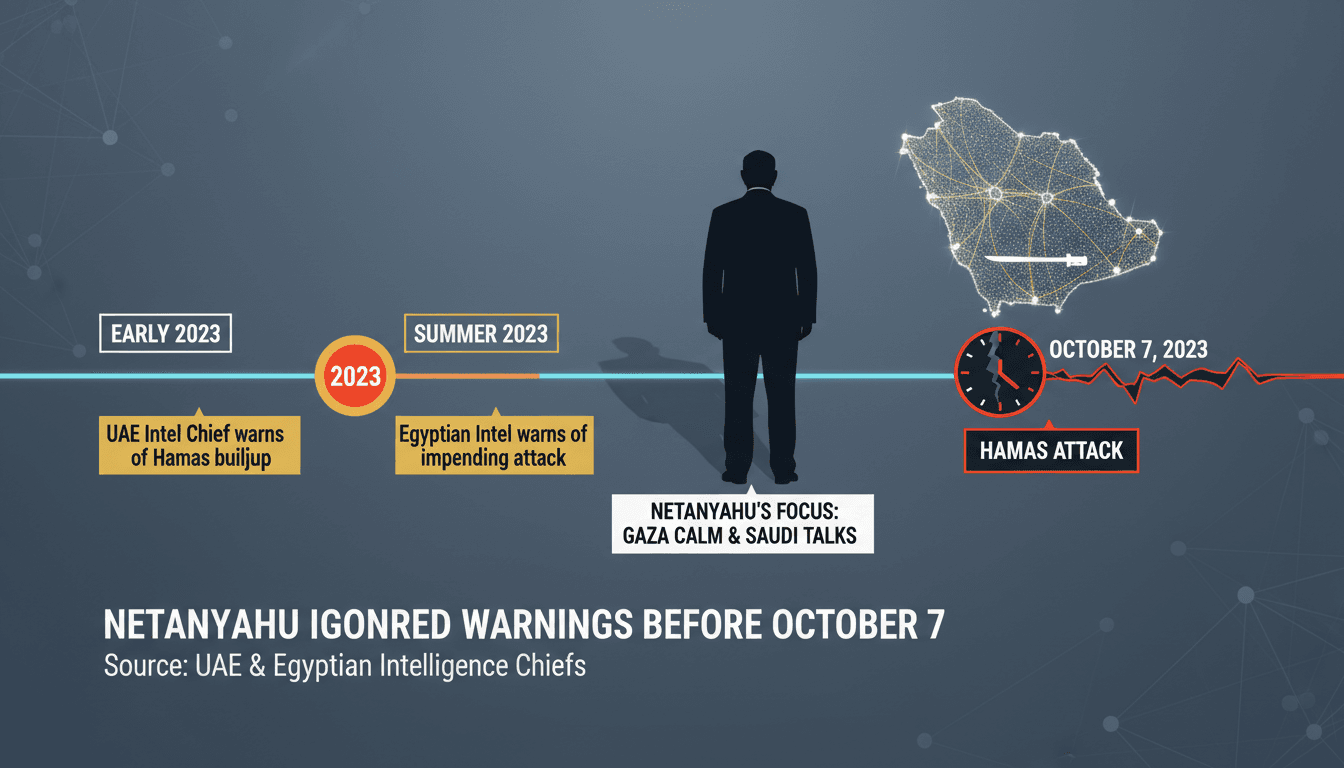
- Netanyahu reportedly ignored warnings from UAE and Egyptian intelligence chiefs about a major Hamas operation before the October 7 attack.
- The attack resulted in approximately 1,200 deaths and over 250 hostages, escalating tensions in the region.
- Ongoing political controversy in Israel has led to calls for investigations and scrutiny of Netanyahu's leadership.
The context you actually need
- Israel was pursuing normalization agreements with Gulf states while maintaining a containment policy toward Hamas, prioritizing threats from Iran and Hezbollah.
- UAE and Egyptian intelligence maintained regular communication with Israeli counterparts, indicating a level of cooperation that was undermined by Netanyahu's inaction.
- The October 7 attack occurred just six days after Netanyahu's security meeting, where he emphasized maintaining calm in Gaza to facilitate Saudi-Israeli normalization talks.
What's really happening
In the lead-up to the October 7, 2023, attack, Israeli Prime Minister Benjamin Netanyahu faced significant intelligence warnings from both UAE President Sheikh Mohammed bin Zayed and Egyptian intelligence chief Abbas Kamel. Reports indicate that a critical 45-minute call took place on September 26, where the UAE leader explicitly warned Netanyahu about a major operation planned by Hamas leader Yahya Sinwar. Despite these warnings, Netanyahu did not relay this information to Israel's security establishment, prioritizing ongoing diplomatic efforts with Saudi Arabia and a policy of de-escalation in Gaza.
This oversight raises questions about the effectiveness of Israel's intelligence apparatus and the decision-making processes at the highest levels of government. The failure to act on credible intelligence not only led to a devastating attack but also exposed the fragility of Israel's security strategy, which had been focused on containing threats from Iran and Hezbollah while engaging in normalization talks with Gulf states.
The implications of this incident extend beyond immediate security concerns. The political fallout in Israel has been significant, with calls for investigations into Netanyahu's leadership and accountability for the intelligence failures. Former officials, including Naftali Bennett, have corroborated aspects of the reports, fueling domestic criticism and political debate ahead of upcoming elections.
Internationally, the incident has implications for the broader geopolitical landscape in the Middle East. The UAE and Egypt, both key players in regional stability, may reassess their intelligence-sharing practices with Israel, potentially leading to a decrease in cooperation. This could have ripple effects on security dynamics, impacting not only Israel but also neighboring countries and international stakeholders invested in the region.
Moreover, the economic ties between Israel and the UAE, particularly through Dubai, could face scrutiny as the political climate shifts. While there have been no immediate disruptions reported in Dubai's expatriate communities or markets, the long-term effects of this intelligence oversight could influence investor confidence and diplomatic relations.
Who feels it first (and how)
- Israeli security officials: Increased scrutiny and pressure for accountability in intelligence operations.
- Expatriates in Dubai: Potential shifts in economic stability and security perceptions affecting daily life.
- Investors in the Middle East: Heightened risk assessments could lead to cautious investment strategies in the region.
What to watch next
- Political developments in Israel: Watch for potential inquiries and shifts in leadership as the fallout continues.
- Changes in UAE-Egypt-Israel relations: Monitor any adjustments in intelligence-sharing practices and diplomatic engagements.
- Market reactions in Dubai: Keep an eye on economic indicators and investor sentiment in response to regional tensions.
Netanyahu received warnings from UAE and Egyptian intelligence.
Increased political pressure on Netanyahu and potential shifts in Israeli leadership.
The long-term impact on UAE-Israel economic relations and security cooperation.
Frequently Asked Questions
- Why it matters?
- This incident highlights vulnerabilities in regional security cooperation, which could affect international investments and stability in the Middle East.
- What happened (in 30 seconds)?
- Netanyahu reportedly ignored warnings from UAE and Egyptian intelligence chiefs about a major Hamas operation before the October 7 attack. The attack resulted in approximately 1,200 deaths and over 250 hostages, escalating tensions in the region. Ongoing political controversy in Israel has led to calls for investigations and scrutiny of Netanyahu's leadership.
- What's really happening?
- In the lead-up to the October 7, 2023, attack, Israeli Prime Minister Benjamin Netanyahu faced significant intelligence warnings from both UAE President Sheikh Mohammed bin Zayed and Egyptian intelligence chief Abbas Kamel. Reports indicate that a critical 45-minute call took place on September 26, where the UAE leader explicitly warned Netanyahu about a major operation planned by Hamas leader Yahya Sinwar. Despite these warnings, Netanyahu did not relay this information to Israel's security est
- Who feels it first (and how)?
- Israeli security officials: Increased scrutiny and pressure for accountability in intelligence operations. Expatriates in Dubai: Potential shifts in economic stability and security perceptions affecting daily life. Investors in the Middle East: Heightened risk assessments could lead to cautious investment strategies in the region.
- What to watch next?
- Political developments in Israel: Watch for potential inquiries and shifts in leadership as the fallout continues. Changes in UAE-Egypt-Israel relations: Monitor any adjustments in intelligence-sharing practices and diplomatic engagements. Market reactions in Dubai: Keep an eye on economic indicators and investor sentiment in response to regional tensions.
Arabic-language coverage of international news and geopolitics.
"RT Arabic is a Russian state-funded outlet often criticized for promoting Kremlin-aligned narratives."
— A47 Editor
لماذا تجاهل نتنياهو تحذيرات الإمارات ومصر قبل 7 أكتوبر؟
Israeli Prime Minister Benjamin Netanyahu reportedly ignored warnings from the United Arab Emirates and Egypt prior to October 7, raising questions about his decision-making and diplomatic relations in the region. The warnings from these nations were...
Arabic-language coverage of international news and geopolitics.
"RT Arabic is a Russian state-funded outlet often criticized for promoting Kremlin-aligned narratives."
— A47 Editor
ليست الإمارات وحدها.. تقارير عبرية تكشف مفاجأة بشأن لقاء نتنياهو وبن زايد
Recent Israeli reports have revealed new details about the meeting between Israeli Prime Minister Benjamin Netanyahu and UAE President Mohammed bin Zayed in Abu Dhabi, indicating the presence of representatives from other Arab countries.
Arabic-language coverage of international news and geopolitics.
"RT Arabic is a Russian state-funded outlet often criticized for promoting Kremlin-aligned narratives."
— A47 Editor
أفيغدور ليبرمان: في تقديري.. بن زايد قال لنتنياهو "لن أكذب من أجلك"
علق رئيس حزب "إسرائيل بيتنا" أفيغدور ليبرمان على الزيارة "السرية" التي قام بها رئيس الوزراء الإسرائيلي بنيامين نتنياهو مؤخرا إلى الإمارات ولقائه برئيسها الشيخ محمد بن زايد.
Arabic-language reporting on global and regional news.
"BBC Arabic is part of the BBC, generally regarded for editorial standards and broad international coverage."
— A47 Editor
لماذا ذهب نتنياهو سراً إلى الإمارات الآن؟ وماذا طلب من بن زايد؟
Israeli Prime Minister Benjamin Netanyahu made a secret visit to the United Arab Emirates to meet with President Mohammed bin Zayed, focusing on three key issues. The timing of this visit raises questions about its implications for regional relations...
Arabic-language coverage of international news and geopolitics.
"RT Arabic is a Russian state-funded outlet often criticized for promoting Kremlin-aligned narratives."
— A47 Editor
"وام": الشيخ محمد بن زايد استقبل نتنياهو وبحث معه تطوير العلاقات بين الإمارات وإسرائيل
Sheikh Mohammed bin Zayed Al Nahyan, the President of the UAE, received Israeli Prime Minister Benjamin Netanyahu during his visit to the country on Sunday. The meeting focused on the development of relations between the UAE and Israel, highlighting ...