
Spain's Government Enacts Eviction Ban Until 2030 Amid Housing Crisis Protests
Why it matters
This policy reflects a growing trend of governments intervening in housing markets to address affordability crises, impacting global real estate dynamics.
What happened (in 30 seconds)
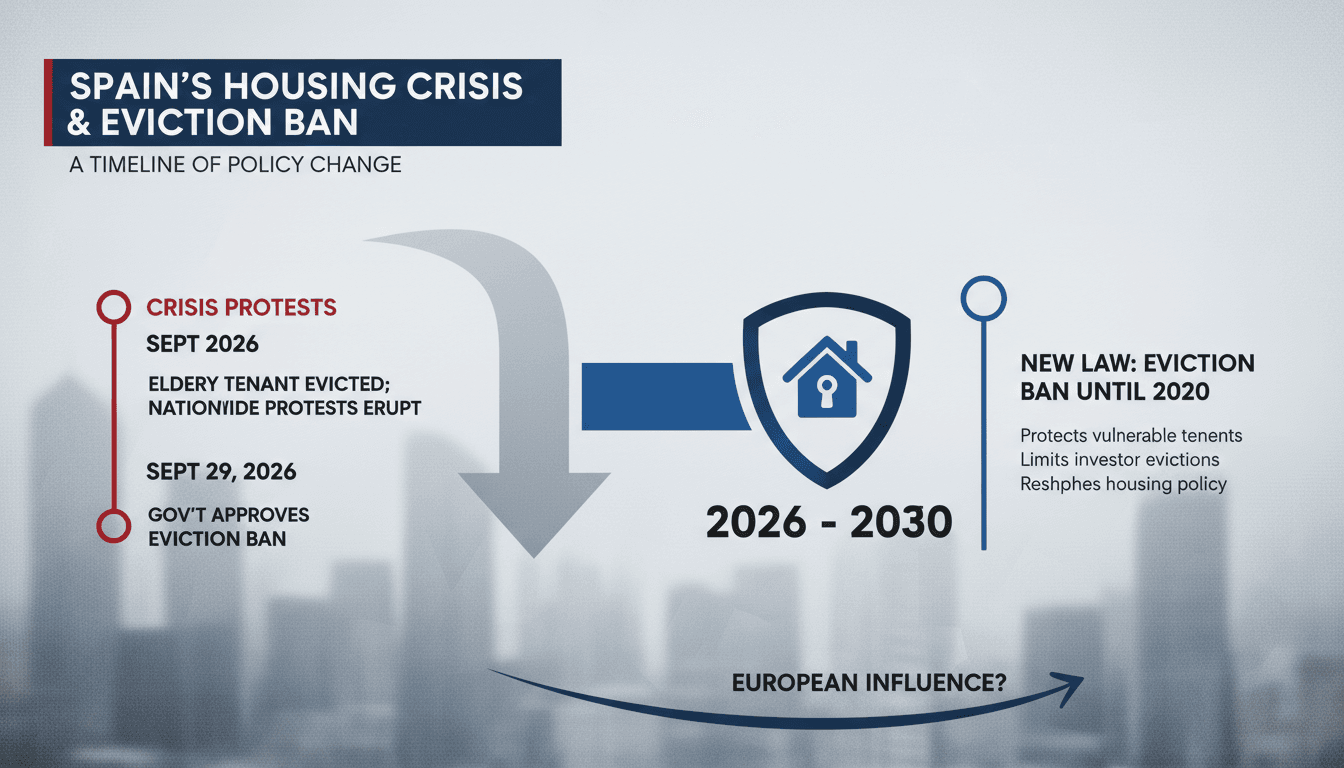
- On September 29, 2026, Spain's coalition government approved a temporary eviction ban until 2030 in response to widespread protests.
- The protests were sparked by the eviction of 87-year-old Maricarmen Abascal, highlighting vulnerabilities in tenant protections.
- The new measures include contract rollovers, regulation of short-term rentals, and restrictions on investment firm property purchases, pending parliamentary approval.
The context you actually need
- Spain is facing a housing crisis with an estimated shortage of 700,000 homes, exacerbated by rising rents and property prices.
- Evictions have surged as investment firms dominate the market, often prioritizing profit over tenant stability.
- Public sentiment is shifting, with increasing pressure on governments to implement tenant protections amid growing social unrest.
What's really happening
The recent approval of the eviction ban by Spain's coalition government is a direct response to a housing crisis that has left millions struggling with skyrocketing rents and insufficient housing supply. The eviction of Maricarmen Abascal, a long-time resident of her Madrid apartment, became a rallying point for widespread protests across major cities. This incident underscored the vulnerabilities faced by tenants, particularly as investment firms have increasingly acquired residential properties, often leading to significant rent hikes.
The government's measures aim to address these systemic issues by imposing a moratorium on evictions until 2030, which is designed to provide immediate relief to tenants. Additionally, the decrees include provisions for contract rollovers until 2028 and regulations on short-term rentals, which have been criticized for exacerbating the housing shortage. The restrictions on investment firms purchasing properties are particularly noteworthy, as they signal a shift in policy that prioritizes tenant rights over corporate interests.
However, these measures are not without controversy. Opposition parties have raised concerns about the potential negative impacts on small landlords, who may struggle to maintain their properties without the ability to evict non-paying tenants. The government's minority status in parliament adds another layer of complexity, as the decrees require congressional ratification within 30 days. This political landscape could lead to further negotiations and potential amendments to the proposed measures.
The broader implications of this policy extend beyond Spain's borders. As countries worldwide grapple with housing affordability, Spain's approach may inspire similar interventions in other markets. Investors and real estate professionals should closely monitor these developments, as they could signal a trend toward increased regulation in housing markets globally.
Who feels it first (and how)
- Tenants: Immediate relief from the threat of eviction, but uncertainty remains regarding long-term housing stability.
- Small Landlords: Potential financial strain due to restrictions on evictions and rental income.
- Investment Firms: Increased scrutiny and regulatory challenges may affect their business models and profitability.
- Local Governments: Pressure to implement and enforce new regulations while managing public sentiment.
What to watch next
- Parliamentary Approval: The outcome of the congressional vote on the eviction ban will determine the longevity and effectiveness of these measures.
- Public Response: Continued protests or support from tenant unions could influence future housing policies and reforms.
- Market Reactions: Changes in rental prices and housing availability in response to the new regulations will provide insights into the policy's impact.
The eviction ban is approved by the cabinet and requires parliamentary approval.
Increased public pressure will lead to further housing reforms in Spain and potentially other countries.
The long-term effects on the housing market and investment strategies remain to be seen.
Frequently Asked Questions
- Why it matters?
- This policy reflects a growing trend of governments intervening in housing markets to address affordability crises, impacting global real estate dynamics.
- What happened (in 30 seconds)?
- On September 29, 2026, Spain's coalition government approved a temporary eviction ban until 2030 in response to widespread protests. The protests were sparked by the eviction of 87-year-old Maricarmen Abascal, highlighting vulnerabilities in tenant protections. The new measures include contract rollovers, regulation of short-term rentals, and restrictions on investment firm property purchases, pending parliamentary approval.
- What's really happening?
- The recent approval of the eviction ban by Spain's coalition government is a direct response to a housing crisis that has left millions struggling with skyrocketing rents and insufficient housing supply. The eviction of Maricarmen Abascal, a long-time resident of her Madrid apartment, became a rallying point for widespread protests across major cities. This incident underscored the vulnerabilities faced by tenants, particularly as investment firms have increasingly acquired residential propertie
- Who feels it first (and how)?
- Tenants: Immediate relief from the threat of eviction, but uncertainty remains regarding long-term housing stability. Small Landlords: Potential financial strain due to restrictions on evictions and rental income. Investment Firms: Increased scrutiny and regulatory challenges may affect their business models and profitability. Local Governments: Pressure to implement and enforce new regulations while managing public sentiment.
- What to watch next?
- Parliamentary Approval: The outcome of the congressional vote on the eviction ban will determine the longevity and effectiveness of these measures. Public Response: Continued protests or support from tenant unions could influence future housing policies and reforms. Market Reactions: Changes in rental prices and housing availability in response to the new regulations will provide insights into the policy's impact.
International coverage of politics, culture, and current affairs.
"BBC News is widely regarded as a reputable international news organization, known for its impartial tone and public service mandate."
— A47 Editor
Spain announces ban on evictions after protests over 87-year-old woman's removal from flat
Spain has announced a ban on evictions following widespread protests triggered by the eviction of 87-year-old Maricarmen Abascal from her home of over 70 years in Madrid. The ban is part of a series of proposals that must be approved by parliament wi...
International coverage from The Guardian's global desks.
"The Guardian is known for its progressive editorial stance and in-depth analysis."
— A47 Editor
Spain announces plan to ease housing crisis amid outcry over eviction of 87-year-old
Spain's government has announced a plan to ease the housing crisis, which includes extending the ban on evictions of vulnerable tenants until 2030, following public outrage over the eviction of 87-year-old Maricarmen Abascal from her home in Madrid. ...
Global coverage of politics, crises, and international affairs.
"HuffPost provides progressive-oriented reporting on international developments, often focusing on humanitarian and social justice issues."
— A47 Editor
87-Year-Old Woman’s Eviction From Home Of 70 Years Sparks Protests In Spain
An 87-year-old woman named Maricarmen Abascal was forcibly evicted from her home in Madrid, where she had lived for over 70 years, igniting widespread protests across Spain. The eviction, enforced by police, occurred despite significant public outcry...