
Algeria Enacts Death Penalty for Arsonists Following Deadly Wildfires
Why it matters
This amendment reflects a growing trend in governance where environmental crimes are met with severe penalties, impacting both local and international perceptions of safety and investment.
What happened (in 30 seconds)
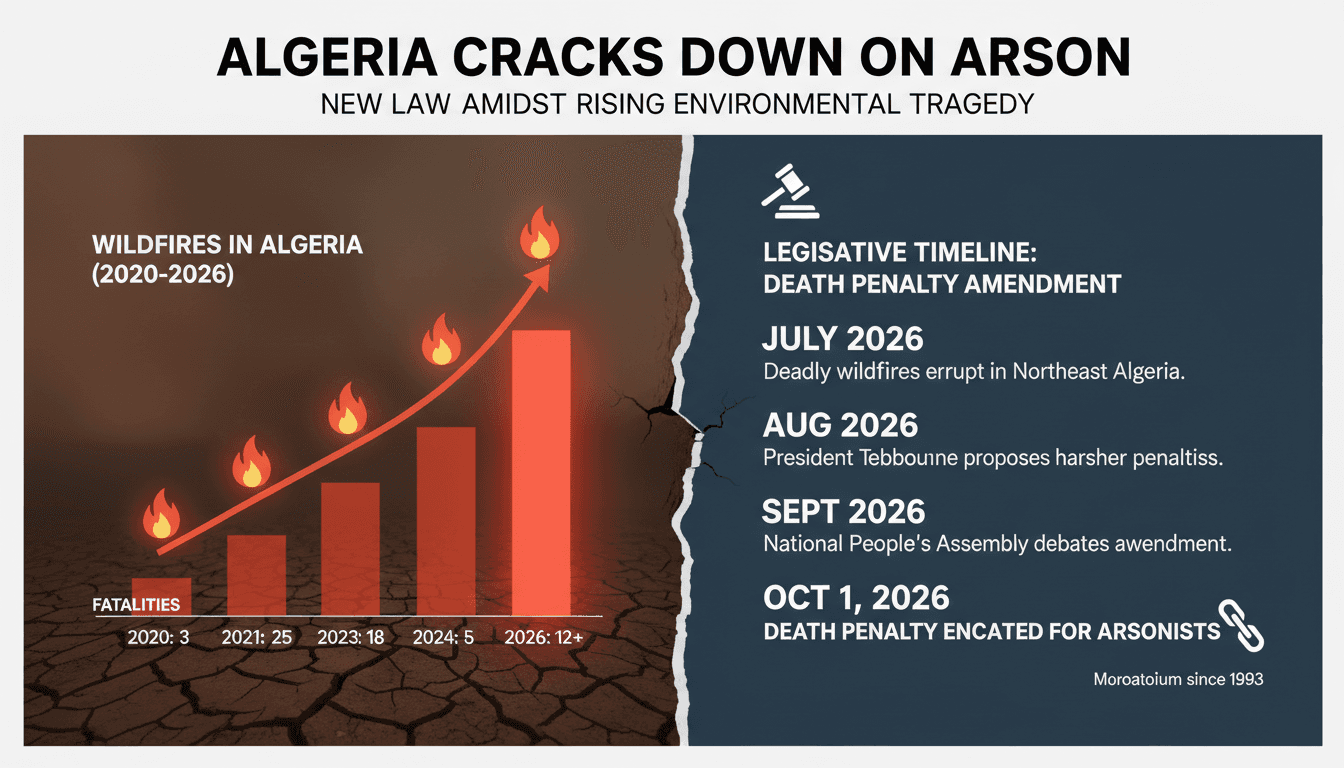
- On October 1, 2026, Algeria's National People's Assembly approved a penal code amendment imposing the death penalty for deliberate forest and field arsonists.
- The legislation follows a series of deadly wildfires in northeast Algeria, with official reports citing 12 deaths and independent estimates suggesting up to 200 fatalities.
- President Abdelmadjid Tebboune directed these changes in response to organized criminal activity suspected behind the wildfires, aiming to protect national stability.
The context you actually need
- Algeria faces recurrent wildfires exacerbated by climate change, particularly during extreme heatwaves affecting North Africa.
- Previous penalties for arson included up to 30 years imprisonment or life sentences, with death applicable only if fires resulted in fatalities.
- Human rights organizations have condemned the expansion of the death penalty, arguing for a focus on prevention rather than execution.
What's really happening
The recent legislative changes in Algeria are a direct response to a series of catastrophic wildfires that have devastated the northeast regions of the country. In August 2026, over 100 fires erupted, leading to significant loss of life and property. Official reports confirmed at least 12 deaths, while independent sources estimate the toll could be as high as 200. This alarming situation prompted President Abdelmadjid Tebboune to call for urgent amendments to the penal code, aiming to deter future incidents of arson that threaten both the environment and public safety.
The new law classifies deliberate arson as a capital offense, particularly when linked to organized crime or threats to national stability. This shift indicates a broader trend in governance where environmental crimes are increasingly met with severe penalties. The Algerian government justifies this harsh measure as necessary to protect economic and environmental stability, reflecting a growing recognition of the severe impacts of climate change on national security.
However, the introduction of the death penalty raises significant ethical and human rights concerns. Organizations like Amnesty International have criticized the move, arguing that it represents a retrograde step in criminal justice. They advocate for a focus on prevention and effective response strategies rather than punitive measures that could lead to executions. The debate surrounding this legislation highlights the tension between the need for immediate action against environmental crimes and the broader implications for human rights and justice.
As the bill moves to the upper house for review, it remains to be seen how it will be received and whether it will ultimately be ratified by the president. The potential for increased scrutiny from international human rights organizations could also influence the final outcome. The implications of this law extend beyond Algeria, as it may set a precedent for other nations grappling with similar challenges posed by climate change and environmental degradation.
Who feels it first (and how)
- Environmental activists: Increased scrutiny and potential backlash against the government’s approach to climate-related crimes.
- Local communities: Those living in fire-prone areas may experience heightened fear and anxiety regarding safety and security.
- Investors and businesses: Companies operating in Algeria may reassess risks associated with environmental policies and governance.
What to watch next
- Upper house review: The outcome of the Council of the Nation's review will determine if the law is enacted, influencing public sentiment and international relations.
- Human rights responses: Continued reactions from organizations like Amnesty International could shape the narrative around Algeria's human rights record.
- Future wildfire incidents: Monitoring the frequency and severity of wildfires in Algeria will provide insight into the effectiveness of this legislation and its deterrent impact.
The death penalty for arsonists has been approved by the National People's Assembly.
The upper house will review the legislation, with potential international scrutiny influencing its final approval.
The long-term effectiveness of this law in preventing wildfires and its impact on human rights in Algeria.
Frequently Asked Questions
- Why it matters?
- This amendment reflects a growing trend in governance where environmental crimes are met with severe penalties, impacting both local and international perceptions of safety and investment.
- What happened (in 30 seconds)?
- On October 1, 2026, Algeria's National People's Assembly approved a penal code amendment imposing the death penalty for deliberate forest and field arsonists. The legislation follows a series of deadly wildfires in northeast Algeria, with official reports citing 12 deaths and independent estimates suggesting up to 200 fatalities. President Abdelmadjid Tebboune directed these changes in response to organized criminal activity suspected behind the wildfires, aiming to protect national stability.
- What's really happening?
- The recent legislative changes in Algeria are a direct response to a series of catastrophic wildfires that have devastated the northeast regions of the country. In August 2026, over 100 fires erupted, leading to significant loss of life and property. Official reports confirmed at least 12 deaths, while independent sources estimate the toll could be as high as 200. This alarming situation prompted President Abdelmadjid Tebboune to call for urgent amendments to the penal code, aiming to deter futu
- Who feels it first (and how)?
- Environmental activists: Increased scrutiny and potential backlash against the government’s approach to climate-related crimes. Local communities: Those living in fire-prone areas may experience heightened fear and anxiety regarding safety and security. Investors and businesses: Companies operating in Algeria may reassess risks associated with environmental policies and governance.
- What to watch next?
- Upper house review: The outcome of the Council of the Nation's review will determine if the law is enacted, influencing public sentiment and international relations. Human rights responses: Continued reactions from organizations like Amnesty International could shape the narrative around Algeria's human rights record. Future wildfire incidents: Monitoring the frequency and severity of wildfires in Algeria will provide insight into the effectiveness of this legislation and its deterrent impact.
Arabic-language reporting on global and regional news.
"BBC Arabic is part of the BBC, generally regarded for editorial standards and broad international coverage."
— A47 Editor
الجزائر تقر عقوبة الإعدام لمفتعلي حرائق الغابات
Algeria has enacted the death penalty for individuals found guilty of starting forest fires, a decision made in response to the devastating wildfires that resulted in the deaths of over 200 people in the northeastern region during the summer. This le...
International coverage of politics, culture, and current affairs.
"BBC News is widely regarded as a reputable international news organization, known for its impartial tone and public service mandate."
— A47 Editor
Algeria introduces death penalty for arsonists after deadly wildfires
Algeria has enacted a death penalty for individuals convicted of arson following devastating wildfires that resulted in over 200 fatalities in the northeastern region during the summer months. This legislative move aims to address the severe conseque...
Regional coverage and analysis focused on politics, diplomacy, and business across the Middle East.
"Al-Monitor is known for analytical reporting on Middle East politics and policy developments."
— A47 Editor
Algeria adopts law imposing death penalty on forest arsonists
Algerian lawmakers have enacted a law imposing the death penalty on individuals convicted of forest arson, a response to the recent devastating wildfires that have claimed at least 12 lives in the country. The legislation comes after a summer marked ...