
US-Led Coalition Completes Withdrawal from Iraq Ending Two Decades of Military Presence
Why it matters
The withdrawal signifies a shift in Iraq's security landscape, which could influence Gulf stability and energy prices.
What happened (in 30 seconds)
- The US-led coalition completed its withdrawal from Iraq on September 30, 2026. This marked the end of Operation Inherent Resolve after nearly two decades.
- Iraqi leaders celebrated the departure with military parades, expressing joy over regained sovereignty while urging local militias to disarm.
- Concerns emerged over potential security vacuums, with analysts warning of risks from Iran-backed militias and the resurgence of ISIS.
The context you actually need
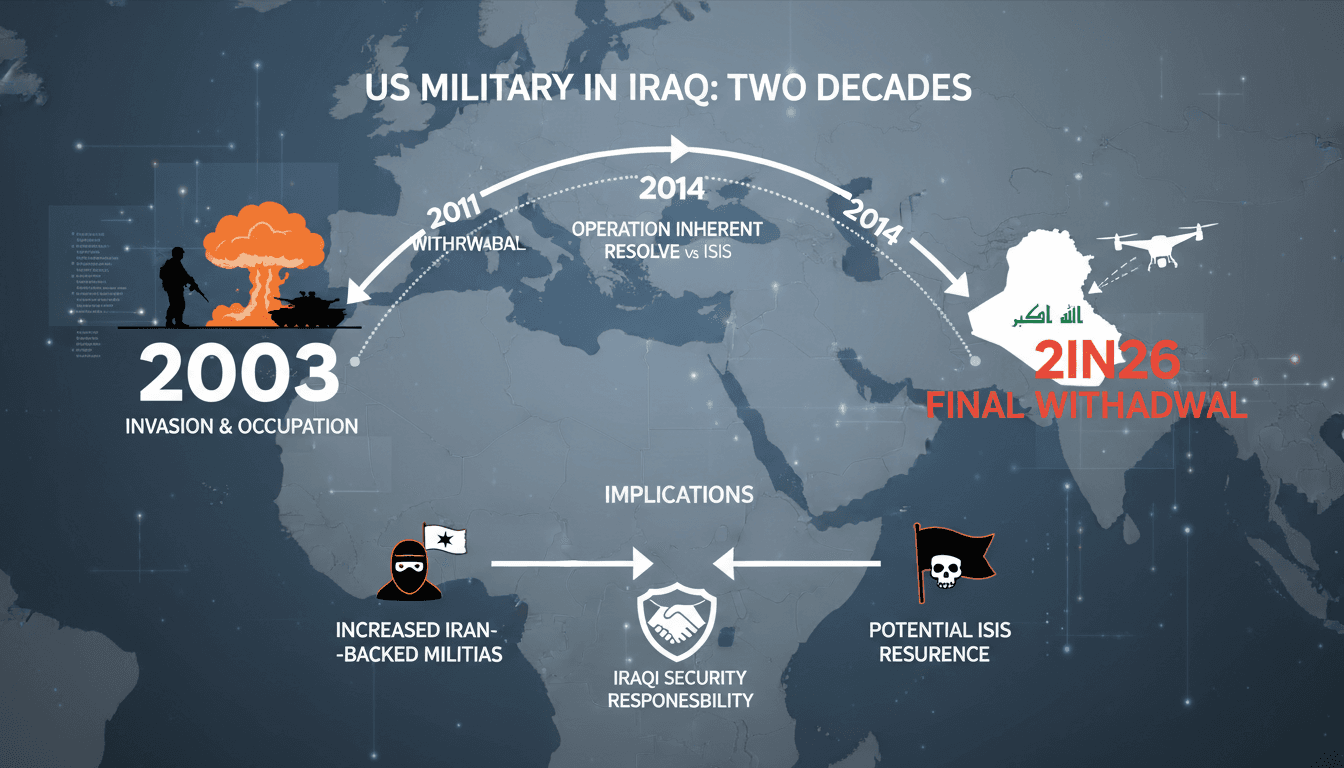
- US forces invaded Iraq in 2003, initiating a prolonged military presence that evolved through various conflicts and missions.
- The 2024 agreement set a timeline for withdrawal, reflecting a shift in US foreign policy under both the Biden and Trump administrations amid rising tensions with Iran.
- Iraq now assumes primary security responsibility, but the Pentagon has confirmed ongoing support through training and intelligence sharing.
What's really happening
On September 30, 2026, the final US and coalition troops departed from Erbil airbase, officially concluding Operation Inherent Resolve. This withdrawal is a culmination of a complex history that began with the 2003 invasion aimed at toppling Saddam Hussein. Over the years, the US military presence in Iraq has fluctuated, with an initial withdrawal in 2011 followed by a return in 2014 to combat the rise of ISIS. The 2024 agreement, reached under the Biden administration, established a clear timeline for the complete withdrawal of US forces, which was executed amid ongoing regional tensions, particularly with Iran.
The departure was celebrated by many Iraqis, who viewed it as a restoration of national sovereignty. However, this sentiment is tempered by fears of instability. Pro-Iran militias, who have gained influence over the years, celebrated the withdrawal, raising concerns among analysts about the potential for these groups to fill any security vacuums left by departing coalition forces. The risk of ISIS resurgence is also a significant concern, as remnants of the group may exploit the situation to regain footholds in the region.
Iraqi Prime Minister Ali al-Zaidi emphasized the importance of this transition, stating that Iraq is now responsible for its own security. However, the reality on the ground is more complicated. The Iraqi security forces face challenges in maintaining stability, especially with the presence of armed militias that operate outside government control. The Pentagon has indicated that while the withdrawal is complete, the US will continue to provide targeted support to Iraqi forces, focusing on training and intelligence sharing to help them navigate the complex security landscape.
This shift in military presence is not just a local issue; it has broader implications for regional stability and security dynamics in the Gulf. The potential for increased militia activity and the threat of ISIS could lead to heightened tensions, affecting energy markets and the safety of expatriates in neighboring countries, including the UAE.
Who feels it first (and how)
- Iraqi security forces: They will bear the brunt of maintaining stability in the absence of US support.
- Iran-backed militias: These groups may feel emboldened to exert more influence and control.
- Energy sector stakeholders: Fluctuations in regional stability could impact oil prices and market dynamics.
- Expatriates in the Gulf: Increased security risks may affect the safety and operations of foreign nationals living in the region.
What to watch next
- Militia activity in Iraq: Monitor any escalations or movements from Iran-backed groups, as they could destabilize the region further.
- ISIS resurgence: Keep an eye on reports of ISIS activity, which could signal a return to violence and instability.
- US-Iran relations: Changes in diplomatic relations may influence security dynamics and energy markets in the Gulf.
The US-led coalition has completed its withdrawal from Iraq.
Increased influence of Iran-backed militias and potential security challenges for Iraqi forces.
The immediate impact on energy markets and expatriate safety in the Gulf region.
Frequently Asked Questions
- Why it matters?
- The withdrawal signifies a shift in Iraq's security landscape, which could influence Gulf stability and energy prices.
- What happened (in 30 seconds)?
- The US-led coalition completed its withdrawal from Iraq on September 30, 2026. This marked the end of Operation Inherent Resolve after nearly two decades. Iraqi leaders celebrated the departure with military parades, expressing joy over regained sovereignty while urging local militias to disarm. Concerns emerged over potential security vacuums, with analysts warning of risks from Iran-backed militias and the resurgence of ISIS.
- What's really happening?
- On September 30, 2026, the final US and coalition troops departed from Erbil airbase, officially concluding Operation Inherent Resolve. This withdrawal is a culmination of a complex history that began with the 2003 invasion aimed at toppling Saddam Hussein. Over the years, the US military presence in Iraq has fluctuated, with an initial withdrawal in 2011 followed by a return in 2014 to combat the rise of ISIS. The 2024 agreement, reached under the Biden administration, established a clear timel
- Who feels it first (and how)?
- Iraqi security forces: They will bear the brunt of maintaining stability in the absence of US support. Iran-backed militias: These groups may feel emboldened to exert more influence and control. Energy sector stakeholders: Fluctuations in regional stability could impact oil prices and market dynamics. Expatriates in the Gulf: Increased security risks may affect the safety and operations of foreign nationals living in the region.
- What to watch next?
- Militia activity in Iraq: Monitor any escalations or movements from Iran-backed groups, as they could destabilize the region further. ISIS resurgence: Keep an eye on reports of ISIS activity, which could signal a return to violence and instability. US-Iran relations: Changes in diplomatic relations may influence security dynamics and energy markets in the Gulf.
English-language news from Qatar covering domestic and regional affairs.
"Gulf Times reflects Qatari perspectives on regional developments."
— A47 Editor
Joy mixed with fear as US forces quit Iraq
Iraqis celebrated the withdrawal of US forces after more than two decades of military presence, marking a significant moment in the nation's history. The departure, officially concluded by the Pentagon, follows extensive negotiations and reflects a s...
European coverage of Middle East politics and security issues.
"France 24 offers international reporting with a European editorial perspective."
— A47 Editor
US forces leave Iraq, raising fears of Iran-backed militias amid power vacuum
US forces have completed their withdrawal from Iraq, marking the end of a military presence that has lasted over two decades. This pullout, agreed upon under former President Joe Biden, raises concerns about a potential security vacuum that could emb...
Coverage of current events and conflicts in the Middle East.
"France 24 is viewed as a globally focused outlet with balanced coverage and a European perspective."
— A47 Editor
US forces leave Iraq, raising fears of Iran-backed militias amid power vacuum
US forces have completed their withdrawal from Iraq, marking the end of a military presence that has lasted over two decades. This pullout, agreed upon under former President Joe Biden, raises concerns about a potential security vacuum that could emb...
UAE-based English-language newspaper covering regional politics, economics, and global affairs.
"The National reflects Emirati policy perspectives while maintaining international editorial standards."
— A47 Editor
Iraq prepares for new chapter after US troop withdrawal as security concerns remain
Iraq is entering a new phase following the completion of the U.S. troop withdrawal, which marks the end of a military presence that has lasted over two decades. This transition coincides with Iraq's celebration of Sovereignty Day, symbolizing a signi...