
Iran Declares No Military Solution to US Conflict as Peace Talks Fail
Why it matters
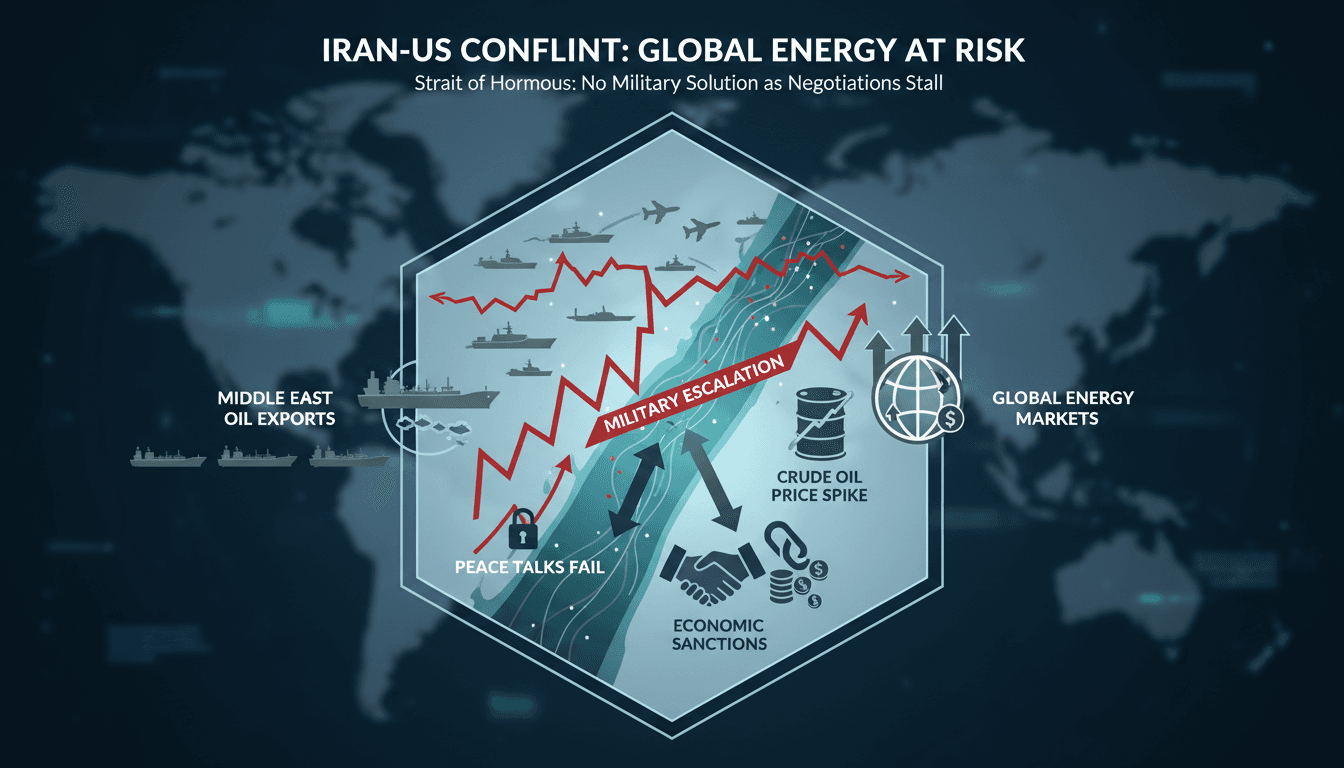
The ongoing conflict between Iran and the US directly impacts global energy prices and maritime trade routes.
What happened (in 30 seconds)
- Iran's Foreign Minister Abbas Araghchi declared on October 4, 2026, that no military solution exists to the US conflict, amid stalled peace talks.
- Negotiations over the Strait of Hormuz have reached an impasse, with Iran presenting seven conditions for reopening the strait, all of which the US rejected.
- Recent incidents in the region, including tanker strikes, have heightened tensions and disrupted global energy markets.
The context you actually need
- The conflict escalated following a US-Israel military campaign launched in February 2026 aimed at curbing Iran's nuclear ambitions, leading to a blockade of the Strait of Hormuz.
- Iran's seven conditions for reopening the strait include a regional ceasefire and sanctions relief, reflecting its desire for a diplomatic resolution rather than military confrontation.
- Market volatility has surged due to ongoing tensions, affecting oil prices and supply chains, particularly in regions reliant on Hormuz shipping.
What's really happening
The current standoff between Iran and the US is rooted in a complex interplay of military, economic, and diplomatic factors. The US-Israel military campaign initiated in February 2026 aimed to prevent Iran from developing nuclear weapons, which has since morphed into a broader conflict involving economic sanctions and military posturing. The Strait of Hormuz, a critical chokepoint for global oil shipments, has become a focal point of this tension.
Iran's Foreign Minister, Abbas Araghchi, emphasized that military solutions are not viable, advocating instead for negotiations based on justice and fairness. This statement reflects Iran's strategic pivot towards diplomacy, even as it faces significant pressure from US sanctions and military threats. The seven conditions Iran presented for reopening the strait highlight its insistence on a comprehensive approach to resolving the conflict, which includes demands for a ceasefire and the unfreezing of assets.
The US, however, has rejected these conditions, indicating a preference for maintaining pressure on Iran while keeping diplomatic channels open. This rejection signals a continued commitment to a hardline stance, which could lead to further military operations or economic sanctions. The situation is exacerbated by recent incidents in the Strait, including attacks on tankers, which have raised alarms about the safety of maritime routes and the potential for escalation into open conflict.
The resignation of Iranian Oil Minister Mohsen Paknejad amid export pressures underscores the internal challenges Iran faces as it navigates this geopolitical landscape. The ongoing blockade and military operations have severely impacted Iran's oil exports, leading to economic strain and political instability within the country.
As tensions remain high, the implications for global energy markets are significant. Disruptions in the Strait of Hormuz could lead to increased oil prices and supply chain volatility, affecting not only regional economies but also global markets. The interconnectedness of these factors means that any escalation in conflict could have far-reaching consequences, particularly for countries reliant on oil imports.
Who feels it first (and how)
- Energy companies: Increased operational costs and market volatility affect profitability and investment strategies.
- Consumers: Rising fuel prices impact household budgets and transportation costs.
- Logistics firms: Disruptions in maritime traffic lead to delays and increased shipping costs.
- Governments: Economic pressures from rising energy costs may lead to public discontent and political instability.
What to watch next
- Further military actions: Any escalation in military operations by the US or Iran could significantly impact global oil supply and prices.
- Diplomatic engagements: Look for any renewed attempts at negotiations or third-party mediation that could alter the current standoff.
- Market reactions: Monitor fluctuations in oil prices and stock market responses to developments in the Strait of Hormuz.
Iran's rejection of military solutions and insistence on diplomatic negotiations.
Continued tensions in the Strait of Hormuz affecting global energy markets.
The potential for a breakthrough in negotiations or further escalation into military conflict.
Frequently Asked Questions
- Why it matters?
- The ongoing conflict between Iran and the US directly impacts global energy prices and maritime trade routes.
- What happened (in 30 seconds)?
- Iran's Foreign Minister Abbas Araghchi declared on October 4, 2026, that no military solution exists to the US conflict, amid stalled peace talks. Negotiations over the Strait of Hormuz have reached an impasse, with Iran presenting seven conditions for reopening the strait, all of which the US rejected. Recent incidents in the region, including tanker strikes, have heightened tensions and disrupted global energy markets.
- What's really happening?
- The current standoff between Iran and the US is rooted in a complex interplay of military, economic, and diplomatic factors. The US-Israel military campaign initiated in February 2026 aimed to prevent Iran from developing nuclear weapons, which has since morphed into a broader conflict involving economic sanctions and military posturing. The Strait of Hormuz, a critical chokepoint for global oil shipments, has become a focal point of this tension. Iran's Foreign Minister, Abbas Araghchi, emphas
- Who feels it first (and how)?
- Energy companies: Increased operational costs and market volatility affect profitability and investment strategies. Consumers: Rising fuel prices impact household budgets and transportation costs. Logistics firms: Disruptions in maritime traffic lead to delays and increased shipping costs. Governments: Economic pressures from rising energy costs may lead to public discontent and political instability.
- What to watch next?
- Further military actions: Any escalation in military operations by the US or Iran could significantly impact global oil supply and prices. Diplomatic engagements: Look for any renewed attempts at negotiations or third-party mediation that could alter the current standoff. Market reactions: Monitor fluctuations in oil prices and stock market responses to developments in the Strait of Hormuz.
European coverage of Middle East politics and security issues.
"France 24 offers international reporting with a European editorial perspective."
— A47 Editor
Iran says no military solution to war as peace talks with US stall
Iran's diplomat stated that there is no military solution to the ongoing conflict with the United States, as peace talks have stalled. The U.S. has shifted its strategy from military actions to economic pressure, while Iran's attempts to blockade the...
24/7 international news from a French perspective in multiple languages.
"France 24 is viewed as a globally focused outlet with balanced coverage and a European perspective."
— A47 Editor
Iran says no military solution to war as peace talks with US stall
Iran's diplomat stated that there is no military solution to the ongoing conflict with the United States, as peace talks have stalled. The U.S. has shifted its strategy from military actions to economic pressure, while Iran's attempts to blockade the...
English-language reporting on Saudi politics, policy, and society.
"Saudi Gazette reflects mainstream Saudi institutional perspectives."
— A47 Editor
Iran says ‘no military solution’ to war with US
Iranian Foreign Minister Abbas Araghchi stated that there is no military solution to the ongoing conflict with the United States, advocating for a negotiated settlement instead of further sanctions. He emphasized Iran's readiness to respond forcefull...
Regional coverage and analysis focused on politics, diplomacy, and business across the Middle East.
"Al-Monitor is known for analytical reporting on Middle East politics and policy developments."
— A47 Editor
Iran tells US there is no military solution to Middle East war
Iran's top diplomat has asserted that there is no military solution to the ongoing conflict with the United States, emphasizing that recent heavy bombardments have not resolved the war initiated by the U.S. and Israel. Diplomatic efforts have reached...