
Bosnia and Herzegovina's 2026 Elections Confirm Nationalist Party Dominance Amid EU Aspirations
Why it matters
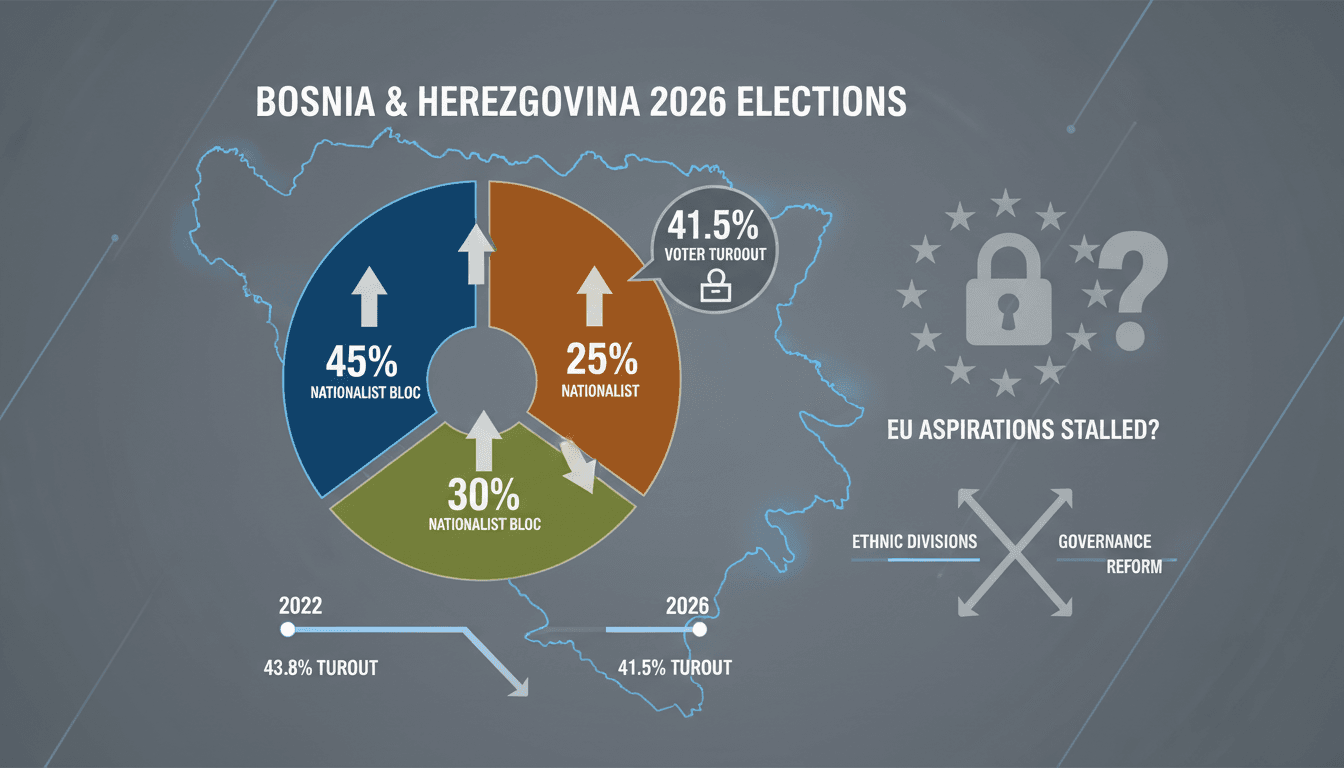
The elections reflect ongoing ethnic divisions that hinder economic growth and EU accession, affecting international relations and investment opportunities.
What happened (in 30 seconds)
- Bosnia and Herzegovina held general elections on October 4, 2026, with over 3.4 million registered voters participating.
- Nationalist parties maintained their dominance, securing the majority of seats across various levels of government.
- Voter turnout hit a record low of 41.5%, indicating widespread disillusionment among the electorate.
The context you actually need
- The 1995 Dayton Peace Accords established a complex governance structure that institutionalized ethnic power-sharing, leading to political fragmentation.
- Persistent political gridlock and slow progress toward EU membership have characterized the post-war period, with leaders often prioritizing ethnic interests over national unity.
- The introduction of biometric voting technology aimed to enhance electoral integrity but did not significantly alter voter engagement.
What's really happening
The 2026 general elections in Bosnia and Herzegovina unfolded against a backdrop of entrenched ethnic divisions and a complex political landscape shaped by the 1995 Dayton Peace Accords. These accords ended the Bosnian War but institutionalized a fragmented governance structure that divides power among the country's three main ethnic groups: Bosniaks, Serbs, and Croats. This arrangement has led to a political environment where nationalist parties dominate, often prioritizing ethnic interests over broader national concerns.
The recent elections saw the Social Democratic Party (SDP), Party of Democratic Action (SDA), Alliance of Independent Social Democrats (SNSD), and Croatian Democratic Union of Bosnia and Herzegovina (HDZ BiH) secure the majority of seats. Notably, Denis Becirovic (SDP) won the Bosniak presidency seat, Zeljka Cvijanovic (SNSD) the Serb seat, and Darijana Filipovic (HDZ BiH) the Croat seat. This continuity in leadership suggests a reluctance to embrace significant change, as these parties have historically focused on ethnic identity politics rather than addressing pressing economic issues or governance reform.
The elections were marked by a record-low voter turnout of 41.5%, down from 51.5% in 2022, reflecting widespread disillusionment among voters. Many citizens feel that their votes do not lead to meaningful change, contributing to a sense of apathy towards the electoral process. The introduction of new electronic identification systems for voting was intended to enhance the integrity of the elections, but it did not translate into increased voter engagement.
International observers noted that the elections did not significantly alter the political landscape, with ethnic polarization remaining a critical issue. The slow progress toward EU membership continues to be a point of contention, as leaders often prioritize local autonomy over integration efforts. The EU's influence in the region remains limited, with external factors from Russia and the United States also playing a role in shaping the political dynamics.
In summary, the 2026 elections reaffirmed the dominance of nationalist parties in Bosnia and Herzegovina, highlighting the challenges of ethnic divisions and the slow pace of reform. The lack of significant change in leadership and the low voter turnout signal a need for renewed efforts to engage citizens and address the underlying issues that hinder progress.
Who feels it first (and how)
- Voters: Disillusioned citizens experiencing low engagement and apathy towards the electoral process.
- Political Parties: Nationalist parties continue to consolidate power, limiting opportunities for reform.
- EU Officials: Slow progress in EU accession impacts diplomatic relations and economic opportunities.
- Local Businesses: Economic stagnation affects investment and growth prospects in the region.
What to watch next
- Voter engagement initiatives: Monitor efforts to increase participation in future elections, as higher turnout could signal a shift in public sentiment.
- EU accession talks: Watch for any developments in Bosnia and Herzegovina's negotiations with the EU, as progress could influence regional stability.
- Political reforms: Keep an eye on any proposals for governance reform that may emerge from the new administration, as these could reshape the political landscape.
Nationalist parties retained their dominance in the elections.
Continued ethnic polarization will hinder governance and reform efforts.
The impact of international influences on Bosnia and Herzegovina's political dynamics remains uncertain.
Frequently Asked Questions
- Why it matters?
- The elections reflect ongoing ethnic divisions that hinder economic growth and EU accession, affecting international relations and investment opportunities.
- What happened (in 30 seconds)?
- Bosnia and Herzegovina held general elections on October 4, 2026, with over 3.4 million registered voters participating. Nationalist parties maintained their dominance, securing the majority of seats across various levels of government. Voter turnout hit a record low of 41.5%, indicating widespread disillusionment among the electorate.
- What's really happening?
- The 2026 general elections in Bosnia and Herzegovina unfolded against a backdrop of entrenched ethnic divisions and a complex political landscape shaped by the 1995 Dayton Peace Accords. These accords ended the Bosnian War but institutionalized a fragmented governance structure that divides power among the country's three main ethnic groups: Bosniaks, Serbs, and Croats. This arrangement has led to a political environment where nationalist parties dominate, often prioritizing ethnic interests ove
- Who feels it first (and how)?
- Voters: Disillusioned citizens experiencing low engagement and apathy towards the electoral process. Political Parties: Nationalist parties continue to consolidate power, limiting opportunities for reform. EU Officials: Slow progress in EU accession impacts diplomatic relations and economic opportunities. Local Businesses: Economic stagnation affects investment and growth prospects in the region.
- What to watch next?
- Voter engagement initiatives: Monitor efforts to increase participation in future elections, as higher turnout could signal a shift in public sentiment. EU accession talks: Watch for any developments in Bosnia and Herzegovina's negotiations with the EU, as progress could influence regional stability. Political reforms: Keep an eye on any proposals for governance reform that may emerge from the new administration, as these could reshape the political landscape.
Global news coverage with extensive reporting on Middle Eastern conflicts and geopolitics.
"Al Jazeera is a Qatar-based broadcaster known for wide regional coverage and alternative perspectives."
— A47 Editor
Will elections bring change to multi-ethnic Bosnia and Herzegovina?
Bosnia and Herzegovina is set to hold elections on October 4, 2026, amid significant political tensions and a pressing emigration crisis, with over 600,000 young people having left the country since 2013. The elections are viewed as a critical opport...
Comprehensive coverage of Middle Eastern and global issues.
"Al Jazeera is a prominent voice from the Global South, especially the Middle East, with an emphasis on underreported stories."
— A47 Editor
Will elections bring change to multi-ethnic Bosnia and Herzegovina?
Bosnia and Herzegovina is set to hold elections on October 4, 2026, amid significant political tensions and a pressing emigration crisis, with over 600,000 young people having left the country since 2013. The elections are viewed as a critical opport...
European current affairs, EU politics, and regional developments.
"France 24 is viewed as a globally focused outlet with balanced coverage and a European perspective."
— A47 Editor
Bosnia votes in general election with wartime divisions still dominating
Bosnia is preparing for a general election on Sunday, with the campaign heavily influenced by the ethnic divisions stemming from the 1990s war. Voters will select numerous officials across various government levels, reflecting the complex political s...
Global news coverage with extensive reporting on Middle Eastern conflicts and geopolitics.
"Al Jazeera is a Qatar-based broadcaster known for wide regional coverage and alternative perspectives."
— A47 Editor
Bosnia’s elections explained
Bosnia and Herzegovina is set to hold elections on October 4, a critical event that could potentially resolve the ongoing political deadlock in the country. This election is seen as a pivotal moment for the nation's governance and stability.
Comprehensive coverage of Middle Eastern and global issues.
"Al Jazeera is a prominent voice from the Global South, especially the Middle East, with an emphasis on underreported stories."
— A47 Editor
Bosnia’s elections explained
Bosnia and Herzegovina is set to hold elections on October 4, a critical event that could potentially resolve the ongoing political deadlock in the country. This election is seen as a pivotal moment for the nation's governance and stability.