
David Rivera Sentenced to 10 Years for Lobbying Maduro's Venezuela
Why it matters
This case underscores the ongoing scrutiny of foreign lobbying in the U.S., particularly concerning adversarial nations like Venezuela.
What happened (in 30 seconds)
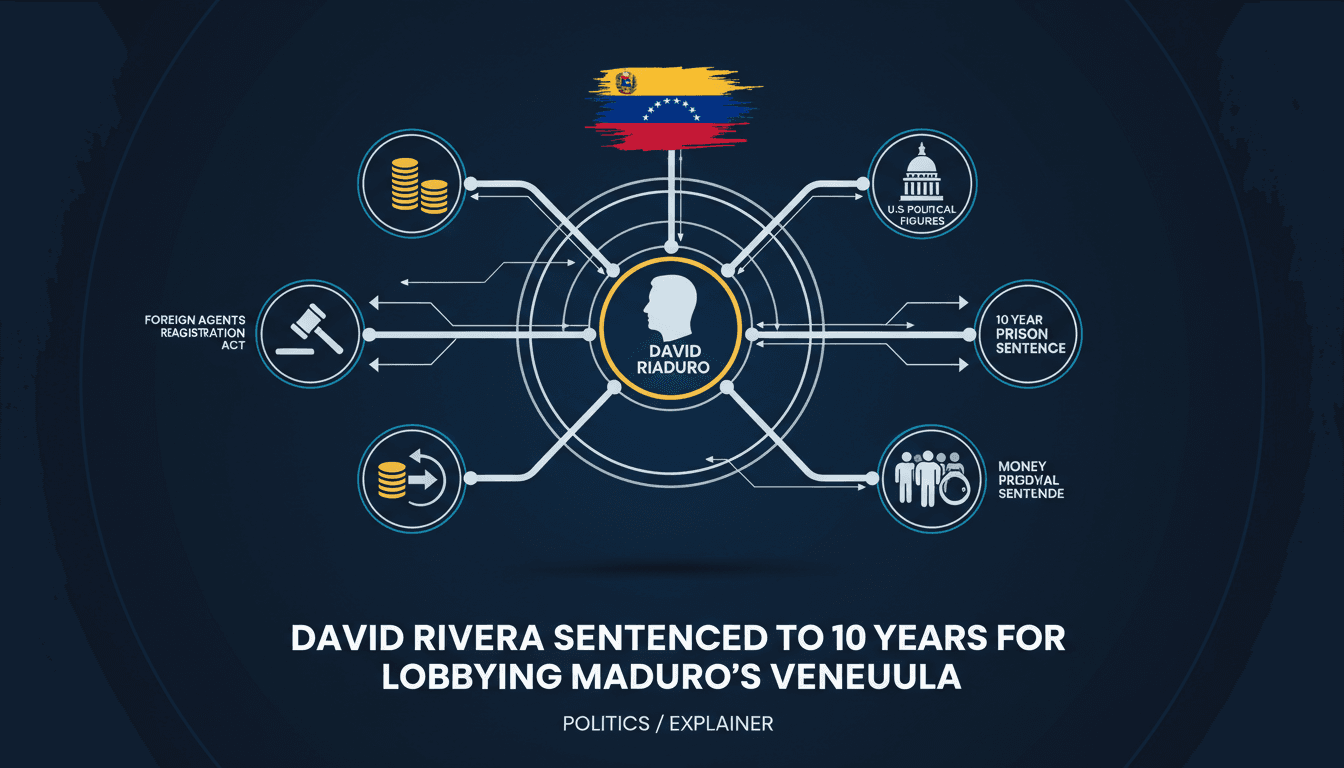
- David Rivera, a former U.S. Congressman, was sentenced to 10 years in prison for secretly lobbying on behalf of Nicolás Maduro's Venezuela.
- He was convicted of violating the Foreign Agents Registration Act (FARA) and money laundering related to a $50 million lobbying campaign.
- U.S. Secretary of State Marco Rubio testified he was unaware of Rivera's activities, highlighting the case's political ramifications.
The context you actually need
- Rivera's political background: He rose in Florida politics as an anti-communist advocate, particularly within the Cuban exile community, and had a close relationship with Marco Rubio.
- Venezuela's political climate: The case emerged amid heightened U.S. scrutiny of Venezuela, including sanctions and Maduro's arrest by U.S. forces in January 2026.
- Undisclosed lobbying: Rivera and his associate secured a contract with a subsidiary of Venezuela's state oil company, PDVSA, to promote Venezuelan interests without proper registration.
What's really happening
David Rivera's conviction is a significant moment in the ongoing battle against foreign influence in U.S. politics. His sentencing reflects a broader trend of increasing vigilance by U.S. authorities regarding foreign lobbying, particularly from nations deemed hostile, such as Venezuela. The case illustrates how political figures can exploit their connections to influence U.S. policy, often without transparency.
Rivera's actions involved coordinating meetings between U.S. officials and Venezuelan representatives while using coded communications to conceal the nature of his lobbying efforts. Prosecutors argued that he leveraged his political connections to sway Trump-era policies, aiming to ease pressure on Maduro's government. This manipulation of political relationships raises concerns about the integrity of U.S. governance and the potential for foreign interests to undermine domestic policy.
The conviction also highlights the complexities of the Foreign Agents Registration Act (FARA), which mandates that individuals representing foreign governments disclose their activities to the U.S. government. Rivera's failure to register under FARA, coupled with his money laundering charges, underscores the legal and ethical obligations that public officials must adhere to when engaging with foreign entities.
Moreover, the case has implications for the future of U.S.-Venezuela relations. With Maduro's regime facing increasing isolation and scrutiny, Rivera's actions may have inadvertently contributed to the tightening of U.S. policies against Venezuela. The fallout from this case could lead to more stringent regulations on foreign lobbying and increased accountability for public officials.
As Rivera's defense team prepares to appeal the conviction, the case serves as a cautionary tale for other politicians and lobbyists. It emphasizes the importance of transparency and adherence to legal frameworks designed to protect the integrity of U.S. democracy from foreign influence.
Who feels it first (and how)
- U.S. Politicians: Increased scrutiny and potential legal repercussions for undisclosed foreign lobbying.
- Lobbyists: Heightened awareness of compliance requirements under FARA and potential penalties for violations.
- Venezuelan Government: Strained relations with the U.S. and potential impacts on diplomatic efforts.
- Cuban-American Community: Possible shifts in political alliances and perceptions of anti-communist advocacy.
What to watch next
- Appeal outcomes: The results of Rivera's appeal could set precedents for future lobbying cases and influence public trust in political figures.
- Legislative changes: Watch for potential reforms to FARA or lobbying regulations in response to this case and similar incidents.
- U.S.-Venezuela relations: Monitor developments in diplomatic relations and how this case may affect U.S. policy toward Venezuela moving forward.
David Rivera was sentenced to 10 years for lobbying on behalf of Venezuela.
Increased scrutiny of foreign lobbying practices and potential legislative reforms.
The long-term impact on U.S.-Venezuela relations and the effectiveness of lobbying regulations.
Frequently Asked Questions
- Why it matters?
- This case underscores the ongoing scrutiny of foreign lobbying in the U.S., particularly concerning adversarial nations like Venezuela.
- What happened (in 30 seconds)?
- David Rivera, a former U.S. Congressman, was sentenced to 10 years in prison for secretly lobbying on behalf of Nicolás Maduro's Venezuela. He was convicted of violating the Foreign Agents Registration Act (FARA) and money laundering related to a $50 million lobbying campaign. U.S. Secretary of State Marco Rubio testified he was unaware of Rivera's activities, highlighting the case's political ramifications.
- What's really happening?
- David Rivera's conviction is a significant moment in the ongoing battle against foreign influence in U.S. politics. His sentencing reflects a broader trend of increasing vigilance by U.S. authorities regarding foreign lobbying, particularly from nations deemed hostile, such as Venezuela. The case illustrates how political figures can exploit their connections to influence U.S. policy, often without transparency. Rivera's actions involved coordinating meetings between U.S. officials and Venezuel
- Who feels it first (and how)?
- U.S. Politicians: Increased scrutiny and potential legal repercussions for undisclosed foreign lobbying. Lobbyists: Heightened awareness of compliance requirements under FARA and potential penalties for violations. Venezuelan Government: Strained relations with the U.S. and potential impacts on diplomatic efforts. Cuban-American Community: Possible shifts in political alliances and perceptions of anti-communist advocacy.
- What to watch next?
- Appeal outcomes: The results of Rivera's appeal could set precedents for future lobbying cases and influence public trust in political figures. Legislative changes: Watch for potential reforms to FARA or lobbying regulations in response to this case and similar incidents. U.S.-Venezuela relations: Monitor developments in diplomatic relations and how this case may affect U.S. policy toward Venezuela moving forward.
Arabic-language coverage of political affairs and current events.
"Okaz political coverage typically follows mainstream Saudi framing on national and regional affairs."
— A47 Editor
من محاربة الشيوعية إلى العمل لصالح مادورو.. نهاية صادمة لمسيرة نائب أمريكي
A federal court in Miami sentenced former Republican Congressman David Rivera to 10 years in prison for secretly working on behalf of the Venezuelan government and laundering money linked to a $50 million lobbying campaign. Rivera, who served in Flor...
Corporate leadership, finance, technology, and market trends.
"Fortune covers financial trends, leadership, and innovation with a pragmatic editorial approach."
— A47 Editor
‘He sold his anti-communism to communists’: Former GOP Rep. David Rivera gets 10 years in prison for $50 million lobbying ‘from the Maduro regime’
David Rivera, a former Republican representative from Miami, has been sentenced to 10 years in prison following his conviction for conspiracy to commit money laundering and failing to register as a foreign agent for the Venezuelan government led by N...
Oil, metals, and agriculture: supply/demand headlines, OPEC chatter, inventories, and price action.
"Solid tape for energy and metals traders tracking macro and micro catalysts."
— A47 Editor
Former US congressman sentenced to 10 years for secretly lobbying for Venezuela
A former US congressman has been sentenced to 10 years in prison for secretly lobbying on behalf of Venezuela, highlighting the legal repercussions of unauthorized foreign influence in US politics. This case underscores the serious nature of lobbying...