
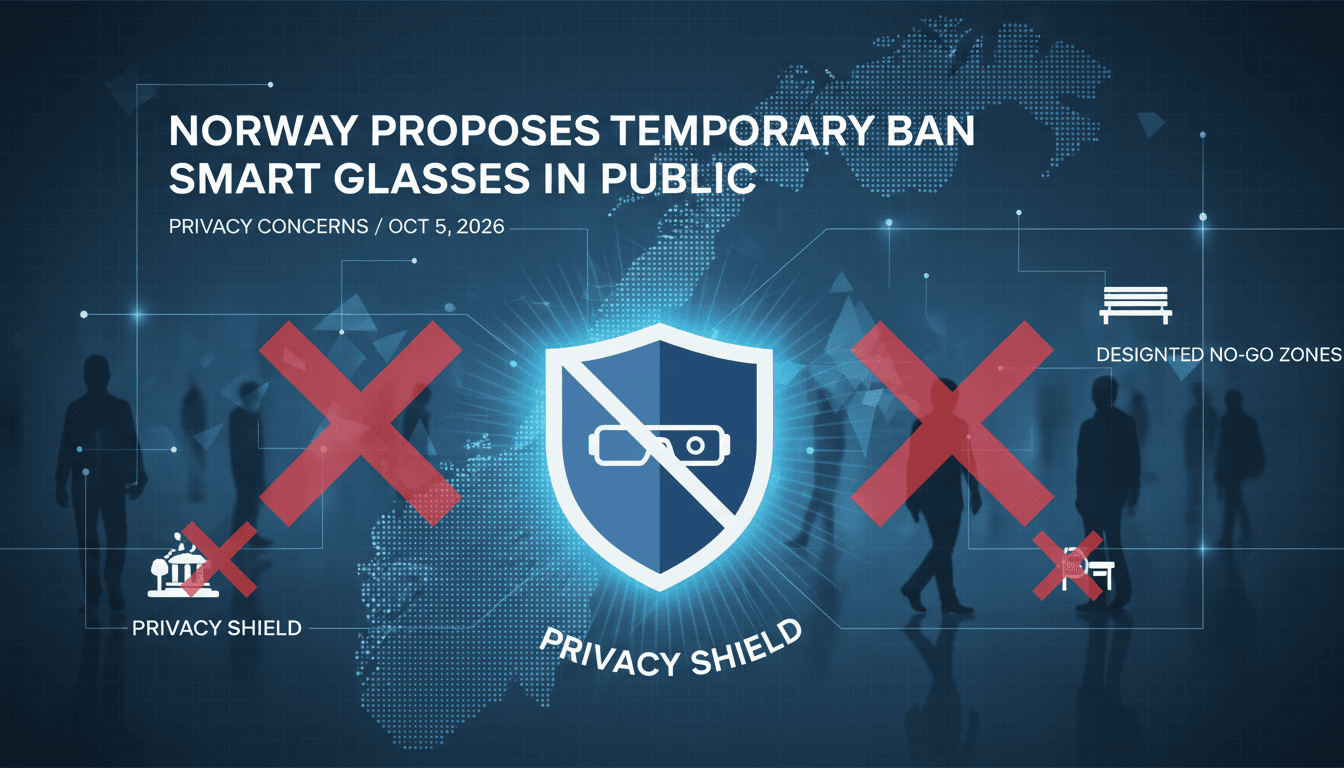
Norway proposes temporary ban on smart glasses in public spaces to mitigate privacy concerns
Why it matters
This proposal reflects growing global concerns about privacy and surveillance, potentially influencing similar regulations in other countries.
What happened (in 30 seconds)
- On October 5, 2026, Norway announced a temporary ban on camera-enabled smart glasses in specific public areas.
- Minister Torgeir Micaelsen emphasized the need to protect privacy and prevent unconsented recording.
- An expert group will be formed to develop permanent regulations, with the proposal requiring parliamentary approval.
The context you actually need
- Rising privacy concerns globally have led to restrictions on AI-powered wearable cameras in various countries, including the UK and US.
- Local precedents in Norway, such as bans in Oslo schools and Equinor corporate sites, have set the stage for this national proposal.
- The initiative aims to prevent a societal shift where individuals feel constantly monitored in everyday spaces.
What's really happening
The Norwegian government's proposal to temporarily ban smart glasses in designated public spaces is a direct response to escalating concerns about privacy invasion. As technology advances, devices like Meta's Ray-Ban smart glasses have raised alarms due to their ability to discreetly record video and audio without the knowledge or consent of those being recorded. This has sparked a broader debate about the implications of such technology on personal privacy and public trust.
Minister Torgeir Micaelsen articulated the government's worries about the potential for unknowing photography and audio capture, particularly in areas frequented by children and vulnerable populations. The proposed ban targets high-privacy locations such as parks, schools, and healthcare facilities, where the risk of covert recording is deemed particularly concerning. By prioritizing these areas, the government aims to create a buffer period for assessment and public discourse on the implications of smart glasses.
The proposal is not merely a reactionary measure; it reflects a growing recognition of the need for regulatory frameworks that can keep pace with technological advancements. The establishment of an expert group to develop permanent regulations indicates a commitment to finding a balanced approach that considers both innovation and privacy rights. While the temporary ban allows for immediate action, the long-term goal is to create a comprehensive legal framework that addresses the nuances of AI-enabled devices.
Exceptions may be made for socially beneficial uses or specific contexts where recording is deemed appropriate, suggesting that the government is not outright rejecting the technology but rather seeking to regulate its use. This nuanced approach could pave the way for a more informed public dialogue about the role of technology in society and the importance of consent in the digital age.
As the proposal moves forward, it will require parliamentary support to be enacted, highlighting the need for cross-party collaboration in addressing these pressing issues. The outcome of this initiative could set a precedent for other nations grappling with similar challenges, potentially influencing global standards for privacy and surveillance in public spaces.
Who feels it first (and how)
- Consumers using smart glasses may face restrictions on where they can wear them.
- Businesses in affected public spaces, such as gyms and shopping centers, will need to adapt to new regulations.
- Parents and guardians of children may feel reassured by increased privacy protections in schools and parks.
What to watch next
- Parliamentary discussions: Monitor the Storting's response to the proposal, as cross-party support will be crucial for its passage.
- Expert group findings: The recommendations from the expert group will shape the future of smart glasses regulation and could influence similar measures in other countries.
- Public sentiment: Watch for shifts in public opinion regarding privacy and surveillance as the debate unfolds, which may impact future technology adoption.
The Norwegian government has proposed a temporary ban on smart glasses in specific public spaces.
The establishment of an expert group will lead to permanent regulations regarding smart glasses.
The extent to which this proposal will influence similar regulations in other countries remains uncertain.
Frequently Asked Questions
- Why it matters?
- This proposal reflects growing global concerns about privacy and surveillance, potentially influencing similar regulations in other countries.
- What happened (in 30 seconds)?
- On October 5, 2026, Norway announced a temporary ban on camera-enabled smart glasses in specific public areas. Minister Torgeir Micaelsen emphasized the need to protect privacy and prevent unconsented recording. An expert group will be formed to develop permanent regulations, with the proposal requiring parliamentary approval.
- What's really happening?
- The Norwegian government's proposal to temporarily ban smart glasses in designated public spaces is a direct response to escalating concerns about privacy invasion. As technology advances, devices like Meta's Ray-Ban smart glasses have raised alarms due to their ability to discreetly record video and audio without the knowledge or consent of those being recorded. This has sparked a broader debate about the implications of such technology on personal privacy and public trust. Minister Torgeir Mi
- Who feels it first (and how)?
- Consumers using smart glasses may face restrictions on where they can wear them. Businesses in affected public spaces, such as gyms and shopping centers, will need to adapt to new regulations. Parents and guardians of children may feel reassured by increased privacy protections in schools and parks.
- What to watch next?
- Parliamentary discussions: Monitor the Storting's response to the proposal, as cross-party support will be crucial for its passage. Expert group findings: The recommendations from the expert group will shape the future of smart glasses regulation and could influence similar measures in other countries. Public sentiment: Watch for shifts in public opinion regarding privacy and surveillance as the debate unfolds, which may impact future technology adoption.
24/7 international news from a French perspective in multiple languages.
"France 24 is viewed as a globally focused outlet with balanced coverage and a European perspective."
— A47 Editor
Norway eyes temporary ban of smart glasses
Norway's government announced plans for a temporary ban on smart glasses in various public spaces, including parks, museums, and schools, due to privacy concerns regarding covert recording of individuals without their consent. The proposed legislatio...
Technology and innovation coverage, including consumer tech and digital transformation stories.
"Emirates 24|7 technology coverage often highlights practical tech developments with relevance to Gulf readers and businesses."
— A47 Editor
Governments tighten scrutiny of smart glasses as privacy concerns grow
Governments and regulators worldwide are increasing scrutiny of smart glasses due to rising privacy concerns, particularly regarding their potential to record individuals without consent. This scrutiny has intensified with the popularity of camera-eq...
Business and tech news excluding paywalled content.
"High-volume business/tech outlet with frequent AI coverage."
— A47 Editor
Norway temporarily bans Meta glasses in public spaces
Norway has implemented a temporary ban on Meta's camera glasses in public spaces, including parks, schools, and beaches, due to rising privacy concerns. This decision reflects the government's commitment to addressing the implications of wearable tec...
International coverage from The Guardian's global desks.
"The Guardian is known for its progressive editorial stance and in-depth analysis."
— A47 Editor
Norway plans temporary ban on smart glasses in some public places
Norway is set to implement a temporary ban on the use of smart glasses equipped with cameras in various public spaces, including parks, museums, and schools, due to growing concerns over privacy and covert recording. The Oslo government is drafting a...
UK and international business news, economics, and corporate coverage.
"The Guardian’s business section covers finance and markets with a progressive editorial tone."
— A47 Editor
Norway plans temporary ban on smart glasses in some public places
Norway is set to implement a temporary ban on the use of smart glasses equipped with cameras in various public spaces, including parks, museums, and schools, due to growing concerns over privacy and covert recording. The Oslo government is drafting a...
Tech culture, product news, and critical takes on the tech industry's social impact.
"The Guardian's tech coverage blends mainstream news, critical analysis, and cultural commentary on emerging technologies and digital trends."
— A47 Editor
Norway plans temporary ban on smart glasses in some public places
Norway is set to implement a temporary ban on the use of smart glasses equipped with cameras in various public spaces, including parks, schools, and healthcare facilities, due to growing concerns over privacy and covert recording. This decision follo...
In-depth reporting on tech, policy, and science including AI.
"Respected analysis for technically savvy readers, including AI topics."
— A47 Editor
AI glasses face their first major government crackdown
Norway has initiated a significant government crackdown on AI glasses capable of recording bystanders, seeking additional time to formulate permanent regulations governing their use. This move marks a critical step in addressing privacy concerns asso...
In-depth coverage of hardware, software, science, and policy.
"Ars Technica provides expert technology news, hardware reviews, and analysis for a technically savvy audience."
— A47 Editor
AI glasses face their first major government crackdown
Norway has initiated a significant government crackdown on AI glasses capable of recording bystanders, seeking additional time to formulate permanent regulations governing their use. This move marks a critical step in addressing privacy concerns asso...
Technology and innovation coverage, including consumer tech and digital transformation stories.
"Emirates 24|7 technology coverage often highlights practical tech developments with relevance to Gulf readers and businesses."
— A47 Editor
Norway proposes temporary ban on smart glasses over privacy concerns
Norway's government has proposed a temporary ban on smart glasses in specific locations due to rising privacy concerns associated with AI-powered wearable technology. This proposal aims to allow authorities to assess the implications of devices that ...