
US Military to Execute Nidal Hasan by Firing Squad for First Time Since 1945
Why it matters
The revival of firing squad executions signals a significant shift in the U.S. approach to capital punishment, impacting legal frameworks and ethical standards.
What happened (in 30 seconds)
- On October 12, 2026, U.S. Defense Secretary Pete Hegseth announced the military execution of Nidal Hasan by firing squad, scheduled for December 3, 2026.
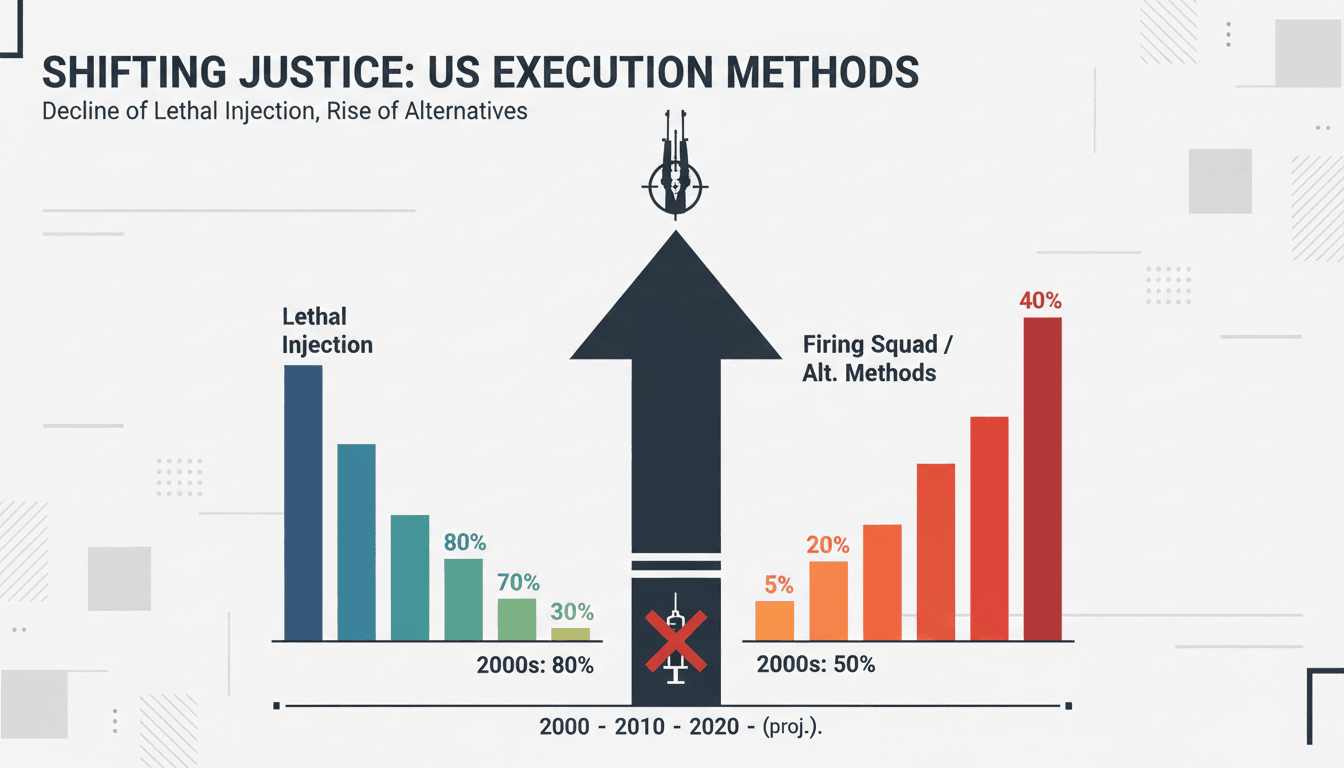
- This marks the first military firing squad execution since 1945, reflecting a broader trend of states and the military adopting alternative execution methods due to issues with lethal injections.
- The Trump administration's policies have expanded federal support for capital punishment, leading to renewed interest in firing squads and other methods.
The context you actually need
- Lethal injection, introduced in 1982, has faced significant challenges, with 51 botched executions out of 64 total since the 1970s, prompting a search for alternatives.
- The Trump administration reinstated federal executions in 2025 after a moratorium, issuing orders to expedite cases and broaden execution methods.
- States like Idaho and South Carolina have already authorized firing squads as viable execution methods, reflecting a growing acceptance of alternatives to lethal injection.
What's really happening
The announcement of Nidal Hasan's execution by firing squad is a culmination of systemic failures in the lethal injection process, which has been plagued by botched executions and pharmaceutical supply issues. Since its introduction, lethal injection has become the dominant method of execution in the U.S., but the reality is stark: 51 out of 64 botched executions since the 1970s have raised serious ethical and operational concerns. These failures have led to a reevaluation of execution methods, with states and the federal government exploring alternatives.
The Trump administration's reinstatement of federal executions in 2025 marked a pivotal shift in capital punishment policy, reversing the Biden-era moratorium. This change was accompanied by executive orders that not only expedited the execution process but also expanded the methods available for carrying out capital punishment. As a result, states began to authorize alternative methods, including nitrogen gas, electric chairs, and firing squads. The military's decision to execute Hasan by firing squad is emblematic of this broader trend, as it represents a return to a method that has not been used in military contexts since World War II.
The decision to utilize firing squads is also influenced by public sentiment and advocacy from victims' families and survivors. For instance, Alonzo Lunsford, a survivor of the Fort Hood shooting, has been vocal in supporting this method as a means of achieving justice. The military's announcement to livestream Hasan's execution further underscores the administration's commitment to transparency and public engagement in capital punishment processes.
As states and the federal government continue to grapple with the complexities of capital punishment, the implications extend beyond the immediate context of executions. Legal professionals, healthcare providers, and ethicists are now faced with the challenge of navigating a landscape where traditional methods are being replaced by alternatives that raise new ethical questions. The revival of firing squads may also influence public opinion on capital punishment, potentially leading to increased scrutiny and debate over its efficacy and morality.
Who feels it first (and how)
- Legal professionals: Lawyers and judges will need to navigate new legal frameworks and ethical considerations surrounding alternative execution methods.
- Healthcare providers: Medical professionals may face ethical dilemmas regarding their involvement in executions, particularly with methods like firing squads.
- Victims' families: Families of victims may experience a renewed sense of justice or closure as alternative methods are implemented.
- Advocacy groups: Organizations focused on criminal justice reform and human rights will likely intensify their efforts in response to these policy changes.
What to watch next
- State legislation: Monitor how various states respond to the federal shift by potentially adopting or rejecting firing squads and other alternative methods.
- Public opinion: Watch for shifts in public sentiment regarding capital punishment as alternative methods gain traction and visibility.
- Legal challenges: Anticipate increased legal challenges surrounding the ethics and implementation of firing squads and other execution methods.
The U.S. military will conduct its first firing squad execution since 1945 on December 3, 2026.
More states will consider or adopt firing squads and other alternative execution methods in response to federal policies.
The long-term impact on public opinion regarding capital punishment and its ethical implications remains uncertain.
Frequently Asked Questions
- Why it matters?
- The revival of firing squad executions signals a significant shift in the U.S. approach to capital punishment, impacting legal frameworks and ethical standards.
- What happened (in 30 seconds)?
- On October 12, 2026, U.S. Defense Secretary Pete Hegseth announced the military execution of Nidal Hasan by firing squad, scheduled for December 3, 2026. This marks the first military firing squad execution since 1945, reflecting a broader trend of states and the military adopting alternative execution methods due to issues with lethal injections. The Trump administration's policies have expanded federal support for capital punishment, leading to renewed interest in firing squads and other m
- What's really happening?
- The announcement of Nidal Hasan's execution by firing squad is a culmination of systemic failures in the lethal injection process, which has been plagued by botched executions and pharmaceutical supply issues. Since its introduction, lethal injection has become the dominant method of execution in the U.S., but the reality is stark: 51 out of 64 botched executions since the 1970s have raised serious ethical and operational concerns. These failures have led to a reevaluation of execution methods,
- Who feels it first (and how)?
- Legal professionals: Lawyers and judges will need to navigate new legal frameworks and ethical considerations surrounding alternative execution methods. Healthcare providers: Medical professionals may face ethical dilemmas regarding their involvement in executions, particularly with methods like firing squads. Victims' families: Families of victims may experience a renewed sense of justice or closure as alternative methods are implemented. Advocacy groups: Organizations focused on criminal
- What to watch next?
- State legislation: Monitor how various states respond to the federal shift by potentially adopting or rejecting firing squads and other alternative methods. Public opinion: Watch for shifts in public sentiment regarding capital punishment as alternative methods gain traction and visibility. Legal challenges: Anticipate increased legal challenges surrounding the ethics and implementation of firing squads and other execution methods.
International coverage of politics, culture, and current affairs.
"BBC News is widely regarded as a reputable international news organization, known for its impartial tone and public service mandate."
— A47 Editor
Why the US is bringing back firing squads
The Pentagon has announced that the execution of Nidal Hasan, the former U.S. Army psychiatrist convicted of the 2009 Fort Hood shooting, will be carried out by firing squad on December 3, 2026. This marks the first use of a firing squad for an execu...
RT is a Russian state-funded network covering global events from a Russian perspective.
"RT is widely criticized for promoting pro-Kremlin narratives and is considered by many to be a state propaganda outlet."
— A47 Editor
Pentagon to livestream firing-squad execution of US Army psychiatrist who killed 13: Inside the scrutinized plan
The Pentagon has announced that the execution of Nidal Hasan, a former U.S. Army psychiatrist convicted of killing 13 people during the 2009 Fort Hood shooting, will be conducted by firing squad and livestreamed on December 3, 2026. This unprecedente...
RT is a Russian state-funded network covering global events from a Russian perspective.
"RT is widely criticized for promoting pro-Kremlin narratives and is considered by many to be a state propaganda outlet."
— A47 Editor
Pentagon to livestream firing-squad execution of US Army psychiatrist who killed 13: Inside the scrutinized plan
The Pentagon has announced that the execution of Nidal Hasan, a former U.S. Army psychiatrist convicted of killing 13 people during the 2009 Fort Hood shooting, will be conducted by firing squad and livestreamed on December 3, 2026. This unprecedente...