
Christa Pike survives botched execution in Tennessee amid scrutiny of capital punishment methods
Why it matters
The incident underscores significant flaws in the U.S. capital punishment system, prompting potential legal and procedural reforms.
What happened (in 30 seconds)
- Christa Pike survived a botched lethal injection execution attempt on September 30, 2026, becoming the first person to endure a full dose of execution drugs without dying.
- Execution protocols failed as the team struggled for over an hour to establish IV access, leading to the administration of pentobarbital that likely infiltrated tissue instead of entering her bloodstream.
- National scrutiny intensified as Tennessee paused executions and initiated a review, with calls for moratoriums on the death penalty emerging from various sectors.
The context you actually need
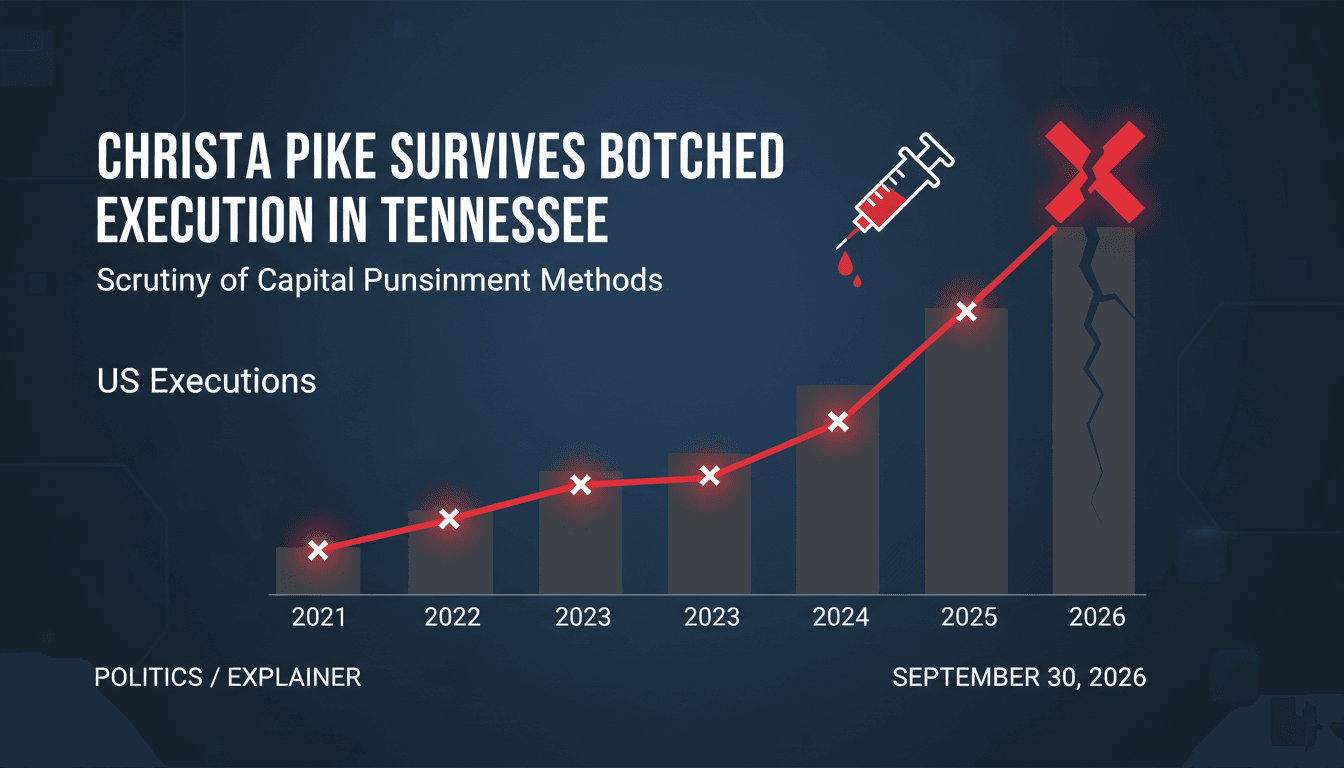
- Executions in the U.S. surged to 47 in 2025, the highest in 16 years, driven by federal policies under the Trump administration.
- Lethal injection botches have increased, with 12 documented cases in the past five years, raising concerns about the methods used.
- Political and public sentiment is shifting, with growing calls for a reevaluation of capital punishment practices and methods.
What's really happening
The botched execution of Christa Pike is a stark illustration of the systemic issues plaguing the U.S. capital punishment framework. Following a two-decade decline in executions, the numbers rebounded sharply under the Trump administration, with 47 executions recorded in 2025. This resurgence was fueled by executive orders aimed at restoring and expanding the death penalty, alongside a cultural push from Christian nationalist groups advocating for retributive justice.
However, the methods employed in lethal injections have come under increasing scrutiny. The incident involving Pike highlights the technical challenges faced by execution teams, particularly in establishing reliable IV access. Despite prior warnings about Pike's vein access issues, the execution team proceeded, resulting in a prolonged and distressing ordeal. Witnesses reported signs of life during the procedure, including breathing and movement, which ultimately led to its cessation.
The aftermath has prompted significant political and public backlash. Tennessee Governor Bill Lee's decision to pause executions and order a comprehensive review reflects a growing recognition of the need for reform. The resignation of Prison Commissioner Frank Strada amid reports of oversight failures further underscores the systemic weaknesses in execution protocols. Legal advocates are now calling for clemency or sentence reductions, framing Pike's experience as torturous and inhumane.
This incident has sparked a broader national debate about the efficacy and morality of capital punishment. Critics are questioning the reliance on lethal injection as a humane method of execution, with some advocating for alternative methods like nitrogen gas or firing squads. However, these alternatives also face scrutiny and criticism, particularly regarding their ethical implications.
As the conversation evolves, the potential for moratoriums on the death penalty is gaining traction, with both national and international voices calling for a reevaluation of execution practices. The implications of this incident extend beyond Tennessee, as it may influence capital punishment policies across the United States and reignite discussions about the future of the death penalty.
Who feels it first (and how)
- Legal professionals: Increased scrutiny on execution protocols may lead to changes in legal practices and defense strategies.
- State governments: Potential policy shifts regarding capital punishment could impact state budgets and legal frameworks.
- Advocacy groups: Organizations pushing for death penalty reform may gain momentum and resources in light of public sentiment.
- Inmates on death row: The incident raises concerns about the treatment and rights of those awaiting execution.
What to watch next
- State-level reviews: Monitor how states respond to the incident and whether they implement changes to execution protocols.
- Public opinion shifts: Watch for changes in public sentiment regarding the death penalty, particularly in light of botched executions.
- Legislative proposals: Keep an eye on new bills or proposals aimed at reforming capital punishment practices at both state and federal levels.
Christa Pike survived a botched execution attempt, leading to a pause in Tennessee executions.
Increased calls for moratoriums on the death penalty and potential reforms in execution methods.
The long-term impact on public opinion and legislative changes regarding capital punishment.
Frequently Asked Questions
- Why it matters?
- The incident underscores significant flaws in the U.S. capital punishment system, prompting potential legal and procedural reforms.
- What happened (in 30 seconds)?
- Christa Pike survived a botched lethal injection execution attempt on September 30, 2026, becoming the first person to endure a full dose of execution drugs without dying. Execution protocols failed as the team struggled for over an hour to establish IV access, leading to the administration of pentobarbital that likely infiltrated tissue instead of entering her bloodstream. National scrutiny intensified as Tennessee paused executions and initiated a review, with calls for moratoriums on the deat
- What's really happening?
- The botched execution of Christa Pike is a stark illustration of the systemic issues plaguing the U.S. capital punishment framework. Following a two-decade decline in executions, the numbers rebounded sharply under the Trump administration, with 47 executions recorded in 2025. This resurgence was fueled by executive orders aimed at restoring and expanding the death penalty, alongside a cultural push from Christian nationalist groups advocating for retributive justice. However, the methods emplo
- Who feels it first (and how)?
- Legal professionals: Increased scrutiny on execution protocols may lead to changes in legal practices and defense strategies. State governments: Potential policy shifts regarding capital punishment could impact state budgets and legal frameworks. Advocacy groups: Organizations pushing for death penalty reform may gain momentum and resources in light of public sentiment. Inmates on death row: The incident raises concerns about the treatment and rights of those awaiting execution.
- What to watch next?
- State-level reviews: Monitor how states respond to the incident and whether they implement changes to execution protocols. Public opinion shifts: Watch for changes in public sentiment regarding the death penalty, particularly in light of botched executions. Legislative proposals: Keep an eye on new bills or proposals aimed at reforming capital punishment practices at both state and federal levels.
Top international stories selected by The Guardian editors.
"The Guardian is known for its progressive editorial stance and in-depth analysis."
— A47 Editor
Capital punishment is surging in the US – but after Christa Pike’s botched execution, what is its future?
Christa Pike, a death row inmate in Tennessee, survived a botched execution attempt on September 30, 2026, during which she was administered two doses of the lethal injection drug pentobarbital. The execution was marked by significant delays and comp...
RT is a Russian state-funded network covering global events from a Russian perspective.
"RT is widely criticized for promoting pro-Kremlin narratives and is considered by many to be a state propaganda outlet."
— A47 Editor
Christa Pike discharged from hospital after botched execution
Christa Pike, a Tennessee death row inmate, has been discharged from the hospital after surviving a botched execution attempt on September 30, 2026, which involved two doses of lethal injection. Initially reported to be in critical condition and on a...
International coverage of politics, culture, and current affairs.
"BBC News is widely regarded as a reputable international news organization, known for its impartial tone and public service mandate."
— A47 Editor
US murderer Christa Pike discharged from hospital 10 days after failed execution
Christa Pike, a convicted murderer in Tennessee, has been discharged from the hospital 10 days after surviving a failed execution attempt involving two lethal injections that left her unconscious and on a ventilator. Her legal team expressed gratitud...
24/7 international news from a French perspective in multiple languages.
"France 24 is viewed as a globally focused outlet with balanced coverage and a European perspective."
— A47 Editor
Convicted murderer Christa Pike leaves hospital, returns to prison after botched execution
Christa Pike, a 50-year-old convicted murderer, has been discharged from the hospital and returned to prison after a botched execution attempt in Tennessee on September 30, 2026. The execution, which involved two lethal injections, left her in critic...