
Dubai Court Orders Fraud Accomplice to Repay 669,369 Dirhams to Partner
Why it matters
This ruling reinforces the legal framework for joint liability in fraud cases, impacting how financial responsibilities are shared among partners.
What happened (in 30 seconds)
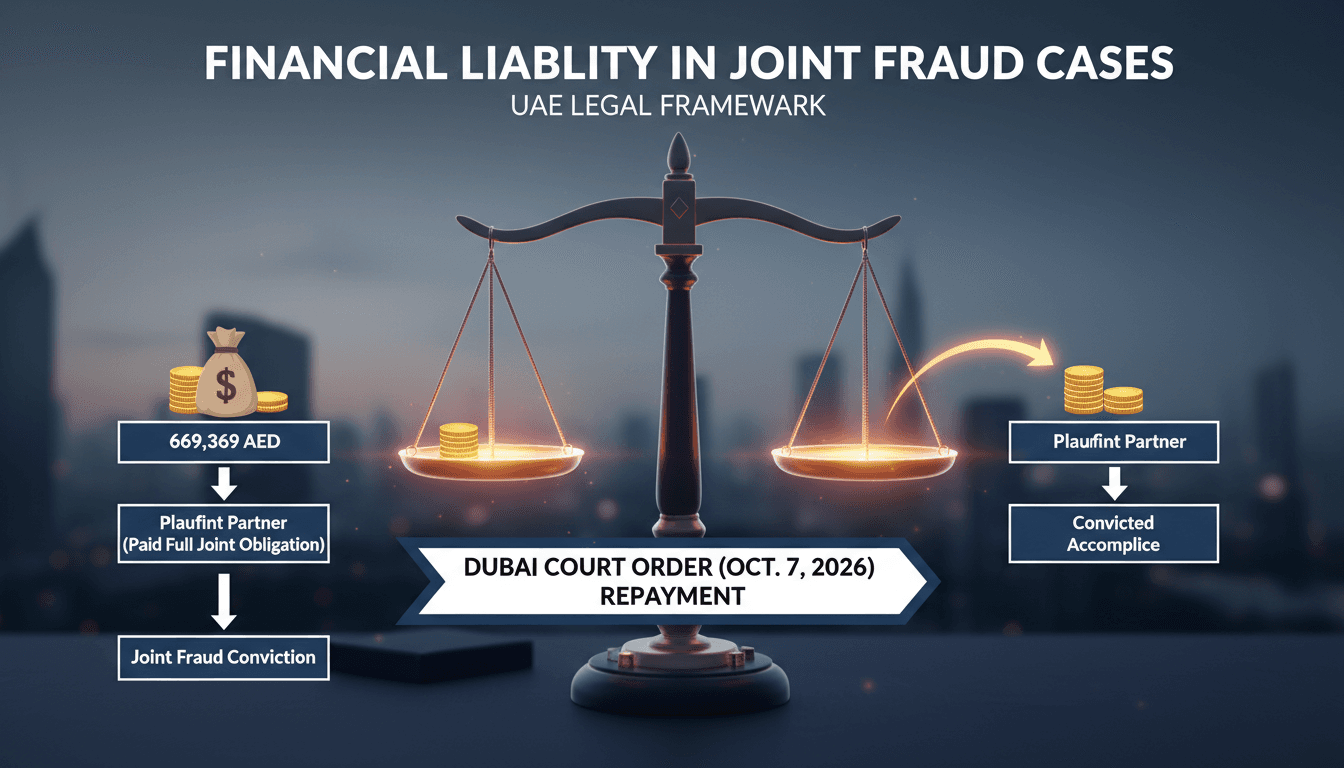
- On October 7, 2026, the Dubai Primary Civil Court ordered a fraud convict to repay 669,369 dirhams to his accomplice.
- The ruling followed a joint criminal conviction for possessing 600,000 dirhams in fraud proceeds, leading to a combined civil judgment exceeding 1.3 million dirhams.
- The plaintiff, who paid the full amount, successfully claimed reimbursement for half of the total obligations under UAE civil transactions law.
The context you actually need
- Joint liability in UAE law means that co-defendants share financial obligations equally unless otherwise specified.
- The case originated from a criminal conviction involving fraud, emphasizing the legal repercussions of financial misconduct.
- Victims of fraud can pursue civil recovery actions, which may encourage more individuals to seek justice through the courts.
What's really happening
The Dubai Primary Civil Court's ruling on October 7, 2026, serves as a critical reminder of the legal principles governing joint liability in the UAE. The case involved two men convicted of fraud, specifically for possessing 600,000 dirhams obtained through illicit means. Following their criminal conviction, a civil lawsuit was initiated by the victim, resulting in a joint fine of 600,000 dirhams and an additional 700,000 dirhams in damages.
The plaintiff, who paid the entire amount exceeding 1.3 million dirhams, sought reimbursement from his co-defendant for half of the total obligations. The court's decision to award 669,369 dirhams reflects the established principle that joint debtors share liability equally unless there is a contrary agreement or law. This ruling not only underscores the enforcement of joint liability but also highlights the legal mechanisms available for individuals who settle full judgments to recover their shares from partners.
The implications of this ruling extend beyond the immediate case. It reinforces the judicial framework that governs financial responsibilities among co-defendants in fraud cases, potentially encouraging victims and accomplices to pursue civil recovery actions. As the UAE continues to strengthen its legal system against fraud, this ruling may serve as a precedent for future cases, ensuring that financial burdens are equitably distributed among those involved in fraudulent activities.
Moreover, the ruling reflects a broader trend in the UAE's legal landscape, where the courts are increasingly focused on protecting the rights of victims while holding perpetrators accountable. This case illustrates the importance of understanding one's legal obligations and rights in joint ventures, particularly in a market where financial misconduct can have severe consequences.
Who feels it first (and how)
- Business partners: Those involved in joint ventures must be aware of their shared liabilities.
- Legal professionals: Lawyers specializing in civil and criminal law will see increased demand for guidance on joint liability.
- Victims of fraud: Individuals affected by fraud may feel empowered to pursue civil claims, knowing the legal framework supports their recovery efforts.
What to watch next
- Increased civil claims: Watch for a rise in civil lawsuits related to fraud as victims become more aware of their rights.
- Legal reforms: Monitor any potential changes in UAE laws regarding joint liability and fraud to understand how they may affect future cases.
- Court precedents: Keep an eye on upcoming rulings that may further clarify the principles of joint liability and reimbursement rights.
The ruling reinforces the principle of joint liability in fraud cases.
There will be an increase in civil recovery actions as victims seek to reclaim losses.
The long-term impact on the prevalence of fraud cases in Dubai remains to be seen.
Frequently Asked Questions
- Why it matters?
- This ruling reinforces the legal framework for joint liability in fraud cases, impacting how financial responsibilities are shared among partners.
- What happened (in 30 seconds)?
- On October 7, 2026, the Dubai Primary Civil Court ordered a fraud convict to repay 669,369 dirhams to his accomplice. The ruling followed a joint criminal conviction for possessing 600,000 dirhams in fraud proceeds, leading to a combined civil judgment exceeding 1.3 million dirhams. The plaintiff, who paid the full amount, successfully claimed reimbursement for half of the total obligations under UAE civil transactions law.
- What's really happening?
- The Dubai Primary Civil Court's ruling on October 7, 2026, serves as a critical reminder of the legal principles governing joint liability in the UAE. The case involved two men convicted of fraud, specifically for possessing 600,000 dirhams obtained through illicit means. Following their criminal conviction, a civil lawsuit was initiated by the victim, resulting in a joint fine of 600,000 dirhams and an additional 700,000 dirhams in damages. The plaintiff, who paid the entire amount exceeding
- Who feels it first (and how)?
- Business partners: Those involved in joint ventures must be aware of their shared liabilities. Legal professionals: Lawyers specializing in civil and criminal law will see increased demand for guidance on joint liability. Victims of fraud: Individuals affected by fraud may feel empowered to pursue civil claims, knowing the legal framework supports their recovery efforts.
- What to watch next?
- Increased civil claims: Watch for a rise in civil lawsuits related to fraud as victims become more aware of their rights. Legal reforms: Monitor any potential changes in UAE laws regarding joint liability and fraud to understand how they may affect future cases. Court precedents: Keep an eye on upcoming rulings that may further clarify the principles of joint liability and reimbursement rights.
Arabic-language local coverage focused on UAE domestic issues, civic affairs, and community reporting.
"Emarat Al Youm local coverage emphasizes UAE institutions, public services, and community-level developments."
— A47 Editor
إلزام مدان بردّ 669.3 ألف درهم من متحصلات احتيال إلى شريكه في الجريمة إلزام مدان بردّ 669.3 ألف درهم من متحصلات احتيال إلى شريكه في الجريمة
The Dubai Civil Court has mandated a convicted individual to repay 669,300 dirhams obtained from fraudulent activities to his accomplice, who had previously paid the fine and compensation without the other defendant's involvement.
English-language coverage focused on UAE news, government updates, and domestic affairs.
"Emirates 24|7 reflects a mainstream UAE editorial perspective with strong emphasis on official and domestic developments."
— A47 Editor
Dubai court orders man to return Dh9.99 million to former friend after share transfer never completed
A Dubai court has ordered a man to return Dh9.99 million to his former friend after a share transfer was not completed. The plaintiff claimed that during their financial dealings from 2021 to 2024, he transferred a total of Dh14.6 million, but the co...
English-language coverage focused on UAE news, government updates, and domestic affairs.
"Emirates 24|7 reflects a mainstream UAE editorial perspective with strong emphasis on official and domestic developments."
— A47 Editor
Abu Dhabi court orders fraudster to repay AED16,000 stolen in fake number plate scam
The Abu Dhabi Family, Civil and Administrative Court has mandated a fraudster to repay AED16,000 to a young man who fell victim to a scam involving a fake online advertisement for a distinctive vehicle number plate. The court also awarded AED3,000 in...