
US Military Aircraft Losses in Iran Conflict Reach 81 with Replacement Costs Estimated at $3.3 Billion
Why it matters
The ongoing military conflict has significant implications for global defense spending and regional security dynamics.
What happened (in 30 seconds)
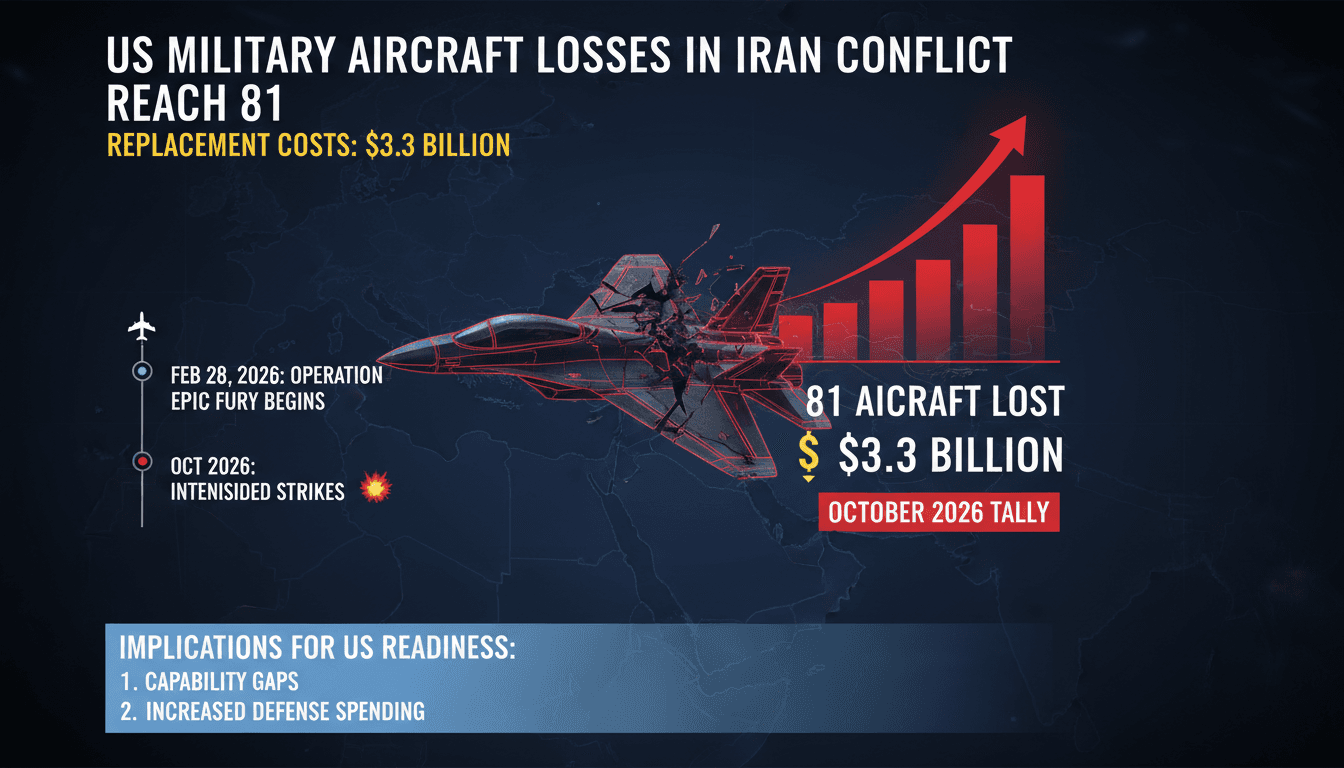
- US military aircraft losses in Operation Epic Fury against Iran reached at least 81 by October 2026, nearly double previous estimates.
- Replacement costs for damaged or lost aircraft are projected between $1.9 billion and $3.3 billion, straining military budgets.
- Total operational costs of the conflict have exceeded $38 billion, raising concerns about munitions stockpiles and air fleet readiness.
The context you actually need
- Tensions escalated between the US and Iran in early 2026, leading to the launch of Operation Epic Fury on February 28, 2026.
- Iranian missile and drone attacks on US bases prompted military responses, resulting in significant aircraft attrition.
- Congressional scrutiny has increased regarding the US military's industrial base capacity and the timeline for munitions replenishment.
What's really happening
Operation Epic Fury commenced on February 28, 2026, as a direct response to Iranian aggression in the Middle East. The US military's initial air and missile operations targeted Iranian installations, but the conflict quickly escalated. Early losses included friendly-fire incidents and damage from Iranian strikes on US bases, which resulted in aircraft being rendered inoperable on the ground. By May 2026, the Congressional Research Service (CRS) reported 42 aircraft lost or damaged. However, as the conflict progressed, the total number of aircraft losses surged to 81 by October 2026, encompassing a range of platforms including advanced fighters, tankers, and drones.
The attrition of US air assets has raised alarms about the military's operational readiness and capability gaps in other theaters. The Pentagon and CRS reports indicate that production constraints and munitions shortages are compounding these issues. The total operational costs of the conflict have skyrocketed from $25 billion in April to over $38 billion by September 2026, driven primarily by munitions expenditures that exceeded $22 billion through June. This financial strain is not just a military concern; it has broader implications for defense contractors and the global arms market.
As the US military grapples with these losses, the Congressional Budget Office has projected replacement costs for the damaged aircraft to be between $1.9 billion and $3.3 billion. This financial burden could lead to increased defense spending requests and a reevaluation of military priorities, particularly as the US faces competition from other global powers, including China. The ongoing conflict has also raised concerns about the depletion of munitions stockpiles, which could affect the US's ability to respond to future crises.
In the context of regional security, bases in the UAE, including those near Dubai, have sustained damage from Iranian strikes. This has heightened security concerns and could lead to economic disruptions in the region, affecting residents and businesses. While specific quantified impacts on Dubai civilians remain unreported, the potential for increased tensions and instability is palpable.
Who feels it first (and how)
- Defense contractors: Increased demand for aircraft and munitions replacement could lead to higher revenues but also production challenges.
- Military personnel: Strain on air fleet readiness may affect operational capabilities and safety.
- Regional businesses: Heightened tensions could disrupt trade and economic activities in the Middle East, particularly in the UAE.
- Government officials: Increased scrutiny and pressure to allocate more resources to defense budgets and military readiness.
What to watch next
- Congressional budget discussions: Watch for shifts in defense spending requests and potential impacts on military readiness.
- Munitions replenishment timelines: Delays could exacerbate operational challenges and affect US military capabilities in other regions.
- Geopolitical developments: Monitor Iranian actions and US responses, as these could influence regional stability and economic conditions.
The US military has lost at least 81 aircraft in the conflict, with significant financial implications.
Increased defense spending requests and scrutiny of military readiness will continue as the conflict evolves.
The long-term impacts on regional security and economic conditions in the Middle East remain uncertain.
Frequently Asked Questions
- Why it matters?
- The ongoing military conflict has significant implications for global defense spending and regional security dynamics.
- What happened (in 30 seconds)?
- US military aircraft losses in Operation Epic Fury against Iran reached at least 81 by October 2026, nearly double previous estimates. Replacement costs for damaged or lost aircraft are projected between $1.9 billion and $3.3 billion, straining military budgets. Total operational costs of the conflict have exceeded $38 billion, raising concerns about munitions stockpiles and air fleet readiness.
- What's really happening?
- Operation Epic Fury commenced on February 28, 2026, as a direct response to Iranian aggression in the Middle East. The US military's initial air and missile operations targeted Iranian installations, but the conflict quickly escalated. Early losses included friendly-fire incidents and damage from Iranian strikes on US bases, which resulted in aircraft being rendered inoperable on the ground. By May 2026, the Congressional Research Service (CRS) reported 42 aircraft lost or damaged. However, as t
- Who feels it first (and how)?
- Defense contractors: Increased demand for aircraft and munitions replacement could lead to higher revenues but also production challenges. Military personnel: Strain on air fleet readiness may affect operational capabilities and safety. Regional businesses: Heightened tensions could disrupt trade and economic activities in the Middle East, particularly in the UAE. Government officials: Increased scrutiny and pressure to allocate more resources to defense budgets and military readiness.
- What to watch next?
- Congressional budget discussions: Watch for shifts in defense spending requests and potential impacts on military readiness. Munitions replenishment timelines: Delays could exacerbate operational challenges and affect US military capabilities in other regions. Geopolitical developments: Monitor Iranian actions and US responses, as these could influence regional stability and economic conditions.
U.S. political news and right-leaning commentary.
"Fox News is a highly influential conservative news outlet known for right-leaning political commentary and coverage."
— A47 Editor
Cost of Iran war explodes as toll on US air fleet nearly doubles
The ongoing conflict in Iran has resulted in significant losses for the U.S. military, with at least 81 aircraft, including F-15E Strike Eagles, an F-35A, and numerous MQ-9 Reapers, either lost or damaged, leading to a financial toll of approximately...
Right-of-center views on political news.
"The Washington Times is a conservative-leaning newspaper known for its political coverage and advocacy of right-of-center viewpoints."
— A47 Editor
81 U.S. aircraft lost or damaged in Iran war, report shows
A recent report indicates that the ongoing war in Iran has resulted in the loss or damage of 81 U.S. aircraft, with an estimated replacement cost of $5.1 billion. This figure is derived from federal unit costs for 73 of the aircraft involved.
Breaking news, politics, business, and entertainment from the U.S. and around the world.
"The New York Post is a tabloid-format newspaper known for its sensationalist headlines and conservative-leaning editorial tone."
— A47 Editor
US military has lost 81 planes, drones and helicopters worth $3.3 billion in Iran war: report
A recent report from the Congressional Research Service reveals that the U.S. military has lost at least 81 aircraft, including planes, drones, and helicopters, valued at approximately $3.3 billion since the onset of the war in Iran. This significant...