
Nationwide Student Protests Erupt in France Over Education System Failures
Why it matters
Chronic underfunding and infrastructure deficiencies in education systems can lead to widespread social unrest and impact future workforce readiness.
What happened (in 30 seconds)
- Protests began in mid-September 2026, escalating into nationwide demonstrations by early October, with approximately 250,000 participants.
- Key grievances include teacher shortages, overcrowded classrooms, and deteriorating school facilities, leading to blockades and clashes with police.
- Government response involved a five-point reform plan, deemed insufficient by protesters, resulting in ongoing actions and planned strikes.
The context you actually need
- Longstanding issues in France's public secondary education system include a decade-long teacher shortage and overcrowded classes averaging 25-30 students.
- Infrastructure failures have been exacerbated by recent heatwaves, revealing dilapidated facilities with problems like rat infestations and leaks.
- Social media mobilization played a crucial role in organizing protests, starting from initial actions at Lycée Saint-Exupéry in Créteil.
What's really happening
The student-led protests in France are a culmination of years of systemic neglect in the public education sector, particularly in the lycée system. The movement began in mid-September 2026, driven by high school students (lycéens) who faced deteriorating conditions in their schools. The immediate triggers included severe teacher shortages, with many classes lacking qualified staff due to a decade-long failure to replace absent educators. This has resulted in overcrowded classrooms, where students often find themselves in classes of 25-30, significantly impacting the quality of education.
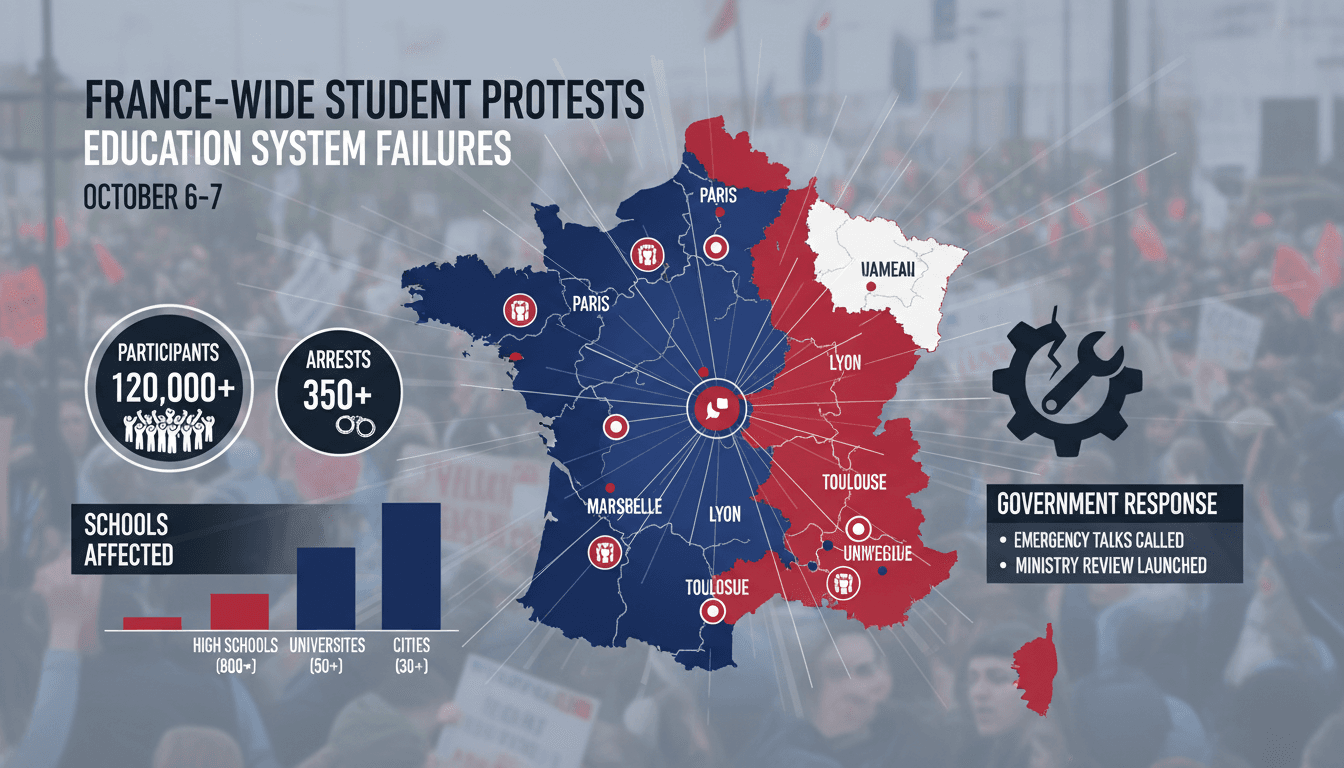
The protests gained momentum as students and their supporters, including teachers, parents, and trade unions, organized blockades and marches. The situation escalated dramatically by early October, culminating in major protests on October 6-7, where approximately 250,000 individuals participated across more than 40 cities. The protests were marked by clashes with police, resulting in over 6,000 arrests, predominantly minors, and hundreds of injuries among both students and law enforcement.
The French government responded with a five-point reform plan aimed at addressing the core issues raised by the protesters. This plan included commitments to improve staffing levels, enhance infrastructure, and provide greater transparency in the university admissions process via the Parcoursup platform. However, many protesters deemed these measures insufficient, leading to ongoing demonstrations and planned strikes.
The protests also reflect broader societal frustrations with the education system, including excessively long school days that extend until 6-7 p.m. and a lack of clarity surrounding university admissions. The movement has been fueled by social media, allowing students to share their grievances and mobilize support rapidly.
As the protests continue, the French government faces pressure to implement meaningful reforms that address the root causes of the unrest. The situation is indicative of a larger trend in which public education systems worldwide are grappling with funding shortages and infrastructure challenges, raising questions about the future of education and workforce readiness.
Who feels it first (and how)
- Students: Directly impacted by overcrowded classrooms and inadequate facilities.
- Teachers: Facing increased workloads and stress due to staffing shortages.
- Parents: Concerned about the quality of education and safety of their children.
- Local communities: Experiencing disruptions and potential long-term impacts on youth development.
- Government officials: Under pressure to respond effectively to public demands and prevent further unrest.
What to watch next
- Government reforms: Monitor the effectiveness of the announced five-point plan and any additional measures introduced by the French government.
- Continued protests: Watch for planned actions by student groups and unions, particularly the next major demonstration scheduled for October 17.
- Public sentiment: Keep an eye on how public opinion shifts regarding education funding and infrastructure, which could influence future policy decisions.
Protests have resulted in significant public unrest and government response.
Continued demonstrations and potential for further strikes as dissatisfaction persists.
The long-term impact of these protests on education policy and funding in France.
Frequently Asked Questions
- Why it matters?
- Chronic underfunding and infrastructure deficiencies in education systems can lead to widespread social unrest and impact future workforce readiness.
- What happened (in 30 seconds)?
- Protests began in mid-September 2026, escalating into nationwide demonstrations by early October, with approximately 250,000 participants. Key grievances include teacher shortages, overcrowded classrooms, and deteriorating school facilities, leading to blockades and clashes with police. Government response involved a five-point reform plan, deemed insufficient by protesters, resulting in ongoing actions and planned strikes.
- What's really happening?
- The student-led protests in France are a culmination of years of systemic neglect in the public education sector, particularly in the lycée system. The movement began in mid-September 2026, driven by high school students (lycéens) who faced deteriorating conditions in their schools. The immediate triggers included severe teacher shortages, with many classes lacking qualified staff due to a decade-long failure to replace absent educators. This has resulted in overcrowded classrooms, where student
- Who feels it first (and how)?
- Students: Directly impacted by overcrowded classrooms and inadequate facilities. Teachers: Facing increased workloads and stress due to staffing shortages. Parents: Concerned about the quality of education and safety of their children. Local communities: Experiencing disruptions and potential long-term impacts on youth development. Government officials: Under pressure to respond effectively to public demands and prevent further unrest.
- What to watch next?
- Government reforms: Monitor the effectiveness of the announced five-point plan and any additional measures introduced by the French government. Continued protests: Watch for planned actions by student groups and unions, particularly the next major demonstration scheduled for October 17. Public sentiment: Keep an eye on how public opinion shifts regarding education funding and infrastructure, which could influence future policy decisions.
Comprehensive coverage of global events, politics, and international issues.
"NBC News is a mainstream outlet known for comprehensive national and international coverage with a centrist to slightly left-leaning editorial tone."
— A47 Editor
France rocked by student-led protests over school conditions
France is experiencing widespread protests led by students, teachers, parents, and labor unions, as demonstrators voice their frustrations over poor school conditions. The protests have resulted in violent clashes with police and the closure or block...
International coverage of politics, culture, and current affairs.
"BBC News is widely regarded as a reputable international news organization, known for its impartial tone and public service mandate."
— A47 Editor
Watch: Riot police clash with school protesters and use tear gas in France
In France, widespread protests by high school students have erupted, leading to violent clashes with riot police who deployed tear gas to disperse crowds. The demonstrations, fueled by grievances over poor classroom conditions and inadequate funding,...
24/7 international news from a French perspective in multiple languages.
"France 24 is viewed as a globally focused outlet with balanced coverage and a European perspective."
— A47 Editor
'We're fed up': Paris students rise up in a movement that shows no sign of slowing
Hundreds of thousands of students and their supporters participated in nationwide protests across France, particularly in Paris, demanding better school conditions after weeks of barricades and demonstrations. The protests reflect deep-seated frustra...
International coverage of politics, culture, and current affairs.
"BBC News is widely regarded as a reputable international news organization, known for its impartial tone and public service mandate."
— A47 Editor
Tear gas in Paris and Marseille as school protests grow across France
Protests have erupted in Paris and Marseille, primarily involving teenagers, who are demanding increased resources for schools and an end to police repression. The demonstrations have escalated into violent clashes, with police using tear gas to disp...
Top international stories selected by The Guardian editors.
"The Guardian is known for its progressive editorial stance and in-depth analysis."
— A47 Editor
‘This is state violence’: Paris students rage at politicians and heavy-handed policing
Unprecedented protests have erupted in Paris, particularly outside the Lycée Sophie-Germain, where hundreds of students have constructed barricades and called for increased funding and equality in education. The demonstrations have escalated into vio...
Comprehensive coverage of global events, politics, and international issues.
"NBC News is a mainstream outlet known for comprehensive national and international coverage with a centrist to slightly left-leaning editorial tone."
— A47 Editor
Paris students face intense police response while demanding better school conditions
Tens of thousands of high school students have taken to the streets in Paris and other French cities, demanding better learning conditions amid escalating protests that have resulted in approximately 6,000 arrests and numerous injuries. The demonstra...
RT is a Russian state-funded network covering global events from a Russian perspective.
"RT is widely criticized for promoting pro-Kremlin narratives and is considered by many to be a state propaganda outlet."
— A47 Editor
Violent student protests spread from France to Belgium (VIDEOS)
Violent student protests have erupted in Belgium, particularly in Liege, as demonstrations over poor education conditions spread from France, where similar unrest has led to clashes with police and significant disruptions in schools. Belgian police h...