
UPS Employee Oversight Leads to Diversion of Australian F-35 Components to China
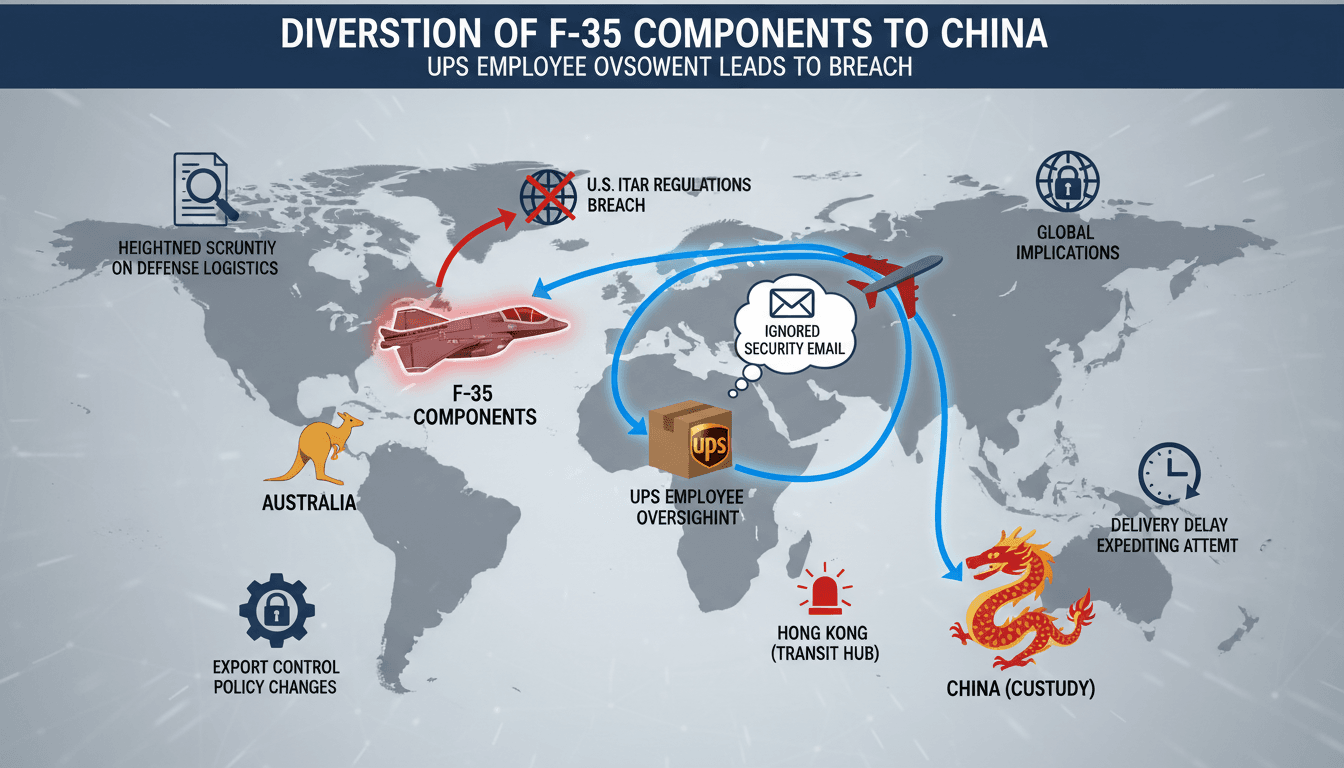
Why it matters
This routing error highlights vulnerabilities in global defense supply chains and the potential for sensitive technology to fall into adversarial hands.
What happened (in 30 seconds)
- A UPS employee missed a security email, leading to the diversion of F-35 components from Australia to China via Hong Kong.
- The shipment included sensitive parts, specifically a cockpit canopy and weapons-bay door, which are crucial for the aircraft's stealth capabilities.
- U.S. authorities are investigating the incident, seeking to recover the components and reassess supply chain safeguards.
The context you actually need
- The F-35 program operates under strict U.S. International Traffic in Arms Regulations (ITAR), designed to prevent sensitive military technology from reaching adversaries.
- Hong Kong's status under U.S. export controls has changed, aligning more closely with mainland China, complicating logistics for defense contractors.
- Commercial carriers like UPS play a vital role in defense logistics, often handling sensitive shipments alongside specialized freight forwarders.
What's really happening
In late May 2026, a shipment of F-35 components departed Australia, intended for inspection, repair, or disposal in the United States. However, due to a missed security email from DSV, the freight forwarder acting on behalf of Lockheed Martin, the shipment was rerouted through Hong Kong, a prohibited jurisdiction under ITAR regulations. This oversight was not merely a clerical error; it stemmed from an attempt to expedite delivery after previous schedule slippages, which created pressure to meet timelines at the expense of compliance.
The components in question—a cockpit canopy and a weapons-bay door—are critical for the F-35's operational capabilities, particularly its radar-absorbing features that enhance stealth. Once the shipment entered Chinese jurisdiction, it was taken into custody, raising significant concerns about the potential transfer of sensitive technology to adversarial forces.
The F-35 Joint Program Office confirmed the routing violation and initiated recovery efforts. Pentagon officials briefed congressional staff on the incident, emphasizing the need for stringent oversight in defense logistics. Australian Defence Minister Richard Marles acknowledged the situation, stating that the items were assessed as non-sensitive, but the implications of the breach remain serious.
This incident not only exposes vulnerabilities in the logistics chain but also raises questions about the effectiveness of current safeguards in place to protect sensitive military technology. As investigations continue, the U.S. government is likely to review and tighten export controls, particularly regarding shipments passing through jurisdictions with heightened risks.
Who feels it first (and how)
- Defense contractors: Increased scrutiny and potential delays in logistics operations.
- Logistics and freight forwarding companies: Heightened compliance requirements and operational adjustments.
- Government officials: Pressure to enhance oversight and accountability in defense procurement processes.
What to watch next
- Recovery efforts: Monitor the U.S. government's progress in retrieving the diverted components and any subsequent legal actions.
- Regulatory changes: Watch for updates on ITAR compliance measures and potential new policies aimed at preventing similar incidents.
- International relations: Observe how this incident affects U.S.-China relations, particularly in the context of defense technology transfers.
The shipment was diverted through Hong Kong due to a missed security email.
The U.S. will implement stricter export controls and oversight measures in response to this incident.
The long-term impact on U.S.-China relations and the implications for future defense logistics.
Frequently Asked Questions
- Why it matters?
- This routing error highlights vulnerabilities in global defense supply chains and the potential for sensitive technology to fall into adversarial hands.
- What happened (in 30 seconds)?
- A UPS employee missed a security email, leading to the diversion of F-35 components from Australia to China via Hong Kong. The shipment included sensitive parts, specifically a cockpit canopy and weapons-bay door, which are crucial for the aircraft's stealth capabilities. U.S. authorities are investigating the incident, seeking to recover the components and reassess supply chain safeguards.
- What's really happening?
- In late May 2026, a shipment of F-35 components departed Australia, intended for inspection, repair, or disposal in the United States. However, due to a missed security email from DSV, the freight forwarder acting on behalf of Lockheed Martin, the shipment was rerouted through Hong Kong, a prohibited jurisdiction under ITAR regulations. This oversight was not merely a clerical error; it stemmed from an attempt to expedite delivery after previous schedule slippages, which created pressure to meet
- Who feels it first (and how)?
- Defense contractors: Increased scrutiny and potential delays in logistics operations. Logistics and freight forwarding companies: Heightened compliance requirements and operational adjustments. Government officials: Pressure to enhance oversight and accountability in defense procurement processes.
- What to watch next?
- Recovery efforts: Monitor the U.S. government's progress in retrieving the diverted components and any subsequent legal actions. Regulatory changes: Watch for updates on ITAR compliance measures and potential new policies aimed at preventing similar incidents. International relations: Observe how this incident affects U.S.-China relations, particularly in the context of defense technology transfers.
English-language digital publication covering business, politics, technology, and current affairs.
"The Arabian Post mixes original and syndicated-style coverage with a broad regional and global business-news orientation."
— A47 Editor
UPS email lapse routed F-35 components to China
A lapse by a UPS employee in responding to a security email resulted in sensitive F-35 components, specifically a cockpit canopy and weapons-bay door from an Australian F-35, being routed to Hong Kong and subsequently taken into Chinese custody. This...
Arabic-language coverage of international news and geopolitics.
"RT Arabic is a Russian state-funded outlet often criticized for promoting Kremlin-aligned narratives."
— A47 Editor
خطأ موظف أمريكي يتسبب في وصول قطع حساسة من مقاتلة "إف-35" إلى الصين
A logistical error by an employee at UPS led to sensitive components of the American F-35 fighter jet reaching China, as reported by Bloomberg. The incident stemmed from the employee's failure to read a warning email, raising significant security con...
Technology business and AI-related headlines.
"Data-driven tech newsroom with global scope."
— A47 Editor
UPS Worker Missed Email, Letting China Get F-35 Parts
A United Parcel Service Inc. employee overlooked an email warning against routing a shipment of F-35 stealth fighter jet parts through Hong Kong, allowing China to acquire these sensitive components. This incident raises concerns about the security p...
Technology business news, market impacts, and innovation trends.
"Bloomberg is a premier financial and tech news provider, respected for its in-depth reporting and analytical rigor."
— A47 Editor
UPS Worker Missed Email, Letting China Get F-35 Parts
A United Parcel Service Inc. employee overlooked an email warning against routing a shipment of F-35 stealth fighter jet parts through Hong Kong, allowing China to acquire these sensitive components. This incident raises concerns about the security p...