
UPS Routing Error Leads to Diversion of Australian F-35 Components to China
Why it matters
This incident highlights vulnerabilities in global supply chains, particularly for sensitive military technology.
What happened (in 30 seconds)
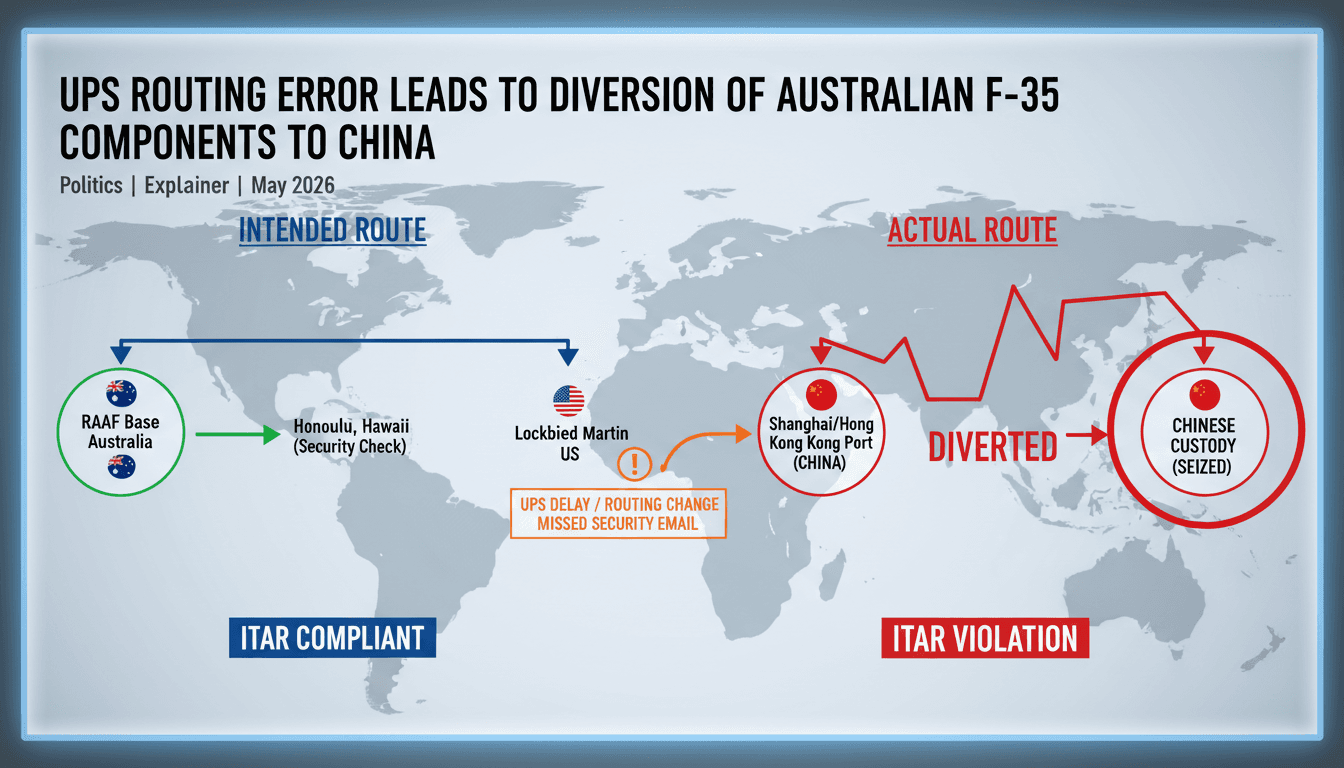
- A UPS employee missed a critical security email in late May 2026, leading to the rerouting of F-35 components through Hong Kong.
- The components, including a cockpit canopy and weapons-bay door, were taken into Chinese custody upon arrival.
- Investigations by US and Australian authorities were initiated after the diversion became public in September 2026.
The context you actually need
- The F-35 program is governed by strict ITAR regulations, which dictate how sensitive military components can be exported.
- Hong Kong's export control status changed in 2020, aligning it more closely with mainland China, complicating international shipping routes.
- The incident underscores the importance of compliance in defense logistics, as even minor oversights can lead to significant geopolitical ramifications.
What's really happening
In late May 2026, a shipment of F-35 components from Australia was set to travel to the United States. The components included a cockpit canopy and a weapons-bay door, both critical for the aircraft's stealth capabilities. These parts were shipped by Lockheed Martin via freight forwarder DSV and carrier UPS. DSV had communicated strict routing requirements under the International Traffic in Arms Regulations (ITAR) to UPS, emphasizing that the shipment should not pass through Hong Kong due to its sensitive nature.
However, a UPS employee failed to act on this warning, possibly due to the email being sent through a separate IT system that did not receive adequate attention. As a result, after delays in departure from Australia, UPS rerouted the shipment through Hong Kong to expedite delivery. This decision violated ITAR regulations, which require that such sensitive components be routed through allied jurisdictions like South Korea and Taiwan.
Upon arrival in Hong Kong, Chinese authorities seized the components. The incident remained under wraps until September 2026, when it was publicly disclosed, prompting immediate investigations by the Pentagon and the US State Department. Congressional committees were briefed on the matter, highlighting the seriousness of the compliance failure. Australia confirmed its awareness of the situation and indicated ongoing coordination with the US and Lockheed Martin to recover the parts.
The ramifications of this incident extend beyond the immediate loss of sensitive technology. It raises questions about the robustness of supply chain security for defense contractors and the potential for similar oversights in the future. The scrutiny on logistics operations is likely to increase, with companies needing to reassess their compliance protocols to prevent unauthorized transfers of sensitive materials.
Who feels it first (and how)
- Defense Contractors: Increased scrutiny on compliance and potential impacts on contracts.
- Logistics Providers: Heightened awareness of the need for rigorous routing protocols.
- Government Agencies: Pressure to enhance oversight and regulatory frameworks for sensitive exports.
What to watch next
- Investigative Outcomes: The results of ongoing investigations by US and Australian authorities will clarify accountability and potential penalties.
- Regulatory Changes: Watch for any updates to ITAR regulations or export controls that may arise from this incident.
- Supply Chain Security Measures: Increased investment in compliance technologies and training within logistics firms could emerge as a direct response.
The components were diverted to Hong Kong and seized by Chinese authorities.
There will be increased regulatory scrutiny on defense logistics and compliance protocols.
The long-term impact on US-China relations and defense technology sharing remains uncertain.
Frequently Asked Questions
- Why it matters?
- This incident highlights vulnerabilities in global supply chains, particularly for sensitive military technology.
- What happened (in 30 seconds)?
- A UPS employee missed a critical security email in late May 2026, leading to the rerouting of F-35 components through Hong Kong. The components, including a cockpit canopy and weapons-bay door, were taken into Chinese custody upon arrival. Investigations by US and Australian authorities were initiated after the diversion became public in September 2026.
- What's really happening?
- In late May 2026, a shipment of F-35 components from Australia was set to travel to the United States. The components included a cockpit canopy and a weapons-bay door, both critical for the aircraft's stealth capabilities. These parts were shipped by Lockheed Martin via freight forwarder DSV and carrier UPS. DSV had communicated strict routing requirements under the International Traffic in Arms Regulations (ITAR) to UPS, emphasizing that the shipment should not pass through Hong Kong due to its
- Who feels it first (and how)?
- Defense Contractors: Increased scrutiny on compliance and potential impacts on contracts. Logistics Providers: Heightened awareness of the need for rigorous routing protocols. Government Agencies: Pressure to enhance oversight and regulatory frameworks for sensitive exports.
- What to watch next?
- Investigative Outcomes: The results of ongoing investigations by US and Australian authorities will clarify accountability and potential penalties. Regulatory Changes: Watch for any updates to ITAR regulations or export controls that may arise from this incident. Supply Chain Security Measures: Increased investment in compliance technologies and training within logistics firms could emerge as a direct response.
English-language digital publication covering business, politics, technology, and current affairs.
"The Arabian Post mixes original and syndicated-style coverage with a broad regional and global business-news orientation."
— A47 Editor
UPS email lapse routed F-35 components to China
A lapse by a UPS employee in responding to a security email resulted in sensitive F-35 components, specifically a cockpit canopy and weapons-bay door from an Australian F-35, being routed to Hong Kong and subsequently taken into Chinese custody. This...
Arabic-language coverage of international news and geopolitics.
"RT Arabic is a Russian state-funded outlet often criticized for promoting Kremlin-aligned narratives."
— A47 Editor
خطأ موظف أمريكي يتسبب في وصول قطع حساسة من مقاتلة "إف-35" إلى الصين
A logistical error by an employee at UPS led to sensitive components of the American F-35 fighter jet reaching China, as reported by Bloomberg. The incident stemmed from the employee's failure to read a warning email, raising significant security con...
Technology business and AI-related headlines.
"Data-driven tech newsroom with global scope."
— A47 Editor
UPS Worker Missed Email, Letting China Get F-35 Parts
A United Parcel Service Inc. employee overlooked an email warning against routing a shipment of F-35 stealth fighter jet parts through Hong Kong, allowing China to acquire these sensitive components. This incident raises concerns about the security p...
Technology business news, market impacts, and innovation trends.
"Bloomberg is a premier financial and tech news provider, respected for its in-depth reporting and analytical rigor."
— A47 Editor
UPS Worker Missed Email, Letting China Get F-35 Parts
A United Parcel Service Inc. employee overlooked an email warning against routing a shipment of F-35 stealth fighter jet parts through Hong Kong, allowing China to acquire these sensitive components. This incident raises concerns about the security p...