
Israel Marks Three Years Since October 7 Hamas Attacks Amid Political Shifts
The Vibe
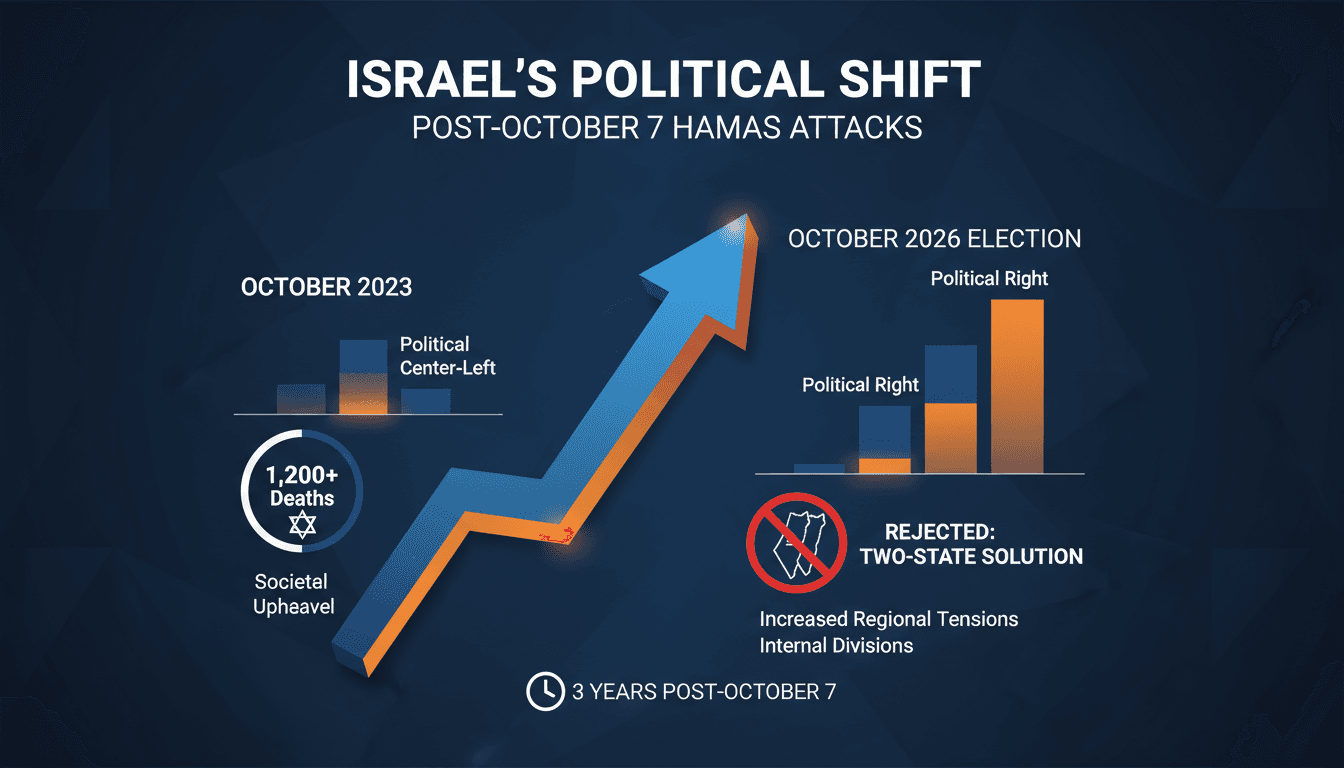
Israel is experiencing a profound political transformation marked by a rightward shift and a rejection of traditional frameworks for peace.
What it signals
This shift indicates a recalibration of power dynamics in the region. The ongoing conflict and the societal trauma from the October 7 attacks have led to a hardened Israeli identity that prioritizes security over diplomacy. This realignment could affect international relations, investment flows, and regional stability, impacting how businesses operate across borders.
Why it's happening now
1. The October 7 attacks exposed critical security vulnerabilities, prompting a nationalistic response that has reshaped public sentiment and political priorities. 2. The failure of peace processes and normalization efforts, particularly with Saudi Arabia, has left a vacuum that hardline policies are now filling. 3. The ongoing military operations and their aftermath have deepened societal trauma, fostering a political environment where right-wing ideologies gain traction, sidelining moderate voices.
Who it's for (and who it leaves out)
The core beneficiaries of this shift are right-leaning political factions and security-focused constituencies within Israel. Conversely, moderate Israelis and Palestinians advocating for a two-state solution find themselves increasingly marginalized.
What to watch next
1. The upcoming national election on October 27, 2026, will be a critical indicator of whether the rightward trend continues or if moderates can regain influence. 2. International reactions, particularly from the U.S. and Gulf states, will reveal how this political shift affects regional alliances and economic partnerships.
Israel is currently under a ceasefire with ongoing low-level violence.
The political landscape will continue to favor right-wing policies, impacting peace negotiations.
The long-term implications for Israel's international relations and economic ties remain uncertain.
European coverage of Middle East politics and security issues.
"France 24 offers international reporting with a European editorial perspective."
— A47 Editor
No longer the same Israel? October 7th and the future of the Jewish State
On the third anniversary of the October 7 attacks, Israel remains under the leadership of Prime Minister Benjamin Netanyahu, who has faced criticism for security failures and the subsequent war against Hamas. Despite predictions of his political decl...
Global news coverage with extensive reporting on Middle Eastern conflicts and geopolitics.
"Al Jazeera is a Qatar-based broadcaster known for wide regional coverage and alternative perspectives."
— A47 Editor
What’s behind Israel’s growing shift to the right?
Three years after the October 7 attacks, Israeli society has experienced a significant political shift to the right, reflecting a growing trend among its leadership and electorate. This shift is characterized by increased support for right-wing parti...
Regional coverage and analysis focused on politics, diplomacy, and business across the Middle East.
"Al-Monitor is known for analytical reporting on Middle East politics and policy developments."
— A47 Editor
War-weary northern Israelis rethink loyalty to Netanyahu before election
In northern Israel, residents are reassessing their support for Prime Minister Benjamin Netanyahu ahead of the upcoming elections, particularly in light of the recent conflict with Hezbollah, which has seen thousands of rockets and drones fired acros...