
Flavio Bolsonaro Surprises with Strong First Round Performance in Brazil's Presidential Election
Why it matters
The outcome signals a potential shift in Brazil's political landscape, influencing both domestic and international economic strategies.
What happened (in 30 seconds)
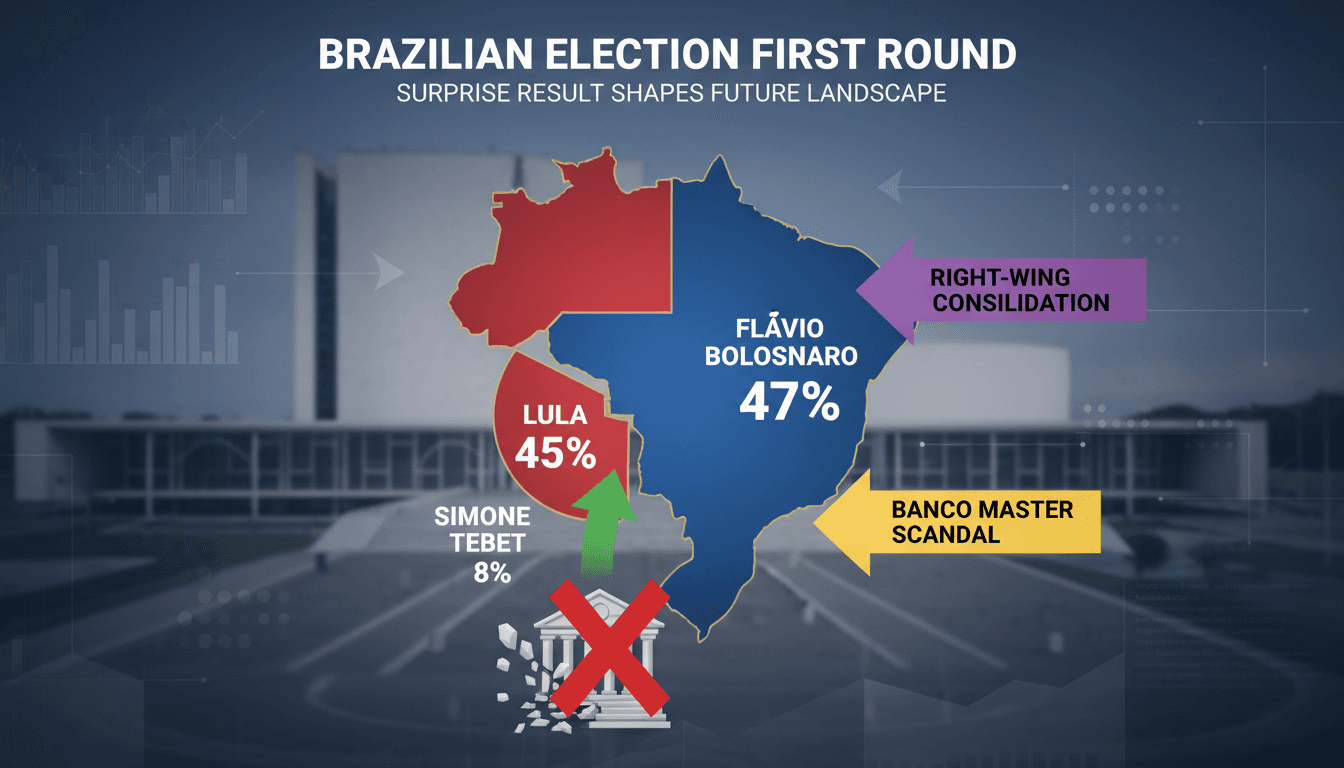
- Flavio Bolsonaro secured approximately 47% of valid votes in the first round of Brazil's presidential election, outperforming expectations.
- Incumbent President Lula received 45%, leading to a runoff scheduled for October 25, 2026.
- Late consolidation of right-wing support and the Banco Master banking scandal significantly influenced voter sentiment.
The context you actually need
- Pre-election polls had consistently shown Lula leading by 3-4 points, indicating a competitive race.
- Economic indicators suggested improvements, such as record-low unemployment, yet public sentiment remained frustrated over high living costs.
- The Banco Master scandal disproportionately affected Lula's campaign, amplifying anti-establishment sentiments favoring Bolsonaro.
What's really happening
Flavio Bolsonaro's unexpected performance in the first round of Brazil's presidential election can be attributed to a confluence of strategic voter behavior and external events that reshaped the political landscape. In the weeks leading up to the election, there was a notable shift as supporters of minor right-wing candidates began consolidating their votes behind Bolsonaro earlier than anticipated. This strategic alignment was crucial in boosting his overall vote share, allowing him to outperform pre-election polling by an average of 4.33 percentage points, according to analysis from BTG Pactual.
The Banco Master banking scandal played a pivotal role in this election cycle. Allegations of fraud and connections to various political figures, including those associated with Lula's administration, created a narrative that resonated with voters disillusioned by the status quo. This scandal not only tarnished Lula's image but also fueled anti-institutional sentiments that Bolsonaro capitalized on, positioning himself as a candidate of change amidst widespread dissatisfaction with the government.
Despite macroeconomic indicators showing improvements, such as record-low unemployment and easing inflation, many voters expressed frustration over high food prices and household debt. This economic discontent, coupled with the perception that the government had not adequately addressed security and living costs, created an environment ripe for a rightward shift in voter sentiment. The right's gains in Senate and gubernatorial contests further reinforced this trend, indicating a broader political realignment in Brazil.
As the election results unfolded on October 4-5, Bolsonaro's ability to secure 47% of the vote against Lula's 45% not only defied expectations but also set the stage for a highly competitive runoff. Lula's campaign has since initiated a communications overhaul aimed at targeting undecided voters and those who supported minor candidates, indicating a recognition of the need to adapt to the changing political dynamics.
The implications of this election extend beyond Brazil's borders, as international observers noted the competitive nature of the contest. Markets reacted with limited volatility, but the right-wing legislative gains suggest a potential shift in policy direction that could impact foreign investment and economic relations.
Who feels it first (and how)
- Voters in Brazil: Those dissatisfied with economic conditions may shift their support towards right-wing candidates.
- Investors: Changes in political leadership could influence investment strategies and market stability.
- Political analysts: The evolving political landscape will require reevaluation of forecasts and strategies.
What to watch next
- Runoff election strategies: Watch how both candidates adjust their messaging to attract undecided voters and supporters of minor candidates.
- Economic policy shifts: Monitor any proposed changes in economic policies post-election, particularly regarding inflation and living costs.
- Legislative developments: Observe how the right-wing gains in legislative races influence governance and policy-making in Brazil.
Flavio Bolsonaro and Luiz Inacio Lula da Silva will face off in a runoff election on October 25, 2026.
The political landscape in Brazil may continue to shift rightward, impacting future elections and governance.
The long-term effects of the Banco Master scandal on Lula's political capital and public perception remain uncertain.
Frequently Asked Questions
- Why it matters?
- The outcome signals a potential shift in Brazil's political landscape, influencing both domestic and international economic strategies.
- What happened (in 30 seconds)?
- Flavio Bolsonaro secured approximately 47% of valid votes in the first round of Brazil's presidential election, outperforming expectations. Incumbent President Lula received 45%, leading to a runoff scheduled for October 25, 2026. Late consolidation of right-wing support and the Banco Master banking scandal significantly influenced voter sentiment.
- What's really happening?
- Flavio Bolsonaro's unexpected performance in the first round of Brazil's presidential election can be attributed to a confluence of strategic voter behavior and external events that reshaped the political landscape. In the weeks leading up to the election, there was a notable shift as supporters of minor right-wing candidates began consolidating their votes behind Bolsonaro earlier than anticipated. This strategic alignment was crucial in boosting his overall vote share, allowing him to outperfo
- Who feels it first (and how)?
- Voters in Brazil: Those dissatisfied with economic conditions may shift their support towards right-wing candidates. Investors: Changes in political leadership could influence investment strategies and market stability. Political analysts: The evolving political landscape will require reevaluation of forecasts and strategies.
- What to watch next?
- Runoff election strategies: Watch how both candidates adjust their messaging to attract undecided voters and supporters of minor candidates. Economic policy shifts: Monitor any proposed changes in economic policies post-election, particularly regarding inflation and living costs. Legislative developments: Observe how the right-wing gains in legislative races influence governance and policy-making in Brazil.
Global news coverage with extensive reporting on Middle Eastern conflicts and geopolitics.
"Al Jazeera is a Qatar-based broadcaster known for wide regional coverage and alternative perspectives."
— A47 Editor
Why Flavio Bolsonaro outperformed the polls in Brazil’s election
In Brazil's recent presidential election, right-wing candidate Flávio Bolsonaro outperformed expectations by securing 47.3% of the votes in the first round, surpassing incumbent President Luiz Inácio Lula da Silva, who received 44.8%. This unexpected...
Comprehensive coverage of Middle Eastern and global issues.
"Al Jazeera is a prominent voice from the Global South, especially the Middle East, with an emphasis on underreported stories."
— A47 Editor
Why Flavio Bolsonaro outperformed the polls in Brazil’s election
In Brazil's recent presidential election, right-wing candidate Flávio Bolsonaro outperformed expectations by securing 47.3% of the votes in the first round, surpassing incumbent President Luiz Inácio Lula da Silva, who received 44.8%. This unexpected...
24/7 international news from a French perspective in multiple languages.
"France 24 is viewed as a globally focused outlet with balanced coverage and a European perspective."
— A47 Editor
Brazil 'has moved to the right progressively over the last two decades', expert says
In a significant political development, Senator Flavio Bolsonaro has received endorsements from fellow right-wing politicians Ronaldo Caiado and Romeu Zema for the upcoming runoff against incumbent President Luiz Inacio Lula da Silva, following the f...
24/7 international news from a French perspective in multiple languages.
"France 24 is viewed as a globally focused outlet with balanced coverage and a European perspective."
— A47 Editor
Brazil 'has moved to the right progressively over the last two decades', expert says
In a significant political development, Senator Flavio Bolsonaro has received endorsements from right-wing politicians Ronaldo Caiado and Romeu Zema for the upcoming runoff against incumbent President Luiz Inacio Lula da Silva. This follows Bolsonaro...
News across North, Central, and South America including politics and economics.
"France 24 is viewed as a globally focused outlet with balanced coverage and a European perspective."
— A47 Editor
Brazil presidential election: 'Bolsonaro being ahead is a surprise,' researcher says
In a surprising turn during Brazil's presidential election, far-right candidate Flavio Bolsonaro secured a lead in the first round with 47 percent of the votes, narrowly surpassing incumbent President Luiz Inacio Lula da Silva, who garnered 45 percen...