
Trump's Military Operations in Iran Under Political Pressure Ahead of Midterms
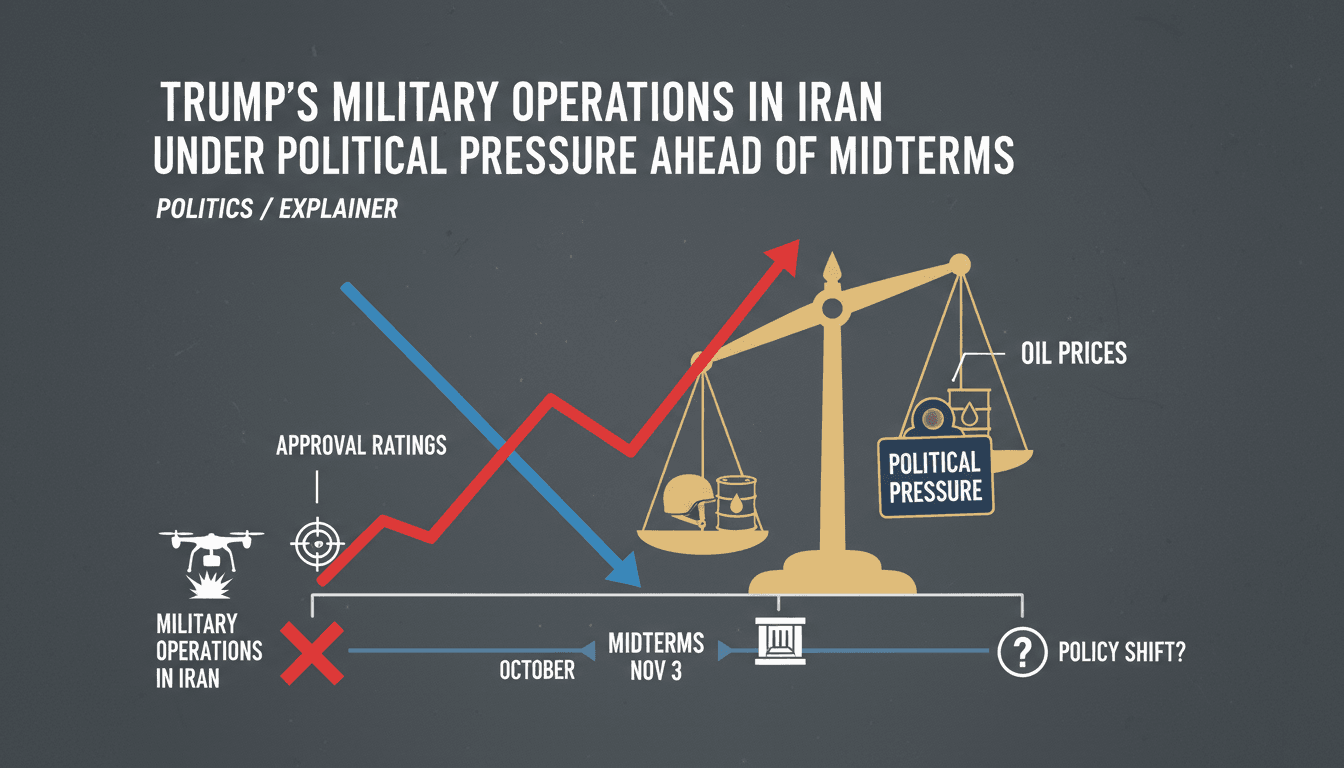
Why it matters
The ongoing U.S.-Iran conflict is reshaping political landscapes and economic conditions, influencing everything from energy prices to voter sentiment.
What happened (in 30 seconds)
- Trump announced a pause on U.S. military strikes against Iran until after the November 3 midterm elections, linking military strategy to electoral outcomes.
- Public disapproval is high, with 70% of Americans dissatisfied with Trump's handling of the war, impacting his approval ratings and Republican candidates.
- Economic pressures are mounting, as elevated oil prices and inflation are exacerbating voter concerns ahead of the elections.
The context you actually need
- Tensions with Iran escalated due to longstanding U.S. concerns over its nuclear program, leading to military action authorized by Trump in February 2026.
- Initial expectations of a quick resolution have given way to a prolonged conflict, with ongoing military operations and economic sanctions affecting both nations.
- Public sentiment is shifting, as economic challenges, including rising fuel costs, are eroding support for the president and his party ahead of critical elections.
What's really happening
The U.S. military operations against Iran, initiated in February 2026, were framed as a necessary response to prevent the development of Iranian nuclear weapons. Initially, Trump anticipated a swift campaign, but the reality has evolved into a complex and drawn-out conflict. By March, Trump declared victory, yet military operations continued, revealing a disconnect between political rhetoric and on-the-ground realities.
As the midterm elections approach, Trump's announcement on October 9, 2026, that there would be no renewed strikes before November 3 serves multiple purposes. It aims to quell fears of escalating conflict that could further alienate voters already concerned about rising energy prices and inflation. The decision reflects a strategic pivot, as internal discussions within the administration recognized the potential political fallout from continued military engagement.
Public opinion polls indicate that 70% of Americans disapprove of Trump's handling of the war, a significant factor as Republican candidates distance themselves from the conflict in battleground states. This disapproval is compounded by economic pressures, with oil prices exceeding $100 per barrel, driven by the conflict and shipping disruptions. Such conditions are not only affecting U.S. voters but also have global ramifications, particularly in regions like Dubai, where expatriate populations are sensitive to fuel price volatility.
The Iranian leadership has signaled resilience, continuing to respond to U.S. sanctions and military positioning without immediate escalation. This dynamic creates a precarious balance, as both nations navigate a complex web of military and economic strategies while the U.S. electorate's mood shifts in response to rising costs and political uncertainty.
Who feels it first (and how)
- U.S. voters: Increased energy prices and inflation are top concerns, influencing their voting behavior.
- Republican candidates: Facing pressure to distance themselves from the conflict to maintain electoral viability.
- Expatriates in Dubai: Rising oil prices directly impact living costs, affecting their financial stability and lifestyle choices.
What to watch next
- Midterm election outcomes: The results will indicate how military decisions and economic conditions influence voter sentiment and party control.
- Oil price fluctuations: Continued instability in the Middle East could lead to further increases in energy costs, impacting global markets.
- U.S.-Iran relations: Watch for any shifts in military strategy or diplomatic efforts post-election, which could redefine the conflict's trajectory.
The U.S. military operations in Iran are ongoing, with a declared pause until after the midterms.
Economic pressures will continue to influence voter sentiment and political strategies leading up to the elections.
The long-term implications of the military pause on U.S.-Iran relations and regional stability remain uncertain.
Frequently Asked Questions
- Why it matters?
- The ongoing U.S.-Iran conflict is reshaping political landscapes and economic conditions, influencing everything from energy prices to voter sentiment.
- What happened (in 30 seconds)?
- Trump announced a pause on U.S. military strikes against Iran until after the November 3 midterm elections, linking military strategy to electoral outcomes. Public disapproval is high, with 70% of Americans dissatisfied with Trump's handling of the war, impacting his approval ratings and Republican candidates. Economic pressures are mounting, as elevated oil prices and inflation are exacerbating voter concerns ahead of the elections.
- What's really happening?
- The U.S. military operations against Iran, initiated in February 2026, were framed as a necessary response to prevent the development of Iranian nuclear weapons. Initially, Trump anticipated a swift campaign, but the reality has evolved into a complex and drawn-out conflict. By March, Trump declared victory, yet military operations continued, revealing a disconnect between political rhetoric and on-the-ground realities. As the midterm elections approach, Trump's announcement on October 9, 2026,
- Who feels it first (and how)?
- U.S. voters: Increased energy prices and inflation are top concerns, influencing their voting behavior. Republican candidates: Facing pressure to distance themselves from the conflict to maintain electoral viability. Expatriates in Dubai: Rising oil prices directly impact living costs, affecting their financial stability and lifestyle choices.
- What to watch next?
- Midterm election outcomes: The results will indicate how military decisions and economic conditions influence voter sentiment and party control. Oil price fluctuations: Continued instability in the Middle East could lead to further increases in energy costs, impacting global markets. U.S.-Iran relations: Watch for any shifts in military strategy or diplomatic efforts post-election, which could redefine the conflict's trajectory.
Policy, elections, and government reporting.
"NPR is an American public media organization known for thoughtful reporting and a slightly left-leaning editorial tone."
— A47 Editor
Trump's War in Iran in spotlight ahead of midterms
President Trump has announced that the U.S. will not conduct military strikes against Iran before the upcoming midterm elections, citing productive diplomatic discussions with Tehran. This decision comes amid heightened scrutiny of the ongoing confli...
Global business headlines with AI angles.
"General business outlet that frequently covers AI."
— A47 Editor
Reports Claimed Trump Could Attack Iran Before The Midterms. The President Denied It.
President Trump has publicly denied reports suggesting a potential military attack on Iran before the upcoming Midterm Elections on November 3rd, asserting that no such action will occur. This statement comes amid heightened tensions between the U.S....
Conservative-leaning political and national coverage.
"The Washington Times is a conservative-leaning newspaper known for its political coverage and advocacy of right-of-center viewpoints."
— A47 Editor
Trump rules out pre-midterm strikes on Iran, citing productive diplomacy with Tehran
President Trump announced that he will not initiate military strikes against Iran before the upcoming midterm elections, citing productive diplomatic discussions with Tehran. This decision reflects a strategic pause in military actions as the adminis...
Regional coverage and analysis focused on politics, diplomacy, and business across the Middle East.
"Al-Monitor is known for analytical reporting on Middle East politics and policy developments."
— A47 Editor
Trump says no Iran strikes before midterms amid ‘productive’ talks
President Donald Trump has stated that the United States will not conduct military strikes against Iran before the upcoming midterm elections, citing ongoing productive discussions with Tehran. This announcement comes amid a backdrop of indirect nego...