
Royal Navy Able Seaman Charged with Espionage Under National Security Act 2023
Why it matters
This case highlights the evolving landscape of national security and the potential risks associated with insider threats in military organizations.
What happened (in 30 seconds)
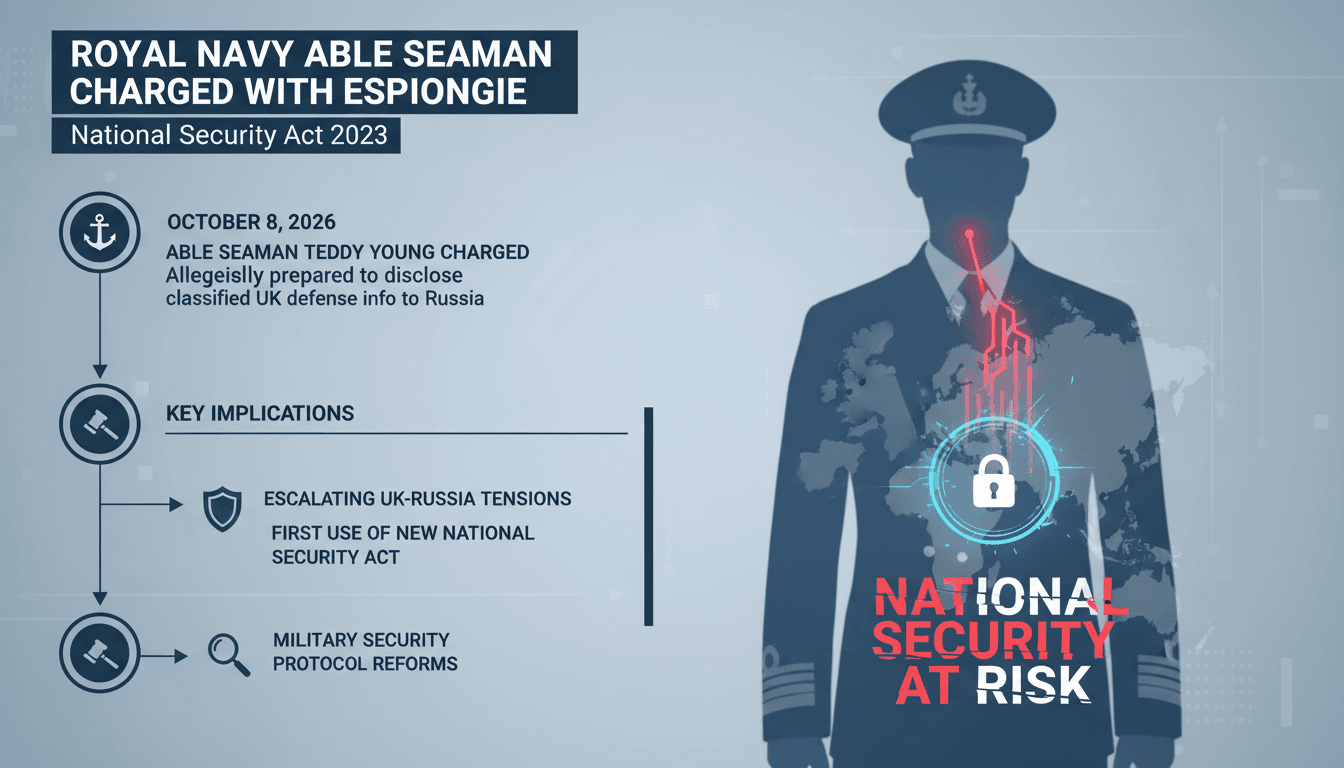
- Teddy Young, a 24-year-old Royal Navy Able Seaman, was charged with espionage under the National Security Act 2023.
- Allegations include accessing classified information and attempting to communicate with foreign powers via the dark web.
- Court proceedings are ongoing, with Young remanded in custody and scheduled for a hearing at the Old Bailey on 16 October 2026.
The context you actually need
- Heightened tensions between the UK and Russia have escalated since the 2022 invasion of Ukraine, leading to increased scrutiny of military personnel.
- The National Security Act 2023 was enacted to modernize laws addressing espionage and foreign interference, marking a significant shift in legal frameworks.
- Young's case is the first application of this act against a serving member of the British armed forces, setting a precedent for future cases.
What's really happening
The arrest and subsequent charges against Teddy Young represent a critical moment in the UK's approach to national security, particularly in the context of modern espionage threats. The National Security Act 2023 was designed to address the complexities of foreign interference, particularly in light of the ongoing geopolitical tensions with Russia. This legislation replaced older espionage laws that were deemed inadequate for the current landscape, reflecting a shift towards more stringent measures against potential threats.
Young's case is particularly notable as it marks the first time a serving member of the British armed forces has been charged under this new framework. The allegations against him include accessing and retaining classified materials during his deployment, drafting communications in Russian, and attempting to establish contact with foreign entities through the dark web. These actions underscore the vulnerabilities that exist within military ranks, where individuals with high-level security clearance may exploit their positions for personal or ideological reasons.
The implications of this case extend beyond Young himself. It raises questions about the effectiveness of current vetting processes for military personnel and the measures in place to prevent insider threats. The Royal Navy and UK authorities are likely to face increased pressure to enhance security protocols and monitoring systems to mitigate risks associated with espionage. This could lead to a reevaluation of how intelligence is shared and protected within military operations.
Moreover, the case is occurring against a backdrop of heightened public awareness and concern regarding national security. As the UK continues to navigate its relationship with Russia and other potential adversaries, incidents like this could influence public opinion and policy decisions. The government's response to this case will be closely watched, as it may set the tone for how similar cases are handled in the future.
In summary, the Teddy Young case is not just an isolated incident; it reflects broader trends in national security, military oversight, and the ongoing challenges posed by foreign interference. The outcomes of this case could have lasting effects on military policy, public trust in defense institutions, and the overall security landscape in the UK.
Who feels it first (and how)
- Military personnel: Increased scrutiny and potential changes in security protocols may affect their operations and privacy.
- Defense contractors: Heightened security measures could impact contracts and operational procedures.
- Government officials: They may face pressure to enhance national security policies and public communication regarding military integrity.
- International businesses: Companies operating in or with ties to the UK may need to reassess their risk management strategies in light of evolving security concerns.
What to watch next
- Legal proceedings: The outcome of Young's trial could set a precedent for future espionage cases within the armed forces.
- Policy changes: Watch for potential revisions to military vetting and security protocols in response to this incident.
- Public sentiment: Monitor how this case influences public opinion on national security and military transparency.
Teddy Young is the first serving member of the British armed forces charged under the National Security Act 2023.
Increased scrutiny and potential policy changes regarding military personnel security and oversight.
The long-term impact on UK-Russia relations and how this case may influence future espionage legislation.
Frequently Asked Questions
- Why it matters?
- This case highlights the evolving landscape of national security and the potential risks associated with insider threats in military organizations.
- What happened (in 30 seconds)?
- Teddy Young, a 24-year-old Royal Navy Able Seaman, was charged with espionage under the National Security Act 2023. Allegations include accessing classified information and attempting to communicate with foreign powers via the dark web. Court proceedings are ongoing, with Young remanded in custody and scheduled for a hearing at the Old Bailey on 16 October 2026.
- What's really happening?
- The arrest and subsequent charges against Teddy Young represent a critical moment in the UK's approach to national security, particularly in the context of modern espionage threats. The National Security Act 2023 was designed to address the complexities of foreign interference, particularly in light of the ongoing geopolitical tensions with Russia. This legislation replaced older espionage laws that were deemed inadequate for the current landscape, reflecting a shift towards more stringent measu
- Who feels it first (and how)?
- Military personnel: Increased scrutiny and potential changes in security protocols may affect their operations and privacy. Defense contractors: Heightened security measures could impact contracts and operational procedures. Government officials: They may face pressure to enhance national security policies and public communication regarding military integrity. International businesses: Companies operating in or with ties to the UK may need to reassess their risk management strategies in li
- What to watch next?
- Legal proceedings: The outcome of Young's trial could set a precedent for future espionage cases within the armed forces. Policy changes: Watch for potential revisions to military vetting and security protocols in response to this incident. Public sentiment: Monitor how this case influences public opinion on national security and military transparency.
Top international stories selected by The Guardian editors.
"The Guardian is known for its progressive editorial stance and in-depth analysis."
— A47 Editor
Royal Navy sailor accused of spying for Russia appears in court
Teddy Young, a 24-year-old junior intelligence specialist in the Royal Navy, appeared in Westminster Magistrates' Court facing accusations of attempting to pass classified military information to Russia. He was arrested at his home in Bedfordshire, r...
United Kingdom-focused news including local politics, business, and social issues.
"BBC News is widely regarded as a reputable international news organization, known for its impartial tone and public service mandate."
— A47 Editor
Royal Navy sailor in court accused of preparing to spy for Russia
A 24-year-old Royal Navy sailor appeared at Westminster Magistrates’ Court, facing accusations of preparing to spy for Russia. He was arrested at his home in Bedfordshire, marking a significant security concern for the UK's naval operations.
International news, politics, and culture.
"Sky News is a UK-based 24-hour channel known for fast-breaking news and political coverage."
— A47 Editor
Royal Navy serviceman accused of plotting to leak intelligence to Russia appears in court
A junior Royal Navy serviceman, Teddy Young, has appeared in Westminster Magistrates' Court facing accusations of plotting to leak classified information to Russia. This development follows his arrest at his home in Bedfordshire, raising significant ...