
USS Abraham Lincoln Carrier Strike Group Returns After Record 321-Day Deployment
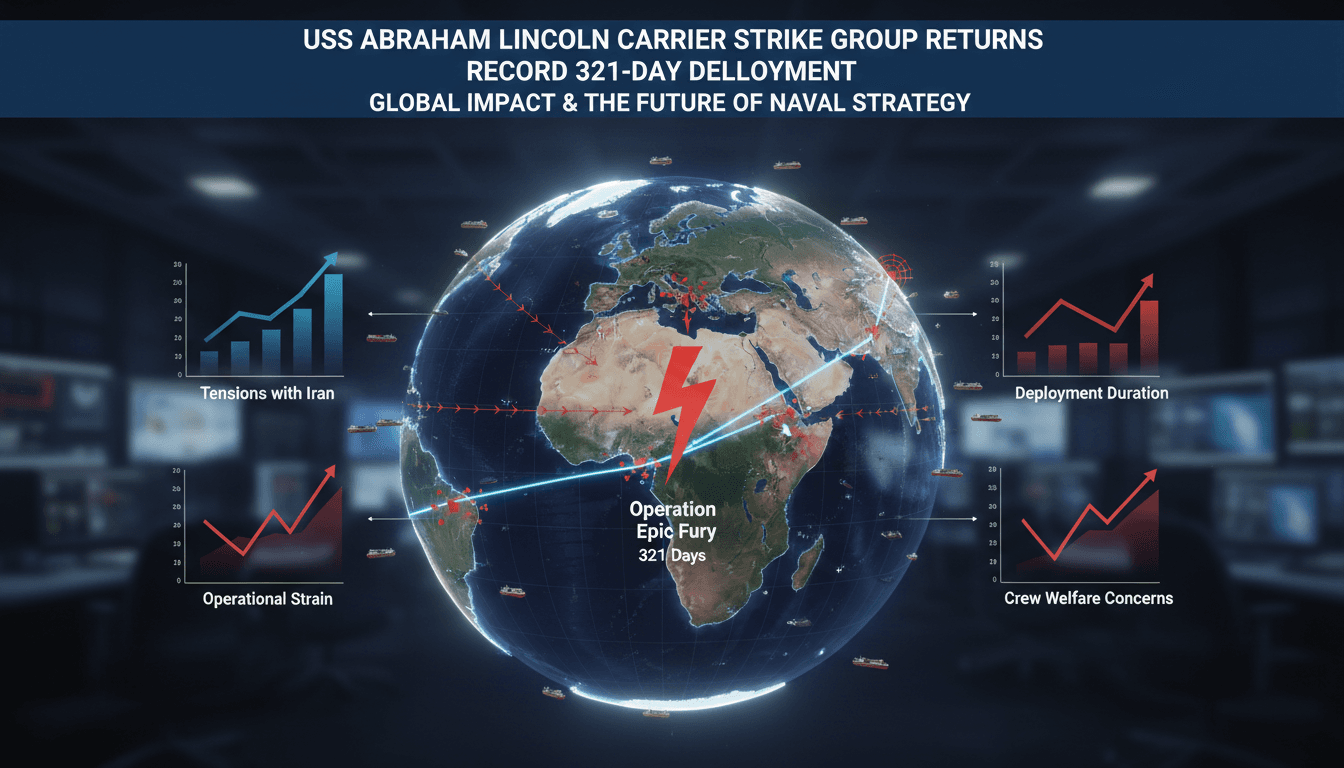
Why it matters
The deployment underscores the U.S. commitment to maintaining stability in critical shipping lanes, directly influencing global trade dynamics.
What happened (in 30 seconds)
- The USS Abraham Lincoln Carrier Strike Group completed a record 321-day deployment, returning to San Diego on October 8, 2026.
- Operation Epic Fury involved 286 consecutive days at sea, with significant combat operations against Iranian threats to commercial shipping.
- The strike group executed nearly 4,000 combat sorties and enforced maritime blockades, receiving the Presidential Unit Citation for its efforts.
The context you actually need
- The deployment began as a routine Indo-Pacific mission but escalated due to rising tensions with Iran, particularly regarding threats to commercial shipping.
- Operation Epic Fury was initiated to neutralize Iranian missile sites and enforce blockades, reflecting a strategic shift in U.S. naval operations.
- The carrier's extended presence in the region is a response to geopolitical instability, emphasizing the importance of U.S. naval power in maintaining global trade security.
What's really happening
The USS Abraham Lincoln's record deployment is a significant indicator of U.S. naval strategy in response to evolving geopolitical threats, particularly in the Middle East. Initially set for a standard Indo-Pacific patrol, the mission was redirected following the outbreak of hostilities with Iran in February 2026. This shift was driven by Iranian actions targeting commercial shipping, which prompted the U.S. to engage in Operation Epic Fury alongside allied forces.
During the operation, the carrier strike group led Task Force 50, conducting extensive combat operations that included nearly 4,000 sorties aimed at neutralizing Iranian missile capabilities and enforcing maritime blockades. The deployment lasted an unprecedented 321 days, with 286 consecutive days at sea without a port call, setting a modern record for aircraft carriers. This extended presence not only showcased U.S. military resolve but also served to reassure allies and deter adversaries in a region marked by instability.
The implications of this deployment extend beyond military operations. The U.S. Navy's actions have a direct impact on global shipping lanes, particularly in the Strait of Hormuz, a critical chokepoint for oil and goods. By enforcing blockades and conducting strikes on Iranian coastal defenses, the strike group helped stabilize these vital routes, which are essential for international trade. For regions like Dubai, which rely heavily on maritime trade, the absence of disruptions in shipping lanes is crucial for economic stability.
Moreover, the deployment has raised questions about the well-being of the crew, with reports of increased stress and mental health challenges among sailors. The Navy's acknowledgment of these issues, including eight suicide attempts during the deployment, highlights the human cost of extended military operations. As the Navy reviews logistics and crew quality-of-life measures, the focus will likely shift toward improving support systems for personnel engaged in long-term deployments.
In summary, the USS Abraham Lincoln's record deployment reflects a strategic response to geopolitical threats while also emphasizing the importance of maintaining maritime security for global trade. The operational success and the challenges faced by the crew will shape future naval strategies and policies.
Who feels it first (and how)
- Shipping companies: Increased operational costs and insurance premiums due to heightened military presence and potential threats.
- Global traders: Fluctuations in shipping schedules and costs, impacting supply chain reliability.
- Military personnel: Sailors and their families face the emotional and psychological toll of extended deployments.
- Regional economies: Countries reliant on stable shipping routes, like Dubai, benefit from reduced disruptions in trade.
What to watch next
- Future deployments: Monitor the U.S. Navy's upcoming missions in the Indo-Pacific and Middle East, as they may indicate shifts in military strategy.
- Geopolitical developments: Watch for changes in U.S.-Iran relations, which could affect maritime security and trade routes.
- Mental health initiatives: Observe the Navy's implementation of new support measures for personnel, which could influence recruitment and retention.
The USS Abraham Lincoln completed a record 321-day deployment, enhancing U.S. naval presence in critical regions.
Future naval operations will continue to focus on maintaining maritime security in response to geopolitical threats.
The long-term effects of extended deployments on crew morale and operational readiness remain to be fully assessed.
Frequently Asked Questions
- Why it matters?
- The deployment underscores the U.S. commitment to maintaining stability in critical shipping lanes, directly influencing global trade dynamics.
- What happened (in 30 seconds)?
- The USS Abraham Lincoln Carrier Strike Group completed a record 321-day deployment, returning to San Diego on October 8, 2026. Operation Epic Fury involved 286 consecutive days at sea, with significant combat operations against Iranian threats to commercial shipping. The strike group executed nearly 4,000 combat sorties and enforced maritime blockades, receiving the Presidential Unit Citation for its efforts.
- What's really happening?
- The USS Abraham Lincoln's record deployment is a significant indicator of U.S. naval strategy in response to evolving geopolitical threats, particularly in the Middle East. Initially set for a standard Indo-Pacific patrol, the mission was redirected following the outbreak of hostilities with Iran in February 2026. This shift was driven by Iranian actions targeting commercial shipping, which prompted the U.S. to engage in Operation Epic Fury alongside allied forces. During the operation, the ca
- Who feels it first (and how)?
- Shipping companies: Increased operational costs and insurance premiums due to heightened military presence and potential threats. Global traders: Fluctuations in shipping schedules and costs, impacting supply chain reliability. Military personnel: Sailors and their families face the emotional and psychological toll of extended deployments. Regional economies: Countries reliant on stable shipping routes, like Dubai, benefit from reduced disruptions in trade.
- What to watch next?
- Future deployments: Monitor the U.S. Navy's upcoming missions in the Indo-Pacific and Middle East, as they may indicate shifts in military strategy. Geopolitical developments: Watch for changes in U.S.-Iran relations, which could affect maritime security and trade routes. Mental health initiatives: Observe the Navy's implementation of new support measures for personnel, which could influence recruitment and retention.
Business and tech news excluding paywalled content.
"High-volume business/tech outlet with frequent AI coverage."
— A47 Editor
Here are the staggering numbers behind the Abraham Lincoln Carrier Strike Group's 321-day deployment
The USS Abraham Lincoln has returned home after a 321-day deployment, which included 72 at-sea replenishments, marking one of the longest missions for a carrier strike group in recent history. This deployment has raised significant concerns regarding...
News from the United States including domestic politics, society, and culture.
"Sky News is often seen as a center-right outlet in the UK, known for its rolling news coverage and emphasis on breaking stories and political affairs."
— A47 Editor
US Navy ship returns home after record deployment and concerns about conditions on board
The USS Abraham Lincoln has returned to San Diego after a record-setting deployment of 322 days, during which crew members faced serious and deteriorating living conditions, including mental health crises and alarming incidents of sailors attempting ...
Global news coverage with extensive reporting on Middle Eastern conflicts and geopolitics.
"Al Jazeera is a Qatar-based broadcaster known for wide regional coverage and alternative perspectives."
— A47 Editor
USS Lincoln returns to US after long deployment supporting war on Iran
The USS Abraham Lincoln has returned to the United States after a record deployment of 265 days at sea, during which the crew faced challenging conditions while supporting military operations related to Iran.
News across North, Central, and South America including politics and economics.
"France 24 is viewed as a globally focused outlet with balanced coverage and a European perspective."
— A47 Editor
Families reunited as USS Lincoln returns from troubled 10-month deployment
The USS Lincoln has returned to California after a record deployment of 265 days at sea, during which crew members faced challenging conditions and prolonged separation from their families due to military operations related to the conflict in Iran.
Business, investment, entrepreneurship, leadership, and innovation.
"Forbes is known for its coverage of business leaders, market trends, and entrepreneurial ventures with a pro-business editorial stance."
— A47 Editor
USS Abraham Lincoln Completed Grueling Near-Record Deployment
The USS Abraham Lincoln, a Nimitz-class aircraft carrier, returned to San Diego on Thursday after completing a demanding 322-day deployment, marking one of the longest missions for the vessel. This deployment included significant operations in the Mi...