
U.S. Vice President acknowledges diverging interests with Israel on Iran
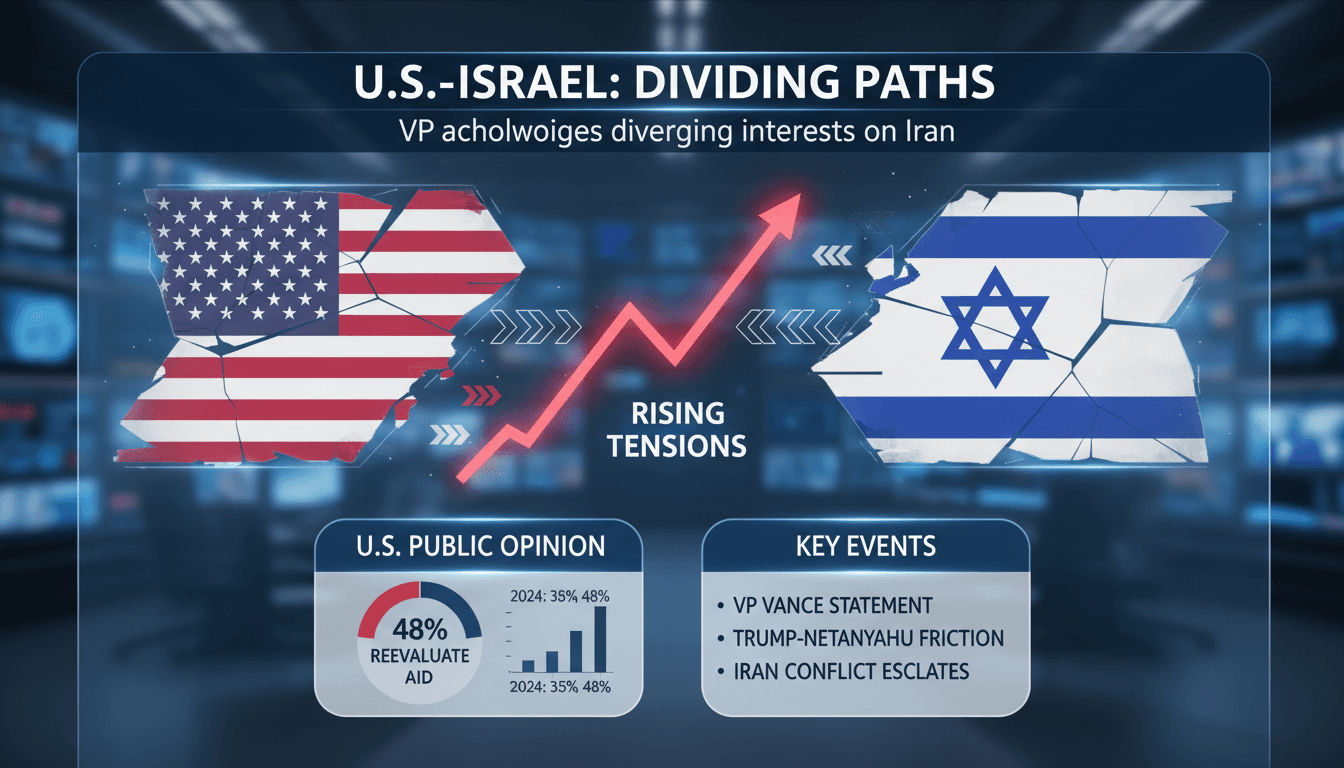
Here's what it means for you.
The acknowledgment by Vice President JD Vance that U.S. and Israeli interests are not always aligned, particularly regarding Iran, signals a potential shift in foreign policy dynamics. As both nations approach critical elections in 2026, this divergence may influence voter sentiment and diplomatic strategies. The evolving relationship could reshape the longstanding U.S.-Israel alliance, impacting regional stability and international relations.
What happened
Vice President JD Vance publicly stated that U.S. and Israeli interests diverge on certain issues, especially concerning Iran. This admission comes amid rising tensions between the Trump administration and Israeli Prime Minister Benjamin Netanyahu. Vance criticized Netanyahu for misalignments in their approaches to U.S.-Israel relations, highlighting a growing rift between the two allies.
Polling indicates a shift in Republican voter sentiment against U.S. support for Israel in the ongoing conflict with Iran. As military actions escalate in Lebanon and disagreements over Middle Eastern strategies intensify, the relationship between the U.S. and Israel faces significant strain.
The Context
The acknowledgment of diverging interests comes at a critical time as both the U.S. and Israel prepare for elections in 2026. This year is pivotal, as the electoral outcomes may influence foreign policy strategies and the future of their alliance. Public opinion in the U.S. is increasingly critical of the ongoing conflict with Iran, which could further complicate U.S.-Israel relations.
Tensions have escalated due to military operations involving Israeli forces and Iranian-backed groups in Lebanon. The growing discontent among American voters regarding U.S. support for Israel adds another layer of complexity to the diplomatic landscape. As both nations navigate their respective electoral landscapes, the stakes are high for their future collaboration.
Takeaway
The evolving dynamics between the U.S. and Israel may lead to a reevaluation of their longstanding alliance, particularly concerning Iran and regional stability. Observers should monitor the upcoming elections in both countries for potential shifts in foreign policy. Additionally, further statements from the Trump administration regarding its stance on Iran and Israel will be crucial in understanding the trajectory of this relationship.
As the political climate changes, the implications for U.S.-Israel relations could be profound, influencing not only bilateral ties but also broader geopolitical stability in the Middle East.
English-language reporting on Saudi politics, policy, and society.
"Saudi Gazette reflects mainstream Saudi institutional perspectives."
— A47 Editor
US vice president says Netanyahu 'certainly got some things wrong'
US Vice President JD Vance stated that Israeli Prime Minister Benjamin Netanyahu has 'certainly gotten some things wrong', indicating a strain in US-Israel relations amid ongoing tensions regarding military actions involving Iran. Vance emphasized th...
International coverage of politics, culture, and current affairs.
"BBC News is widely regarded as a reputable international news organization, known for its impartial tone and public service mandate."
— A47 Editor
Vance says Israeli PM Netanyahu 'has got some things wrong'
U.S. Vice President JD Vance has publicly stated that Israeli Prime Minister Benjamin Netanyahu 'has got some things wrong,' indicating a divergence between Israeli interests and those of the United States. Vance noted that Netanyahu's aggressive ass...
Capitol Hill news, legislation, and policy insight.
"The Hill specializes in U.S. politics and policy, with a focus on Capitol Hill developments and a reputation for insider reporting."
— A47 Editor
Vance says US, Israeli interests ‘diverge’ on some Iran issues
Vice President JD Vance acknowledged on Monday that U.S. and Israeli interests diverge regarding Iran, amidst ongoing tensions and public disputes between President Trump and Israeli Prime Minister Benjamin Netanyahu. Vance emphasized the complexitie...
Regional coverage and analysis focused on politics, diplomacy, and business across the Middle East.
"Al-Monitor is known for analytical reporting on Middle East politics and policy developments."
— A47 Editor
Vance says US and Israel's 'interests diverge' on Iran nuclear issue: What to know
U.S. Special Envoy for Iran, Vance, acknowledged a divergence in interests between the U.S. and Israel regarding the Iran nuclear issue, coinciding with a shift in Republican voter sentiment towards U.S. alignment with Israel in its military actions ...