
UAE Public Prosecution Unveils Terror Plot by Omani Co-Pilot to Attack Israeli Airport
Why it matters
This incident highlights vulnerabilities in aviation security that could lead to broader regulatory changes affecting air travel.
What happened (in 30 seconds)
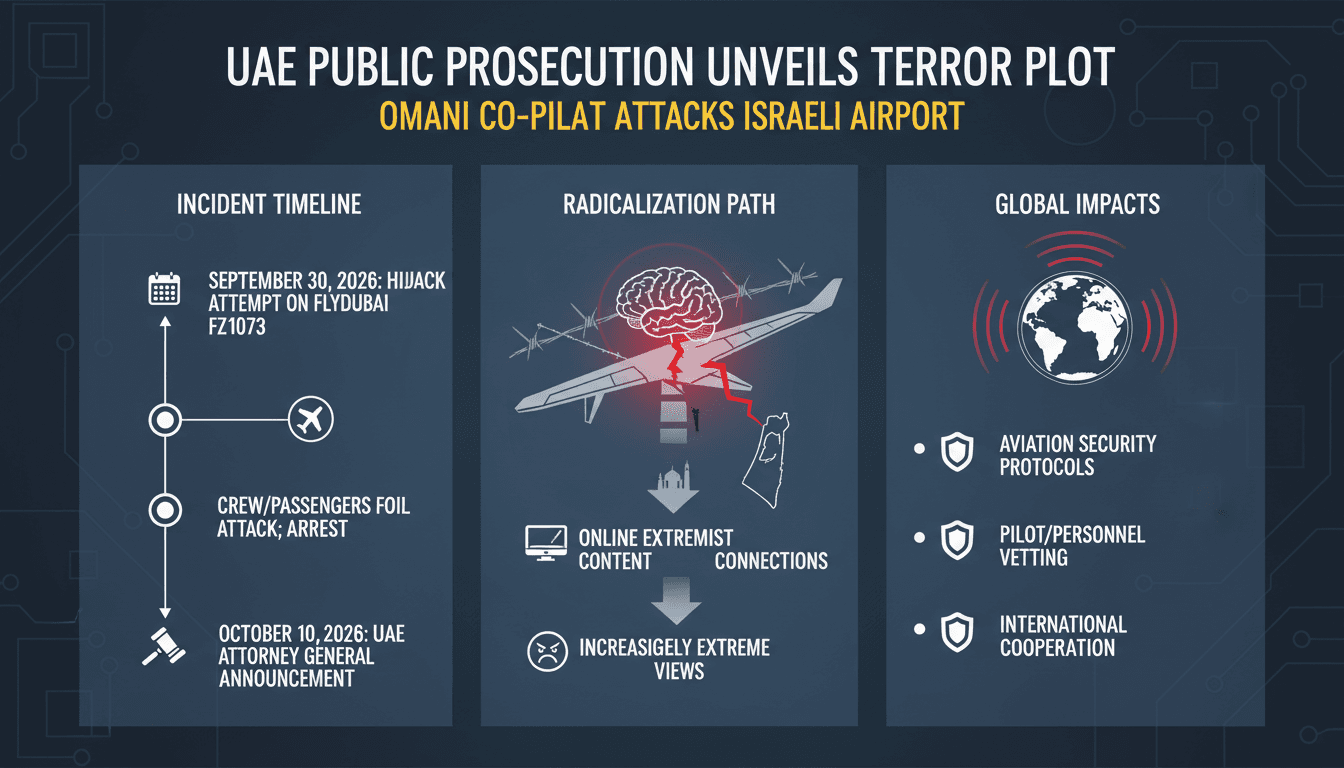
- On September 30, 2026, an Omani co-pilot attempted to hijack Flydubai flight FZ1073, aiming for a suicide attack on Ben Gurion Airport.
- The co-pilot attacked the captain with an emergency axe but was subdued by crew and passengers, leading to an emergency landing in Tabuk, Saudi Arabia.
- UAE authorities confirmed the premeditated nature of the plot on October 10, 2026, with ongoing investigations into the suspect's radicalization and security protocols.
The context you actually need
- Radicalization began in 2017 when the suspect was exposed to extremist literature while studying in Australia, leading to a desire to execute a high-casualty attack.
- The suspect had a history of working for various airlines, including Oman Air and Royal Air Maroc, before joining Flydubai in January 2026, raising questions about hiring practices.
- The incident has prompted immediate reviews of aviation security protocols in the UAE and Israel, with potential implications for international air travel safety.
What's really happening
The attempted hijacking of Flydubai flight FZ1073 by the Omani co-pilot, Hammam al-Hammami, underscores a significant threat to aviation security that has been evolving over the past few years. The suspect's radicalization journey began in 2017 during his studies in Melbourne, Australia, where he was exposed to extremist ideologies and literature that glorified terrorist acts. This exposure, combined with a calculated career path in aviation, suggests a deliberate effort to exploit the airline industry for nefarious purposes.
The attack on September 30, 2026, was not a spontaneous act of violence but rather a culmination of years of planning and psychological preparation. Al-Hammami's choice of weapon—a cockpit emergency axe—indicates a premeditated strategy to incapacitate the captain and take control of the aircraft. The fact that he had previously flown to Tel Aviv for reconnaissance further illustrates the lengths to which he went to execute his plan.
The immediate aftermath of the incident has led to a comprehensive review of security protocols within the UAE and beyond. The UAE Attorney General's announcement on October 10 confirmed the terrorist intent behind the attack, prompting both national and international scrutiny of hiring practices within airlines. Flydubai and other carriers may face increased pressure to enhance their vetting processes for pilots and crew, particularly those operating on routes to sensitive destinations like Israel.
This incident also raises broader questions about the effectiveness of current aviation security measures. While the immediate response by crew and passengers was commendable, it highlights the need for more robust systems to prevent such attacks from occurring in the first place. The aviation industry may see a shift towards more stringent security checks, including psychological evaluations and background checks for airline personnel, especially those with access to sensitive areas of aircraft.
As investigations continue, the implications of this incident could resonate throughout the aviation sector, affecting everything from flight schedules to passenger screening processes. The potential for increased regulations and security measures could lead to longer wait times at airports and heightened scrutiny of travelers, particularly those flying to or from regions perceived as high-risk.
Who feels it first (and how)
- Airline passengers: Increased security measures may lead to longer wait times and more rigorous screening processes.
- Airline staff: Potential changes in hiring protocols and training requirements could affect job security and operational procedures.
- Aviation regulators: Heightened scrutiny and pressure to implement stricter security measures will impact regulatory frameworks and compliance requirements.
What to watch next
- Security protocol reviews: Monitor changes in airline security measures and how they affect travel experiences.
- Regulatory responses: Watch for new regulations from aviation authorities in the UAE and Israel aimed at preventing similar incidents.
- Public sentiment: Observe how public perception of airline safety evolves in response to this incident and subsequent security changes.
The suspect acted alone, and investigations are ongoing to confirm this status.
Increased security measures will be implemented across airlines, particularly for flights to sensitive regions.
The long-term impact on international travel patterns and airline operations remains to be seen.
Frequently Asked Questions
- Why it matters?
- This incident highlights vulnerabilities in aviation security that could lead to broader regulatory changes affecting air travel.
- What happened (in 30 seconds)?
- On September 30, 2026, an Omani co-pilot attempted to hijack Flydubai flight FZ1073, aiming for a suicide attack on Ben Gurion Airport. The co-pilot attacked the captain with an emergency axe but was subdued by crew and passengers, leading to an emergency landing in Tabuk, Saudi Arabia. UAE authorities confirmed the premeditated nature of the plot on October 10, 2026, with ongoing investigations into the suspect's radicalization and security protocols.
- What's really happening?
- The attempted hijacking of Flydubai flight FZ1073 by the Omani co-pilot, Hammam al-Hammami, underscores a significant threat to aviation security that has been evolving over the past few years. The suspect's radicalization journey began in 2017 during his studies in Melbourne, Australia, where he was exposed to extremist ideologies and literature that glorified terrorist acts. This exposure, combined with a calculated career path in aviation, suggests a deliberate effort to exploit the airline i
- Who feels it first (and how)?
- Airline passengers: Increased security measures may lead to longer wait times and more rigorous screening processes. Airline staff: Potential changes in hiring protocols and training requirements could affect job security and operational procedures. Aviation regulators: Heightened scrutiny and pressure to implement stricter security measures will impact regulatory frameworks and compliance requirements.
- What to watch next?
- Security protocol reviews: Monitor changes in airline security measures and how they affect travel experiences. Regulatory responses: Watch for new regulations from aviation authorities in the UAE and Israel aimed at preventing similar incidents. Public sentiment: Observe how public perception of airline safety evolves in response to this incident and subsequent security changes.
Arabic-language local coverage focused on UAE domestic issues, civic affairs, and community reporting.
"Emarat Al Youm local coverage emphasizes UAE institutions, public services, and community-level developments."
— A47 Editor
مخطط إرهابي لاستخدام طائرة «فلاي دبي» في عملية انتحارية تستهدف مطار بن غوريون مخطط إرهابي لاستخدام طائرة «فلاي دبي» في عملية انتحارية تستهدف مطار بن غوريون
The Attorney General of the UAE, Dr. Hamad Saif Al Shamsi, announced ongoing investigations into a terrorist plot involving a Fly Dubai flight intended for a suicide attack targeting Ben Gurion Airport. This alarming development raises concerns about...
Arabic-language reporting on global and regional news.
"BBC Arabic is part of the BBC, generally regarded for editorial standards and broad international coverage."
— A47 Editor
الإمارات: مساعد طيار "فلاي دبي" خطط لهجوم انتحاري مستوحى من 11 سبتمبر
Investigations led by the UAE indicate that an Omani co-pilot planned a suicide attack inspired by the September 11 events in the United States. This revelation raises serious concerns about aviation security and the potential for extremist ideologie...
Arabic-language local coverage focused on UAE domestic issues, civic affairs, and community reporting.
"Emarat Al Youm local coverage emphasizes UAE institutions, public services, and community-level developments."
— A47 Editor
النائب العام للاتحاد: مساعد طيار «فلاي دبي» خطط لعملية إرهابية مستلهماً هجمات 11 سبتمبر النائب العام للاتحاد: مساعد طيار «فلاي دبي» خطط لعملية إرهابية مستلهماً هجمات 11 سبتمبر
The Attorney General of the UAE, Dr. Hamad Saif Al Shamsi, announced that investigations are underway regarding a Fly Dubai co-pilot who allegedly planned a terrorist operation inspired by the September 11 attacks. The suspect reportedly expressed ex...
Arabic-language coverage of international news and geopolitics.
"RT Arabic is a Russian state-funded outlet often criticized for promoting Kremlin-aligned narratives."
— A47 Editor
النيابة الإماراتية: مساعد طيار "فلاي دبي" خطط لعملية انتحارية بمطار بن غوريون مستلهما "11 سبتمبر"
The UAE Public Prosecution announced that investigations into a Fly Dubai flight revealed that the co-pilot, a national of Oman, planned a suicide attack targeting the passenger terminal at Ben Gurion Airport in Tel Aviv, inspired by the events of Se...
Arabic-language coverage of political affairs and current events.
"Okaz political coverage typically follows mainstream Saudi framing on national and regional affairs."
— A47 Editor
الإمارات: طيار «فلاي دبي» عماني استلهم 11 سبتمبر وخطط لعملية انتحارية في مطار بن غوريون
Investigations by the UAE's public prosecutor revealed that a 29-year-old Omani co-pilot of a Flydubai flight planned a suicide attack targeting the passenger terminal at Ben Gurion Airport, inspired by the September 11 attacks. The incident occurred...
Arabic-language coverage of international news and geopolitics.
"RT Arabic is a Russian state-funded outlet often criticized for promoting Kremlin-aligned narratives."
— A47 Editor
تفاصيل جديدة عن حادثة "فلاي دبي".. سبب "إنساني" ألغى تحطيمها فوق مطار بن غوريون الإسرائيلي في يوليو
New details have emerged regarding the Fly Dubai incident, revealing that the suspect attempted to take control of the aircraft during a flight from Dubai to Tel Aviv and had been planning this scheme since last summer.