
UK Green Party Passes Controversial Motion Declaring Zionism as Racism
Why it matters
This motion reflects a significant ideological shift within the Green Party, potentially influencing broader political alliances and voter sentiments.
What happened (in 30 seconds)
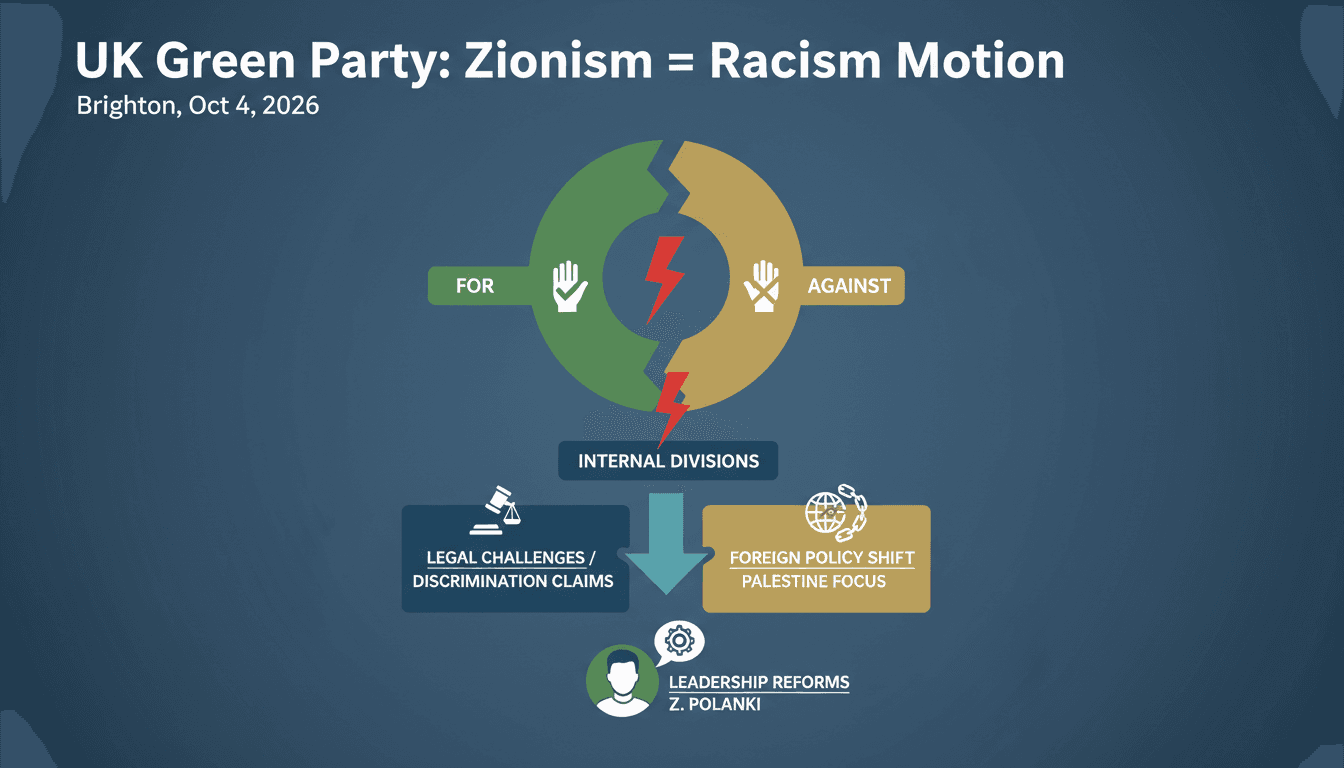
- On October 4, 2026, the Green Party conference voted 1,022 to 813 to adopt a motion equating Zionism with racism and advocating for a single Palestinian state.
- Zack Polanski, the party leader, proposed internal reforms on October 11 to enhance leadership authority following the contentious vote.
- Internal divisions emerged, with opposition from Green MPs and Jewish members, leading to concerns over potential discrimination and party unity.
The context you actually need
- The Green Party has historically supported Palestinian rights, aligning with broader left-populist movements, which have gained traction under Polanski's leadership.
- Party membership surged to approximately 230,000, reflecting a shift towards more radical positions on social justice and anti-racism.
- The Israel-Palestine conflict remains a polarizing issue, with the recent motion occurring amid heightened tensions and ongoing debates about foreign policy within the party.
What's really happening
The Green Party's decision to adopt the motion equating Zionism with racism is a culmination of internal and external pressures that reflect broader societal debates about identity, justice, and political alignment. The vote, which passed with a significant margin, indicates a shift towards more radical leftist ideologies within the party, appealing to a growing base that prioritizes social justice and anti-colonial narratives.
Zack Polanski's absence during the vote, due to campaigning in a by-election, highlights the complexities of leadership in a party grappling with internal dissent. His subsequent call for reforms to enhance leadership authority suggests a strategic pivot aimed at consolidating power and ensuring that the party can navigate the contentious waters of foreign policy more effectively. This move is seen as necessary for maintaining unity and coherence in the party's messaging, especially as it faces criticism from both within and outside its ranks.
The backlash against the motion has been swift, with Israeli authorities condemning it as antisemitic and barring Polanski from entry into Israel. This international response underscores the potential diplomatic ramifications of the party's stance, which could alienate some voters and allies. Furthermore, the opposition from Green MPs and Jewish members raises questions about the party's commitment to inclusivity and anti-racism, as internal figures express concerns over the implications of such a divisive policy.
As the party navigates these challenges, the focus will likely shift towards internal governance debates and potential legal challenges regarding equality laws. The outcome of these discussions will be crucial in determining the party's future direction and its ability to maintain a cohesive identity amidst growing ideological divides.
Who feels it first (and how)
- Green Party members: Internal divisions may lead to a loss of support among moderates and Jewish members.
- Political analysts: Increased scrutiny on party dynamics and potential shifts in voter alignment.
- Activists and NGOs: Organizations focused on Palestinian rights may see a boost in visibility and support, while others may distance themselves from the party.
- Voters: Individuals concerned about social justice and foreign policy may reassess their support based on the party's evolving stance.
What to watch next
- Internal party reforms: Monitor discussions around Polanski's proposals for leadership authority, as these could reshape party governance and decision-making processes.
- Public response: Watch for shifts in voter sentiment and membership dynamics, particularly among those who may feel alienated by the recent motion.
- Legal challenges: Keep an eye on potential legal actions regarding the motion's implications under equality laws, which could have broader ramifications for party policy.
The motion equating Zionism with racism has been adopted as party policy.
Internal divisions will continue to challenge party unity and governance.
The long-term impact on voter support and party membership remains uncertain.
Frequently Asked Questions
- Why it matters?
- This motion reflects a significant ideological shift within the Green Party, potentially influencing broader political alliances and voter sentiments.
- What happened (in 30 seconds)?
- On October 4, 2026, the Green Party conference voted 1,022 to 813 to adopt a motion equating Zionism with racism and advocating for a single Palestinian state. Zack Polanski, the party leader, proposed internal reforms on October 11 to enhance leadership authority following the contentious vote. Internal divisions emerged, with opposition from Green MPs and Jewish members, leading to concerns over potential discrimination and party unity.
- What's really happening?
- The Green Party's decision to adopt the motion equating Zionism with racism is a culmination of internal and external pressures that reflect broader societal debates about identity, justice, and political alignment. The vote, which passed with a significant margin, indicates a shift towards more radical leftist ideologies within the party, appealing to a growing base that prioritizes social justice and anti-colonial narratives. Zack Polanski's absence during the vote, due to campaigning in a by
- Who feels it first (and how)?
- Green Party members: Internal divisions may lead to a loss of support among moderates and Jewish members. Political analysts: Increased scrutiny on party dynamics and potential shifts in voter alignment. Activists and NGOs: Organizations focused on Palestinian rights may see a boost in visibility and support, while others may distance themselves from the party. Voters: Individuals concerned about social justice and foreign policy may reassess their support based on the party's evolving stance.
- What to watch next?
- Internal party reforms: Monitor discussions around Polanski's proposals for leadership authority, as these could reshape party governance and decision-making processes. Public response: Watch for shifts in voter sentiment and membership dynamics, particularly among those who may feel alienated by the recent motion. Legal challenges: Keep an eye on potential legal actions regarding the motion's implications under equality laws, which could have broader ramifications for party policy.
Global news coverage with extensive reporting on Middle Eastern conflicts and geopolitics.
"Al Jazeera is a Qatar-based broadcaster known for wide regional coverage and alternative perspectives."
— A47 Editor
UK Greens leader seeks rule change after party declares Zionism is racism
Zack Polanski, leader of the UK Green Party, is advocating for internal rule changes following a contentious vote that declared 'Zionism is racism.' This decision has sparked significant backlash, both within the party and from external entities, lea...
Comprehensive coverage of Middle Eastern and global issues.
"Al Jazeera is a prominent voice from the Global South, especially the Middle East, with an emphasis on underreported stories."
— A47 Editor
UK Greens leader seeks rule change after party declares Zionism is racism
Zack Polanski, leader of the UK Green Party, is advocating for internal rule changes following a contentious vote that declared 'Zionism is racism.' This decision has sparked significant backlash, both within the party and from external entities, lea...
International coverage from The Guardian's global desks.
"The Guardian is known for its progressive editorial stance and in-depth analysis."
— A47 Editor
Zack Polanski signals Green party overhaul after row over Zionism vote
Zack Polanski, leader of the Green Party, has indicated a potential overhaul of the party's grassroots democracy following a contentious vote that equated Zionism with racism. This decision has sparked significant internal and external backlash, lead...
Political developments, policy debates, elections, and government affairs in the UK.
"BBC News is widely regarded as a reputable international news organization, known for its impartial tone and public service mandate."
— A47 Editor
Polanski faces greatest crisis of his leadership so far
Zack Polanski, leader of the Green Party, is currently facing significant challenges following a controversial party motion declaring 'Zionism is racism' and a recent by-election loss. This situation has led to increased scrutiny and criticism from v...