
Trump Considers Military Action Against Houthis After Riyadh Airport Attack
Why it matters
The escalation of military tensions in the Middle East could significantly impact global oil prices and regional stability.
What happened (in 30 seconds)
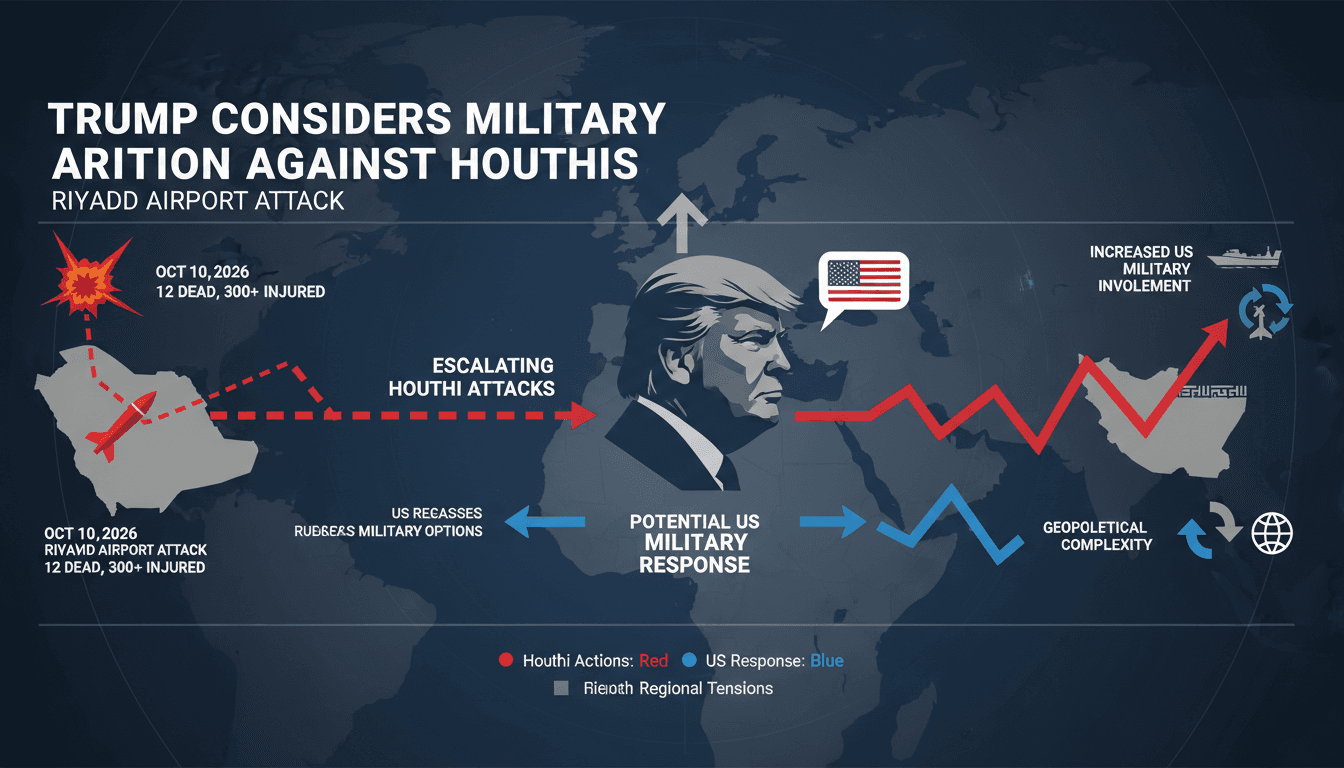
- Houthi missile strike: On October 10, 2026, a Houthi missile attack on Riyadh's King Khalid International Airport killed 12 and injured over 300.
- Trump's response: President Trump announced a swift review of potential US military action to support Saudi Arabia amid ongoing Houthi offensives.
- Continued attacks: A follow-up projectile struck the airport on October 11, leading to further injuries and flight suspensions.
The context you actually need
- Escalating conflict: The Houthi attacks represent a sharp increase in hostilities, with multiple strikes on Saudi targets in recent weeks.
- US involvement: Trump had previously considered military action but refrained; the current situation marks a potential shift in US engagement in the region.
- Regional implications: The conflict is part of a broader struggle involving Iran, affecting not only Saudi Arabia but also neighboring countries and global markets.
What's really happening
The recent missile strike on Riyadh's King Khalid International Airport by Houthi rebels underscores a significant escalation in the ongoing conflict in Yemen, which has seen a resurgence of violence in recent months. The Houthis, backed by Iran, have intensified their attacks on Saudi Arabia, targeting critical infrastructure and exposing vulnerabilities in Saudi defenses. This latest attack, which resulted in the deadliest casualties on Saudi soil in over a decade, has prompted a swift response from President Trump, who indicated that the US is considering military options to support Saudi Arabia.
The backdrop to this escalation includes a series of Houthi advances along the Red Sea coast and repeated strikes on Saudi targets, which have raised alarms about the security of the region. Trump's statement reflects a shift in the US stance, as he had previously opted against direct military intervention despite Saudi requests. The urgency of his response suggests that the US is now more inclined to engage militarily, particularly as the situation deteriorates.
The implications of this conflict extend beyond immediate military considerations. The potential for US strikes could lead to a broader military engagement in the region, which would have significant ramifications for global oil markets. As tensions rise, oil prices are likely to experience volatility, impacting economies worldwide. Additionally, the conflict could disrupt travel and trade routes, particularly through UAE hubs, affecting businesses and travelers alike.
Moreover, the situation is compounded by the geopolitical dynamics involving Iran, which continues to support the Houthis. This relationship not only fuels the conflict in Yemen but also poses a challenge to US interests in the region. The potential for a wider conflict involving Iran could lead to increased instability, affecting not just Saudi Arabia but also neighboring countries and global security.
As the situation unfolds, the international community is closely monitoring developments, with organizations like the UN condemning the attacks and calling for restraint. The response from Saudi Arabia and the US will be critical in shaping the future trajectory of this conflict and its broader implications for regional and global stability.
Who feels it first (and how)
- Travelers: Increased travel advisories and potential flight disruptions through Middle Eastern airports.
- Oil consumers: Fluctuations in oil prices affecting fuel costs and overall economic stability.
- Businesses in the region: Companies reliant on stable conditions for trade and operations may face increased risks and costs.
What to watch next
- US military decisions: Monitor Trump's consultations with Saudi leadership and any announcements regarding military action, as this will influence regional stability.
- Oil price movements: Watch for fluctuations in oil prices as tensions escalate, which could impact global markets and consumer costs.
- Houthi responses: Keep an eye on further Houthi actions and statements, as they may indicate the group's strategic intentions and the potential for further escalation.
The Houthi missile strike resulted in significant casualties and prompted a US review of military options.
Increased military engagement from the US could lead to further escalation in the region.
The long-term implications for US-Iran relations and the broader geopolitical landscape remain uncertain.
Frequently Asked Questions
- Why it matters?
- The escalation of military tensions in the Middle East could significantly impact global oil prices and regional stability.
- What happened (in 30 seconds)?
- Houthi missile strike: On October 10, 2026, a Houthi missile attack on Riyadh's King Khalid International Airport killed 12 and injured over 300. Trump's response: President Trump announced a swift review of potential US military action to support Saudi Arabia amid ongoing Houthi offensives. Continued attacks: A follow-up projectile struck the airport on October 11, leading to further injuries and flight suspensions.
- What's really happening?
- The recent missile strike on Riyadh's King Khalid International Airport by Houthi rebels underscores a significant escalation in the ongoing conflict in Yemen, which has seen a resurgence of violence in recent months. The Houthis, backed by Iran, have intensified their attacks on Saudi Arabia, targeting critical infrastructure and exposing vulnerabilities in Saudi defenses. This latest attack, which resulted in the deadliest casualties on Saudi soil in over a decade, has prompted a swift respons
- Who feels it first (and how)?
- Travelers: Increased travel advisories and potential flight disruptions through Middle Eastern airports. Oil consumers: Fluctuations in oil prices affecting fuel costs and overall economic stability. Businesses in the region: Companies reliant on stable conditions for trade and operations may face increased risks and costs.
- What to watch next?
- US military decisions: Monitor Trump's consultations with Saudi leadership and any announcements regarding military action, as this will influence regional stability. Oil price movements: Watch for fluctuations in oil prices as tensions escalate, which could impact global markets and consumer costs. Houthi responses: Keep an eye on further Houthi actions and statements, as they may indicate the group's strategic intentions and the potential for further escalation.
English-language news from Qatar covering domestic and regional affairs.
"Gulf Times reflects Qatari perspectives on regional developments."
— A47 Editor
Trump says to decide ‘very quickly’ on military action against Houthis
US President Donald Trump announced that he will make a swift decision regarding potential military action against the Iran-backed Houthis following a missile attack on Riyadh's international airport. This escalation in hostilities has raised concern...
Arabic-language political and world news coverage for UAE readers.
"Emarat Al Youm world coverage usually presents international developments through a UAE and Arab audience lens."
— A47 Editor
ترامب: سأتخذ قراراً "سريعاً" بشأن الانضمام الى السعودية في ضرب الحوثيين ترامب: سأتخذ قراراً "سريعاً" بشأن الانضمام الى السعودية في ضرب الحوثيين
U.S. President Donald Trump announced that he will make a 'quick' decision regarding whether the United States will join Saudi Arabia in military actions against the Houthi forces. This statement reflects ongoing tensions in the Middle East and the U...
Corporate leadership, finance, technology, and market trends.
"Fortune covers financial trends, leadership, and innovation with a pragmatic editorial approach."
— A47 Editor
Trump says he’s evaluating whether the U.S. should join Saudi Arabia’s fight against Iran-backed Houthi rebels in Yemen after fresh attacks on Riyadh
Former President Trump announced that he is evaluating the possibility of the United States joining Saudi Arabia in its military efforts against the Iran-backed Houthi rebels in Yemen, following recent attacks on Riyadh. Trump stated, "We may. We’re ...
Arabic-language coverage of international news and geopolitics.
"RT Arabic is a Russian state-funded outlet often criticized for promoting Kremlin-aligned narratives."
— A47 Editor
ترامب: سندرس المشاركة في الضربات السعودية ضد الحوثيين وسنتخذ قرارا سريعا
U.S. President Donald Trump announced that he will consider the possibility of U.S. involvement in Saudi strikes against the Houthis, indicating that Washington has just learned about the recent attack and will make a swift decision regarding this ma...