
Federal Judge Orders Trump Administration to Restore White House Access for Major News Outlets
Why it matters
This ruling underscores the ongoing tension between government and media, impacting how information flows in a democratic society.
What happened (in 30 seconds)
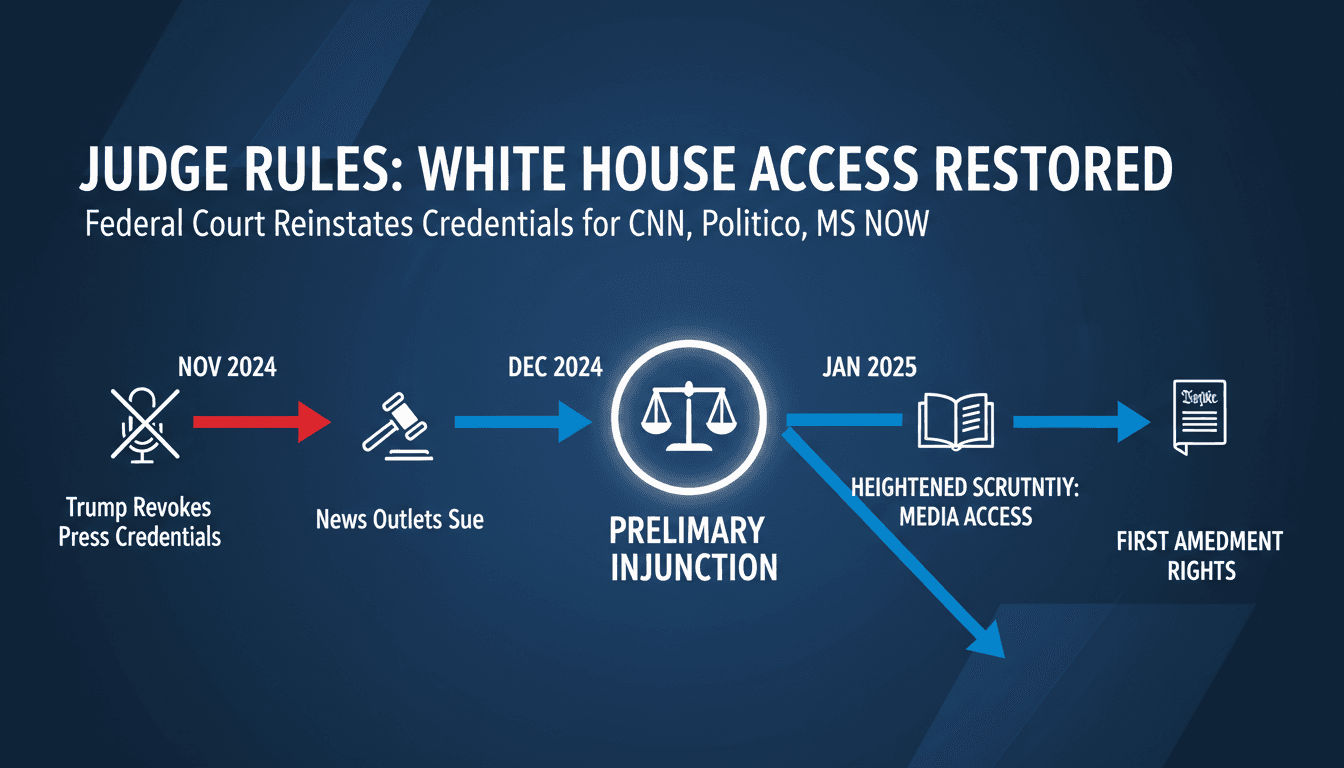
- On October 13, 2026, a federal judge issued a preliminary injunction allowing CNN, Politico, and MS NOW to maintain White House access.
- This followed President Trump's revocation of their hard-pass credentials on September 18, citing 'fake news' reporting.
- The judge found that the ban likely violated constitutional rights, rejecting the administration's national security claims.
The context you actually need
- Tensions between Trump and media outlets have been ongoing since his first term, with accusations of 'fake news' frequently levied against critical coverage.
- The legal challenge began when the affected outlets filed suit shortly after the credential revocation, claiming violations of due process and First Amendment rights.
- The judge's ruling reflects a broader judicial skepticism towards government actions perceived as retaliatory against the press.
What's really happening
The preliminary injunction issued by U.S. District Judge Timothy Kelly is a significant legal development in the ongoing struggle between the Trump administration and certain media outlets. The ruling is rooted in constitutional law, particularly the First and Fifth Amendments, which protect freedom of the press and due process rights. By reinstating access for CNN, Politico, and MS NOW, the court has sent a clear message about the importance of journalistic freedom and the potential consequences of government overreach.
The backdrop to this ruling is a long-standing animosity between President Trump and various media organizations, which he has frequently labeled as purveyors of 'fake news.' This animosity reached a peak with the September 18 announcement to revoke the hard-pass credentials of these outlets, a move that many viewed as an attempt to silence critical voices. The administration's justification for this action was rooted in claims of national security, which the court found to be unsubstantiated.
Judge Kelly's decision to issue a preliminary injunction was based on the likelihood that the plaintiffs would succeed in their claims of due process violations and First Amendment retaliation. The court noted that the revocation of access occurred without adequate notice or justification, which is a fundamental requirement under the law. The ruling also highlighted the importance of maintaining a free press, especially in a democratic society where the flow of information is crucial for public accountability.
As the Trump administration prepares to appeal the ruling, the implications for media access and government transparency remain significant. The ongoing litigation will likely continue to shape the relationship between the White House and the press, with potential ramifications for how future administrations interact with media outlets. This case serves as a reminder of the delicate balance between national security concerns and the rights of the press, a balance that is increasingly being tested in today's political climate.
Who feels it first (and how)
- Journalists: They will continue to have access to the White House, allowing for comprehensive coverage of government actions.
- Media Organizations: Outlets like CNN, Politico, and MS NOW can maintain their reporting capabilities without interruption.
- Political Analysts: They will have access to information that shapes public discourse and opinion, impacting political narratives.
What to watch next
- Appeal Outcomes: The Trump administration's appeal will be crucial in determining the future of media access and could set precedents for similar cases.
- Public Reactions: Watch for how the public and media organizations respond to the ruling and any subsequent actions taken by the administration.
- Legislative Changes: Potential legislative efforts to protect press freedoms could emerge as a response to this ruling and ongoing tensions.
The preliminary injunction maintains access for the affected media outlets during litigation.
The Trump administration will pursue an appeal, which could prolong the legal battle.
The long-term implications for media access and government transparency remain uncertain as the case unfolds.
Frequently Asked Questions
- Why it matters?
- This ruling underscores the ongoing tension between government and media, impacting how information flows in a democratic society.
- What happened (in 30 seconds)?
- On October 13, 2026, a federal judge issued a preliminary injunction allowing CNN, Politico, and MS NOW to maintain White House access. This followed President Trump's revocation of their hard-pass credentials on September 18, citing 'fake news' reporting. The judge found that the ban likely violated constitutional rights, rejecting the administration's national security claims.
- What's really happening?
- The preliminary injunction issued by U.S. District Judge Timothy Kelly is a significant legal development in the ongoing struggle between the Trump administration and certain media outlets. The ruling is rooted in constitutional law, particularly the First and Fifth Amendments, which protect freedom of the press and due process rights. By reinstating access for CNN, Politico, and MS NOW, the court has sent a clear message about the importance of journalistic freedom and the potential consequence
- Who feels it first (and how)?
- Journalists: They will continue to have access to the White House, allowing for comprehensive coverage of government actions. Media Organizations: Outlets like CNN, Politico, and MS NOW can maintain their reporting capabilities without interruption. Political Analysts: They will have access to information that shapes public discourse and opinion, impacting political narratives.
- What to watch next?
- Appeal Outcomes: The Trump administration's appeal will be crucial in determining the future of media access and could set precedents for similar cases. Public Reactions: Watch for how the public and media organizations respond to the ruling and any subsequent actions taken by the administration. Legislative Changes: Potential legislative efforts to protect press freedoms could emerge as a response to this ruling and ongoing tensions.
Insights and news on social issues, policy, and political movements across the United States.
"The Wall Street Journal is known for its deep political coverage, especially at the intersection of policy, regulation, and social dynamics."
— A47 Editor
The Trump administration must maintain White House access for CNN, MS NOW and Politico while a legal challenge plays out over Trump’s attempt to ban the news outlets, a federal judge ruled
A federal judge has ruled that the Trump administration must maintain White House access for CNN, MS NOW, and Politico while these news outlets challenge the president's attempt to ban them from covering White House events. This decision extends a te...
Public radio coverage of American news and issues.
"NPR is an American public media organization known for thoughtful reporting and a slightly left-leaning editorial tone."
— A47 Editor
CNN, MS NOW and Politico prevail against White House — for now
A federal judge ruled that President Trump cannot prohibit CNN, MS NOW, and Politico from covering the White House, following a lawsuit after he banned these outlets due to their reporting, which he labeled as 'fake news.' This ruling allows these me...
News from the United States including domestic politics, society, and culture.
"Sky News is often seen as a center-right outlet in the UK, known for its rolling news coverage and emphasis on breaking stories and political affairs."
— A47 Editor
Judge extends White House access for media outlets banned by Trump
A federal judge has ruled that CNN, MS NOW, and Politico must retain access to the White House, overturning former President Donald Trump's attempt to ban these media outlets. This decision allows the journalists from these organizations to continue ...