
GCC Ministerial Council Condemns Houthi Attacks on Saudi Arabia
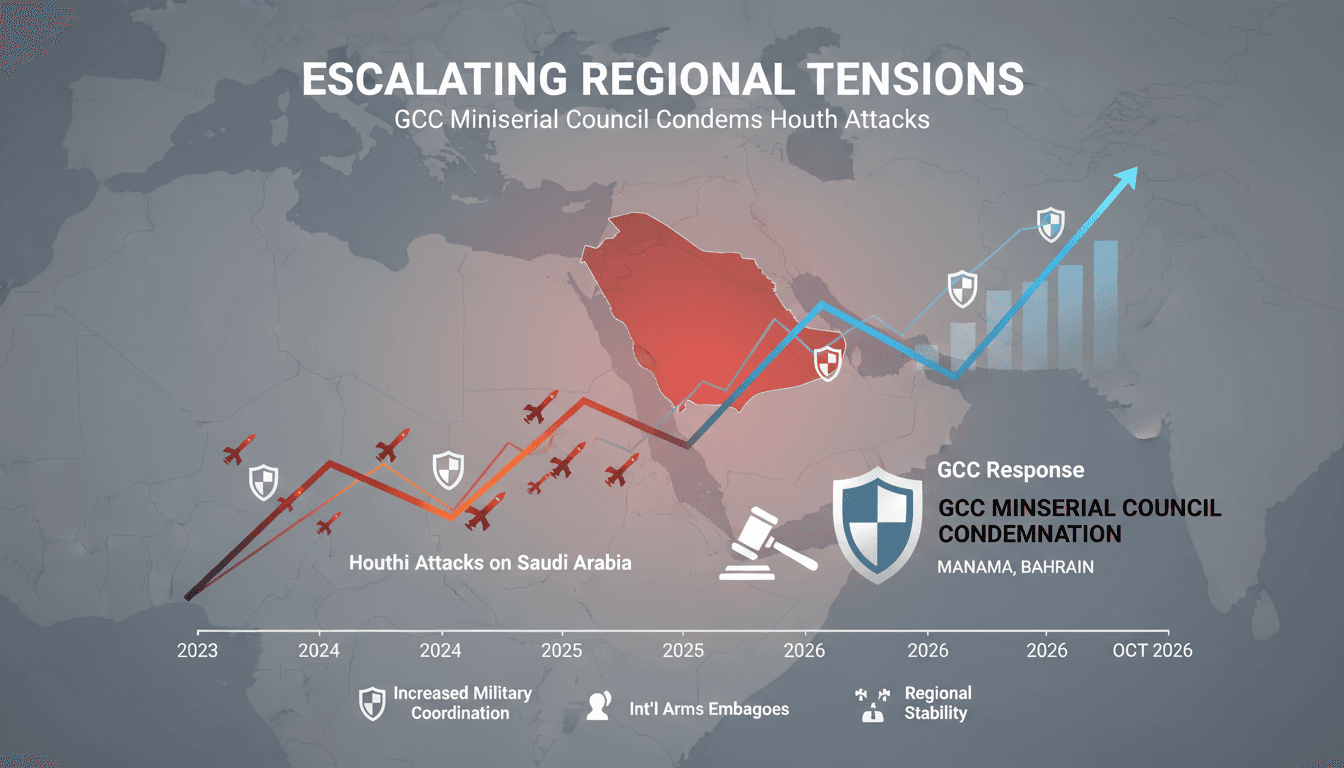
Why it matters
The GCC's unified stance against Houthi attacks signals a critical moment for regional stability and international relations.
What happened (in 30 seconds)
- On October 18, 2026, the GCC Ministerial Council condemned Houthi militia attacks on Saudi Arabia during its 168th session in Manama, Bahrain.
- The statement emphasized that Saudi security is integral to GCC collective security and called for international action against the Houthi aggression.
- GCC Secretary General Jasem Albudaiwi labeled the attacks as criminal violations of international law, urging global enforcement of arms embargoes.
The context you actually need
- The Yemeni conflict has seen escalating Houthi attacks on Saudi Arabia, including missile strikes on civilian areas and critical infrastructure.
- In 2026 alone, over 7,000 ballistic missiles have reportedly targeted Gulf facilities, raising alarms about regional security.
- The GCC's response aligns with previous UN Security Council positions, reinforcing the need for international law enforcement and maritime security.
What's really happening
The recent condemnation by the GCC Ministerial Council is a significant escalation in the ongoing conflict involving Houthi forces, which are aligned with Iran. The Houthi militia has increasingly targeted Saudi Arabia with ballistic missiles and drone strikes, particularly in 2026, where the number of attacks has surged. This has raised concerns not only about the immediate safety of civilians but also about the broader implications for regional stability.
The GCC's statement reflects a collective recognition that the security of Saudi Arabia is intertwined with the security of all member states. By invoking the Joint Defence Agreement, the GCC is reinforcing its commitment to mutual defense, which could lead to increased military cooperation among member states. This solidarity is crucial as it sends a clear message to both regional adversaries and the international community that the GCC will not tolerate aggression against its members.
Moreover, the call for international action highlights the GCC's desire for a coordinated global response to the Houthi threat. This includes enforcing arms embargoes and potentially designating the Houthi group as a terrorist organization. Such actions would not only aim to curb the militia's capabilities but also signal to other state and non-state actors that violations of international law will have consequences.
The implications of this situation extend beyond military considerations. The GCC's unified front could influence energy markets, shipping routes, and expatriate communities in the region. For instance, sustained instability could lead to disruptions in oil supply chains, affecting global oil prices and economic stability in the Gulf. Additionally, expatriate communities may face increased security measures, impacting their daily lives and business operations.
As the situation evolves, the GCC's response will likely shape the geopolitical landscape of the region, with potential ripple effects felt globally.
Who feels it first (and how)
- Expatriates in the Gulf: Increased security measures may affect daily life and business operations.
- Energy sector professionals: Potential disruptions in oil supply chains could impact job stability and market dynamics.
- Local businesses: Heightened security may lead to increased operational costs and changes in consumer behavior.
What to watch next
- International response: Watch for actions taken by the UN and other global powers regarding arms embargoes and designations of the Houthi militia.
- Regional military movements: Increased military readiness among GCC states could indicate preparations for potential escalations.
- Market reactions: Monitor fluctuations in oil prices and energy markets as the situation develops, which could signal broader economic impacts.
The GCC has condemned Houthi attacks and reaffirmed collective security.
Increased military cooperation among GCC states and potential international sanctions against the Houthis.
The long-term effectiveness of international actions in deterring Houthi aggression.
Frequently Asked Questions
- Why it matters?
- The GCC's unified stance against Houthi attacks signals a critical moment for regional stability and international relations.
- What happened (in 30 seconds)?
- On October 18, 2026, the GCC Ministerial Council condemned Houthi militia attacks on Saudi Arabia during its 168th session in Manama, Bahrain. The statement emphasized that Saudi security is integral to GCC collective security and called for international action against the Houthi aggression. GCC Secretary General Jasem Albudaiwi labeled the attacks as criminal violations of international law, urging global enforcement of arms embargoes.
- What's really happening?
- The recent condemnation by the GCC Ministerial Council is a significant escalation in the ongoing conflict involving Houthi forces, which are aligned with Iran. The Houthi militia has increasingly targeted Saudi Arabia with ballistic missiles and drone strikes, particularly in 2026, where the number of attacks has surged. This has raised concerns not only about the immediate safety of civilians but also about the broader implications for regional stability. The GCC's statement reflects a collec
- Who feels it first (and how)?
- Expatriates in the Gulf: Increased security measures may affect daily life and business operations. Energy sector professionals: Potential disruptions in oil supply chains could impact job stability and market dynamics. Local businesses: Heightened security may lead to increased operational costs and changes in consumer behavior.
- What to watch next?
- International response: Watch for actions taken by the UN and other global powers regarding arms embargoes and designations of the Houthi militia. Regional military movements: Increased military readiness among GCC states could indicate preparations for potential escalations. Market reactions: Monitor fluctuations in oil prices and energy markets as the situation develops, which could signal broader economic impacts.
Arabic-language coverage of political affairs and current events.
"Okaz political coverage typically follows mainstream Saudi framing on national and regional affairs."
— A47 Editor
«التعاون الخليجي» يؤكد التضامن مع السعودية ويطالب بتحرك دولي لوقف الاعتداءات الحوثية
In a show of solidarity with Saudi Arabia, Bahraini Foreign Minister Abdullatif Al-Zayani emphasized that the security of the Kingdom is integral to the security of the Gulf Cooperation Council (GCC). During the 168th GCC ministerial meeting in Manam...
Arabic-language local and national news coverage from Saudi Arabia.
"Al-Jazirah is a major Saudi daily with strong emphasis on domestic reporting and official developments."
— A47 Editor
المملكة تؤكد أهمية مضامين بيان مجلس الأمن حول هجمات الميليشيا الحوثية وتشدد على ضرورة تنفيذ القرارات
The Ministry of Foreign Affairs of Saudi Arabia welcomed the presidential statement issued by the members of the Security Council regarding the ongoing attacks by the Houthi militia against the Kingdom, which included condemnation of the continuous a...
Arabic-language local and national news coverage from Saudi Arabia.
"Al-Jazirah is a major Saudi daily with strong emphasis on domestic reporting and official developments."
— A47 Editor
المملكة تشدد على حقها الأصيل في اتخاذ الإجراءات كافة للدفاع عن أمنها
The Ministry of Foreign Affairs of Saudi Arabia welcomed the presidential statement issued by the members of the Security Council regarding the ongoing attacks against the Kingdom, which condemned the continuous and escalatory assaults carried out by...
Arabic-language coverage of Saudi, regional, and international affairs.
"Al Bilad offers mainstream Saudi newspaper coverage across domestic and broader Arab topics."
— A47 Editor
المملكة تشدد على حقها الأصيل في الدفاع عن أمنها وحماية مواطنيها
The Saudi Ministry of Foreign Affairs welcomed the presidential statement from the Security Council members condemning the ongoing and escalating attacks by the Houthi militia against the Kingdom, which have targeted civilian sites, airports, and inf...