
Azerbaijan Enforces Secular School Uniform Rules Amid Diplomatic Tensions with Turkey
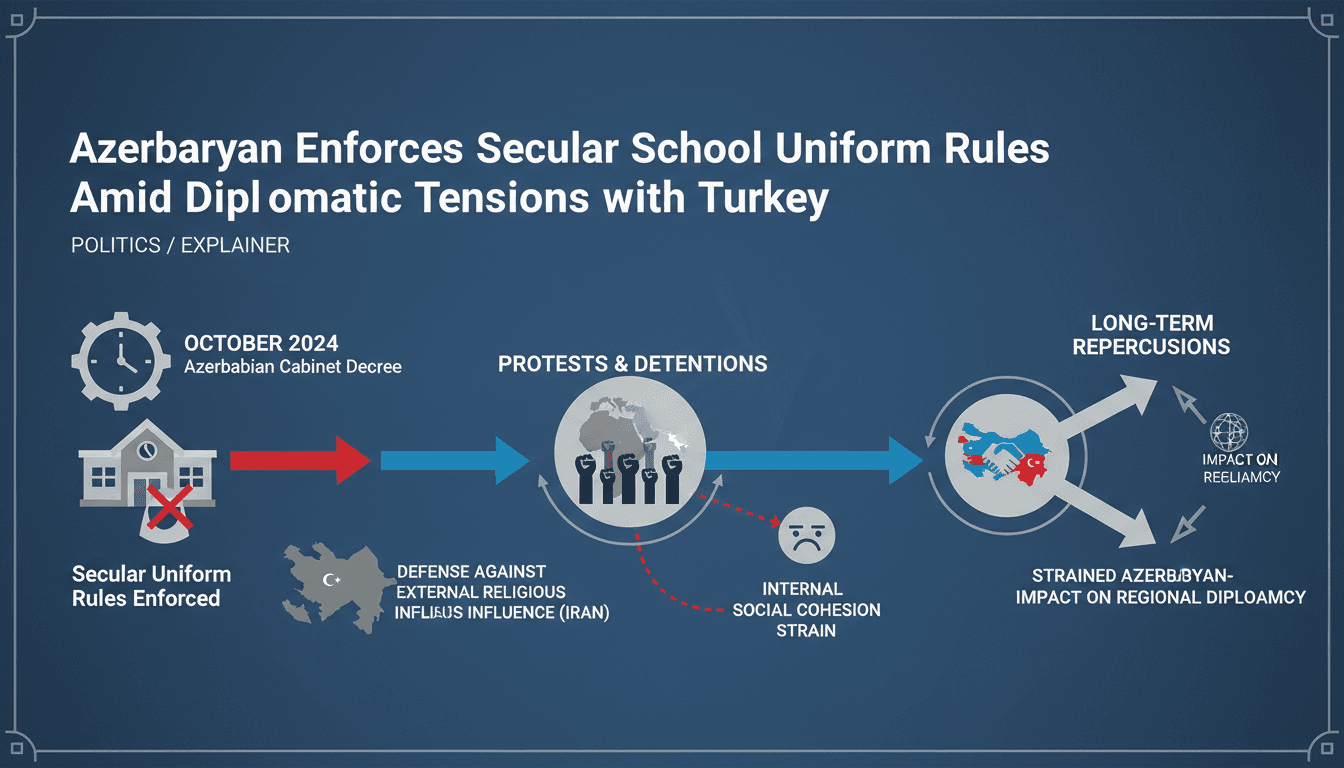
Why it matters
This policy shift highlights the tension between secularism and religious expression in a geopolitically significant region, potentially reshaping alliances and economic ties.
What happened (in 30 seconds)
- Azerbaijan's cabinet approved rules banning clothing inconsistent with secularism in schools on September 21, 2026, effectively targeting headscarves.
- Protests erupted in Azerbaijan and Turkey, leading to 37 detentions and social media restrictions as the policy was enforced in October 2026.
- Turkey criticized the ban, with ruling party figures calling it unacceptable, prompting a diplomatic backlash from Azerbaijan.
The context you actually need
- Azerbaijan has a secular constitution rooted in over a century of tradition, with limited religious observance compared to its neighbors.
- Fears of Iranian influence have driven Azerbaijan to reinforce its secular identity against perceived external religious pressures.
- Turkey and Azerbaijan share deep ties, including military cooperation and economic partnerships, complicating the response to this domestic policy.
What's really happening
On September 21, 2026, Azerbaijan's cabinet approved a set of uniform rules aimed at reinforcing secular education principles, which effectively barred headscarves in schools. This decision was framed by the Azerbaijani government as a necessary measure to protect national identity from external religious influences, particularly in light of concerns regarding Iranian cultural encroachment. The enforcement of these rules in October led to immediate backlash, with videos circulating on social media showing schoolgirls being denied entry to classrooms for wearing headscarves.
The protests that followed were significant, with demonstrators taking to the streets in Baku and even in Istanbul, where Azerbaijani expatriates voiced their dissent. The Azerbaijani Interior Ministry reported 37 detentions on October 12 for public order violations, indicating a swift governmental response to the unrest. In addition, the government imposed restrictions on social media platforms like TikTok, Instagram, and X, aiming to curb the spread of dissent and maintain control over the narrative.
Turkey's reaction was notably sharp, with figures from the ruling Justice and Development Party (AKP) expressing strong disapproval of Azerbaijan's actions. Oktay Saral, a presidential adviser, labeled the measures as unacceptable, urging Azerbaijan to reconsider its stance. This criticism was met with a swift rebuttal from Azerbaijan's New Azerbaijan Party (YAP), which accused Turkish officials of meddling in its internal affairs and labeled their comments as populist and irresponsible.
The diplomatic friction is particularly concerning given the historical context of the relationship between the two nations. Turkey has been a staunch ally of Azerbaijan, providing military support during the 2020 Nagorno-Karabakh conflict and fostering deep economic ties. The current situation raises questions about the durability of this alliance, as Azerbaijan seeks to assert its sovereignty while navigating external pressures.
As the situation unfolds, Azerbaijani officials have emphasized the importance of maintaining secular stability and protecting the nation from external ideologies. Meanwhile, Turkish officials have shifted towards de-escalation, focusing on historical alliances and private dialogue to mitigate tensions. However, the protests outside Azerbaijan's consulate in Istanbul and the varied responses from opposition figures in both countries suggest that public sentiment may be shifting, potentially eroding trust between the populations.
Who feels it first (and how)
- Schoolgirls and teachers: Directly impacted by the uniform rules, facing restrictions on personal expression.
- Azerbaijani government officials: Under pressure to maintain control and public order amid protests.
- Turkish policymakers: Navigating the diplomatic fallout and public criticism regarding religious freedoms.
- Business sectors: Companies engaged in trade between Azerbaijan and Turkey may face uncertainty due to shifting political dynamics.
What to watch next
- Diplomatic engagements: Monitor upcoming meetings between Azerbaijani and Turkish officials to gauge efforts at reconciliation.
- Public sentiment: Watch for further protests or shifts in public opinion regarding secularism and religious expression in both countries.
- Economic impacts: Keep an eye on trade flows between Azerbaijan and Turkey, as any deterioration in relations could affect regional economic stability.
Azerbaijan's enforcement of secular uniform rules has led to protests and detentions.
Continued diplomatic efforts between Azerbaijan and Turkey to de-escalate tensions.
The long-term impact on public trust and bilateral relations between the two nations.
Frequently Asked Questions
- Why it matters?
- This policy shift highlights the tension between secularism and religious expression in a geopolitically significant region, potentially reshaping alliances and economic ties.
- What happened (in 30 seconds)?
- Azerbaijan's cabinet approved rules banning clothing inconsistent with secularism in schools on September 21, 2026, effectively targeting headscarves. Protests erupted in Azerbaijan and Turkey, leading to 37 detentions and social media restrictions as the policy was enforced in October 2026. Turkey criticized the ban, with ruling party figures calling it unacceptable, prompting a diplomatic backlash from Azerbaijan.
- What's really happening?
- On September 21, 2026, Azerbaijan's cabinet approved a set of uniform rules aimed at reinforcing secular education principles, which effectively barred headscarves in schools. This decision was framed by the Azerbaijani government as a necessary measure to protect national identity from external religious influences, particularly in light of concerns regarding Iranian cultural encroachment. The enforcement of these rules in October led to immediate backlash, with videos circulating on social med
- Who feels it first (and how)?
- Schoolgirls and teachers: Directly impacted by the uniform rules, facing restrictions on personal expression. Azerbaijani government officials: Under pressure to maintain control and public order amid protests. Turkish policymakers: Navigating the diplomatic fallout and public criticism regarding religious freedoms. Business sectors: Companies engaged in trade between Azerbaijan and Turkey may face uncertainty due to shifting political dynamics.
- What to watch next?
- Diplomatic engagements: Monitor upcoming meetings between Azerbaijani and Turkish officials to gauge efforts at reconciliation. Public sentiment: Watch for further protests or shifts in public opinion regarding secularism and religious expression in both countries. Economic impacts: Keep an eye on trade flows between Azerbaijan and Turkey, as any deterioration in relations could affect regional economic stability.
UAE-based English-language newspaper covering regional politics, economics, and global affairs.
"The National reflects Emirati policy perspectives while maintaining international editorial standards."
— A47 Editor
Azerbaijan ban on headscarves in schools opens rift with ally Turkey
Azerbaijan has implemented a ban on headscarves in schools, a decision that has ignited protests among students who view the restrictions as an infringement on their rights. This move has created a rift with Turkey, traditionally seen as an ally, rai...
Business, investment, entrepreneurship, leadership, and innovation.
"Forbes is known for its coverage of business leaders, market trends, and entrepreneurial ventures with a pro-business editorial stance."
— A47 Editor
Azerbaijan’s Hijab Dispute Tests America’s Caucasus Strategy
Azerbaijan's recent hijab restrictions have ignited tensions with Turkey, as both Iran and Russia seek to exploit the situation, thereby complicating U.S. strategic interests in the South Caucasus region. This dispute highlights the delicate balance ...
Regional coverage and analysis focused on politics, diplomacy, and business across the Middle East.
"Al-Monitor is known for analytical reporting on Middle East politics and policy developments."
— A47 Editor
How hijab dispute is opening new front in Iran-Azerbaijan tensions
The ongoing tensions between Iran and Azerbaijan have escalated due to a dispute over hijab restrictions in Azerbaijan's schools, which Iran perceives as a challenge to its influence in the Islamic world. This situation is compounded by Azerbaijan's ...