
Norwegian Teenager Sentenced for Conspiracy to Murder Linked to Iranian Criminal Network
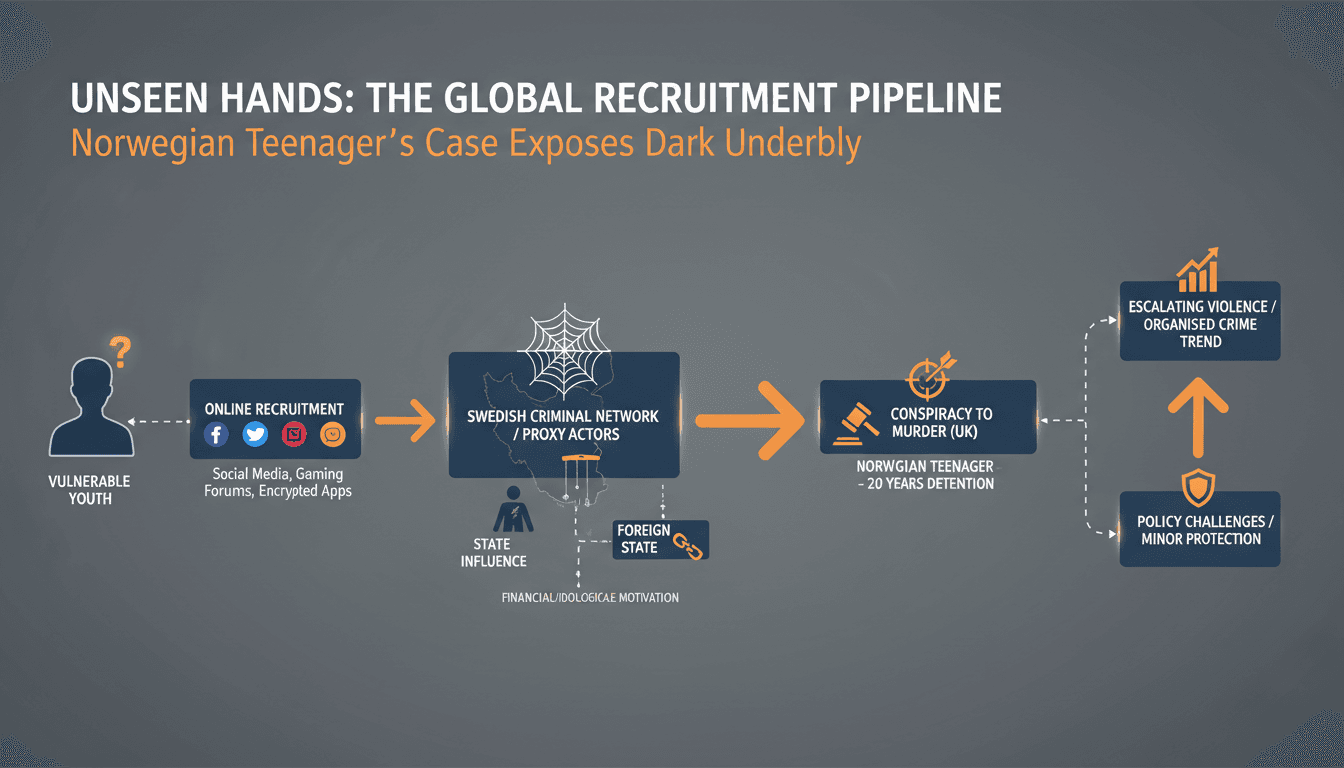
Why it matters
This case underscores the alarming trend of organized crime networks leveraging young recruits for violent acts, raising concerns about youth vulnerability and international crime.
What happened (in 30 seconds)
- A Norwegian teenager was sentenced to 20 years' detention for conspiracy to murder after being recruited online by a criminal group.
- Johannes Kongsnes Natland was arrested in March 2025 in Huddersfield with firearms, having agreed to carry out a contract killing for approximately 270,000 Norwegian kroner.
- The case highlights the use of young individuals as proxies for organized crime, particularly in relation to foreign state interests.
The context you actually need
- The Foxtrot Network, a Swedish criminal organization, has been linked to recruiting minors for violent crimes, often acting on behalf of foreign clients.
- Online recruitment for violent acts has surged in recent years, with several cases in the UK involving young people unwittingly serving foreign interests.
- Authorities are increasingly concerned about the implications of such recruitment strategies, particularly regarding national security and youth safety.
What's really happening
The case of Johannes Kongsnes Natland reveals a disturbing trend in organized crime: the recruitment of young individuals for violent acts through online platforms. The Foxtrot Network, a Swedish criminal organization, has pioneered a model that capitalizes on the vulnerabilities of youth, often targeting them through gaming and social media. This method of recruitment is not just about finding willing participants; it reflects a broader strategy where organized crime acts as a proxy for foreign state interests, particularly those linked to Iran.
Natland's journey began when he responded to an online advertisement while gaming, leading him to agree to travel to the UK for a contract killing. This recruitment method is particularly insidious, as it often involves young people who may not fully comprehend the gravity of their actions or the potential consequences. The financial incentive—approximately 270,000 Norwegian kroner—can be enticing for individuals in precarious economic situations, making them more susceptible to manipulation by criminal networks.
The implications of this case extend beyond the individual. It highlights a systemic issue where organized crime groups exploit the internet to recruit minors and young adults, effectively creating a new class of unwitting proxies for violent acts. This trend raises significant concerns for law enforcement agencies, as it complicates the landscape of crime prevention and intervention. The involvement of foreign actors, even if indirect, adds another layer of complexity, as authorities must navigate international laws and relations while addressing domestic security threats.
Moreover, the sentencing of Natland serves as a warning to other potential recruits and organized crime networks. It underscores the legal repercussions of engaging in such activities, but it also raises questions about the effectiveness of deterrence in the face of financial incentives and the allure of criminal notoriety. As organized crime continues to evolve, so too must the strategies employed by law enforcement to combat these emerging threats.
Who feels it first (and how)
- Law enforcement agencies: Increased pressure to monitor and prevent online recruitment of minors for violent crimes.
- Parents and guardians: Heightened concern over youth safety and the potential for their children to be targeted by criminal networks.
- Gaming and social media platforms: Greater scrutiny and responsibility to implement measures that prevent exploitation of their services for criminal activities.
- Youth: Vulnerable individuals may face increased risks of being recruited into criminal activities, impacting their futures.
What to watch next
- Increased law enforcement collaboration: Watch for enhanced partnerships between countries to combat organized crime and protect youth from recruitment.
- Legislative changes: Monitor potential new laws aimed at regulating online platforms to prevent exploitation and recruitment of minors.
- Public awareness campaigns: Expect initiatives aimed at educating youth and parents about the risks of online recruitment and the tactics used by organized crime.
Organized crime networks are increasingly using online platforms to recruit young individuals for violent acts.
Law enforcement will intensify efforts to combat this trend through international cooperation and new regulations.
The long-term effectiveness of deterrence strategies in preventing youth recruitment by organized crime remains uncertain.
Frequently Asked Questions
- Why it matters?
- This case underscores the alarming trend of organized crime networks leveraging young recruits for violent acts, raising concerns about youth vulnerability and international crime.
- What happened (in 30 seconds)?
- A Norwegian teenager was sentenced to 20 years' detention for conspiracy to murder after being recruited online by a criminal group. Johannes Kongsnes Natland was arrested in March 2025 in Huddersfield with firearms, having agreed to carry out a contract killing for approximately 270,000 Norwegian kroner. The case highlights the use of young individuals as proxies for organized crime, particularly in relation to foreign state interests.
- What's really happening?
- The case of Johannes Kongsnes Natland reveals a disturbing trend in organized crime: the recruitment of young individuals for violent acts through online platforms. The Foxtrot Network, a Swedish criminal organization, has pioneered a model that capitalizes on the vulnerabilities of youth, often targeting them through gaming and social media. This method of recruitment is not just about finding willing participants; it reflects a broader strategy where organized crime acts as a proxy for foreign
- Who feels it first (and how)?
- Law enforcement agencies: Increased pressure to monitor and prevent online recruitment of minors for violent crimes. Parents and guardians: Heightened concern over youth safety and the potential for their children to be targeted by criminal networks. Gaming and social media platforms: Greater scrutiny and responsibility to implement measures that prevent exploitation of their services for criminal activities. Youth: Vulnerable individuals may face increased risks of being recruited into cr
- What to watch next?
- Increased law enforcement collaboration: Watch for enhanced partnerships between countries to combat organized crime and protect youth from recruitment. Legislative changes: Monitor potential new laws aimed at regulating online platforms to prevent exploitation and recruitment of minors. Public awareness campaigns: Expect initiatives aimed at educating youth and parents about the risks of online recruitment and the tactics used by organized crime.
Regional coverage and analysis focused on politics, diplomacy, and business across the Middle East.
"Al-Monitor is known for analytical reporting on Middle East politics and policy developments."
— A47 Editor
Norwegian teen jailed for 20 years for UK murder plot after being recruited online
A Norwegian teenager, Johannes Natland, has been sentenced to 20 years in prison for plotting a murder in the UK after being recruited online by the Foxtrot Network, a Swedish organized crime group linked to Iran. The group allegedly pays individuals...
United Kingdom-focused news including local politics, business, and social issues.
"BBC News is widely regarded as a reputable international news organization, known for its impartial tone and public service mandate."
— A47 Editor
Norwegian teen 'hitman' jailed over UK murder plot
Johannes Natland, a 19-year-old from Norway, has been sentenced for his role in a murder plot in the UK, specifically targeting an individual in Huddersfield. He traveled to West Yorkshire in March last year with the intent to carry out the hit, whic...
International coverage from The Guardian's global desks.
"The Guardian is known for its progressive editorial stance and in-depth analysis."
— A47 Editor
Norwegian teenage hitman hired for UK murder by Iran-backed crime gang jailed for 20 years
Johannes Kongsnes Natland, a 19-year-old from Norway, has been sentenced to 20 years in prison after traveling to the UK to commit murder for an Iran-backed crime gang. He was arrested in Huddersfield with two firearms and live ammunition, having agr...