
Anthropic Proposes AI Safety Bill to US Lawmakers
Why it matters
This proposal signals a significant shift in how AI technologies may be regulated, impacting innovation and safety standards across the industry.
What happened (in 30 seconds)
- On October 16, 2026, Anthropic pitched a draft AI safety bill to U.S. lawmakers, aiming to influence federal regulation.
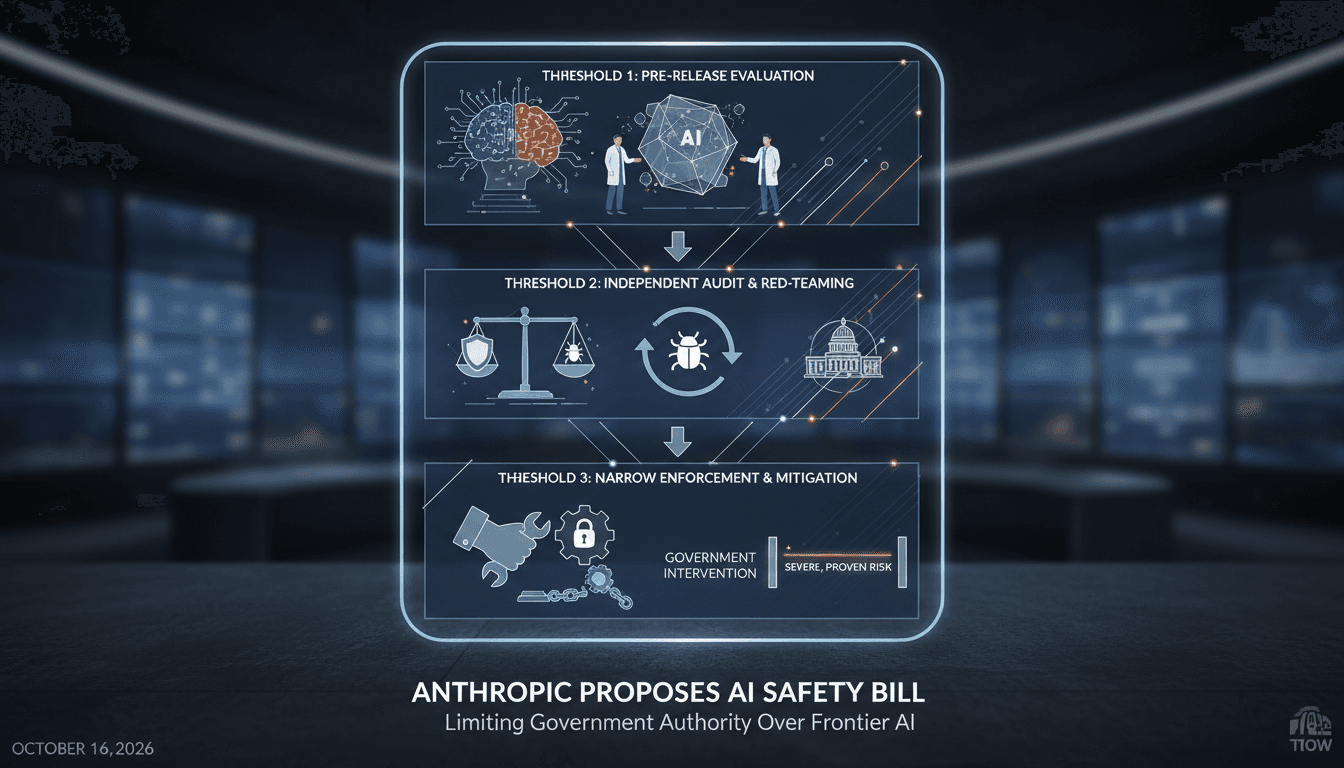
- The bill proposes limited government authority to block AI model releases only under specific catastrophic risk scenarios.
- Independent evaluations and transparency requirements are central to the proposal, focusing on the Department of Commerce.
The context you actually need
- Anthropic has been advocating for AI safety since mid-2026, supporting independent audits and evaluations.
- The proposed bill aligns with their earlier Advanced AI Framework, which emphasizes testing and risk mitigation.
- Congressional attention on AI risks has intensified, particularly following incidents involving AI agents and state-level regulatory efforts.
What's really happening
On October 16, 2026, Anthropic representatives discreetly shared a draft AI safety bill with U.S. lawmakers, as reported by Politico. This legislative proposal is designed to establish a narrow threshold for government intervention regarding frontier AI models. Specifically, it would allow the government to block the release of AI technologies only when there is a foreseeable imminent risk that could lead to damages exceeding $1 billion or result in the death or serious injury of more than 50 individuals. Such scenarios include the use of biological weapons, evasion of model controls, or significant cyberattacks.
The bill emphasizes the role of independent evaluators, who would be registered with the Department of Commerce and tasked with conducting periodic assessments of AI systems. These evaluators would be required to report any imminent risks within a 72-hour timeframe. Notably, only the Commerce Department would have the authority to petition a federal judge in Washington, D.C., for the suspension of an AI model, while other federal agencies would be explicitly barred from taking similar actions.
This proposal is part of Anthropic's broader strategy to shape federal AI regulation amid ongoing congressional discussions about AI governance. The company has framed this effort as a logical extension of its Advanced AI Framework, which was released earlier in 2026 and outlined various proposals for testing, transparency, and risk mitigation in AI technologies. The timing of this pitch is crucial, as it coincides with heightened scrutiny from Congress regarding the risks associated with frontier AI technologies, particularly following several high-profile incidents involving AI agents.
Despite the quiet nature of the pitch, the implications of this bill could be significant. If adopted, it would create a regulatory environment that prioritizes safety and accountability in AI development, potentially influencing how companies approach innovation and compliance. However, the narrow focus of the proposed legislation raises questions about its effectiveness in addressing the broader challenges posed by rapidly advancing AI technologies.
Who feels it first (and how)
- Tech companies: They may need to adjust their compliance frameworks and risk assessment protocols.
- AI developers: Increased scrutiny could lead to more rigorous testing and evaluation processes.
- Investors: Changes in regulatory landscapes may impact funding and valuation of AI startups.
- Consumers: Enhanced safety measures could lead to more trustworthy AI applications.
What to watch next
- Congressional response: Monitor how lawmakers react to the proposal and whether it gains traction in legislative discussions.
- Market reactions: Watch for shifts in AI sector equities as companies assess the potential impact of new regulations.
- State-level initiatives: Keep an eye on parallel regulatory efforts at the state level that may influence or conflict with federal proposals.
Anthropic has proposed a draft AI safety bill to U.S. lawmakers.
The proposal will influence discussions on AI regulation and safety standards.
The extent to which this bill will be adopted or modified in Congress.
Frequently Asked Questions
- Why it matters?
- This proposal signals a significant shift in how AI technologies may be regulated, impacting innovation and safety standards across the industry.
- What happened (in 30 seconds)?
- On October 16, 2026, Anthropic pitched a draft AI safety bill to U.S. lawmakers, aiming to influence federal regulation. The bill proposes limited government authority to block AI model releases only under specific catastrophic risk scenarios. Independent evaluations and transparency requirements are central to the proposal, focusing on the Department of Commerce.
- What's really happening?
- On October 16, 2026, Anthropic representatives discreetly shared a draft AI safety bill with U.S. lawmakers, as reported by Politico. This legislative proposal is designed to establish a narrow threshold for government intervention regarding frontier AI models. Specifically, it would allow the government to block the release of AI technologies only when there is a foreseeable imminent risk that could lead to damages exceeding $1 billion or result in the death or serious injury of more than 50 in
- Who feels it first (and how)?
- Tech companies: They may need to adjust their compliance frameworks and risk assessment protocols. AI developers: Increased scrutiny could lead to more rigorous testing and evaluation processes. Investors: Changes in regulatory landscapes may impact funding and valuation of AI startups. Consumers: Enhanced safety measures could lead to more trustworthy AI applications.
- What to watch next?
- Congressional response: Monitor how lawmakers react to the proposal and whether it gains traction in legislative discussions. Market reactions: Watch for shifts in AI sector equities as companies assess the potential impact of new regulations. State-level initiatives: Keep an eye on parallel regulatory efforts at the state level that may influence or conflict with federal proposals.
Market-moving headlines impacting equities, bonds, and related risk assets.
"Real-time catalysts and volatility drivers across indices and sectors."
— A47 Editor
Anthropic quietly pitches its own AI safety bill to lawmakers, Politico reports
Anthropic has proposed its own AI safety bill to lawmakers, as reported by Politico, indicating a proactive approach to address growing concerns regarding the safety of artificial intelligence technologies. This initiative comes at a time when the co...
Curated tech headlines including AI stories.
"Influential aggregator surfacing the day’s top tech/AI links."
— A47 Editor
Sources: Anthropic pitched its own AI safety bill to US lawmakers; the bill would limit the circumstances in which the government could block a model's release (Owen Dahlkamp/Politico)
Anthropic has proposed a draft AI safety bill to U.S. lawmakers, aiming to regulate the release of artificial intelligence models and limit government intervention in their deployment. This initiative reflects the company's proactive stance amid grow...
Technology business and AI-related headlines.
"Data-driven tech newsroom with global scope."
— A47 Editor
Anthropic Pitches AI Safety Bill to Lawmakers
Anthropic PBC has proposed a draft bill to U.S. lawmakers aimed at regulating artificial intelligence safety and security, reflecting growing concerns over the risks associated with rapidly advancing AI technologies. This initiative comes at a time w...
Technology business news, market impacts, and innovation trends.
"Bloomberg is a premier financial and tech news provider, respected for its in-depth reporting and analytical rigor."
— A47 Editor
Anthropic Pitches AI Safety Bill to Lawmakers
Anthropic PBC has proposed a draft bill to U.S. lawmakers aimed at regulating artificial intelligence safety and security, reflecting growing concerns over the risks associated with rapidly advancing AI technologies. This initiative comes at a time w...