
Nicaragua cancels upcoming elections extending Ortega's rule
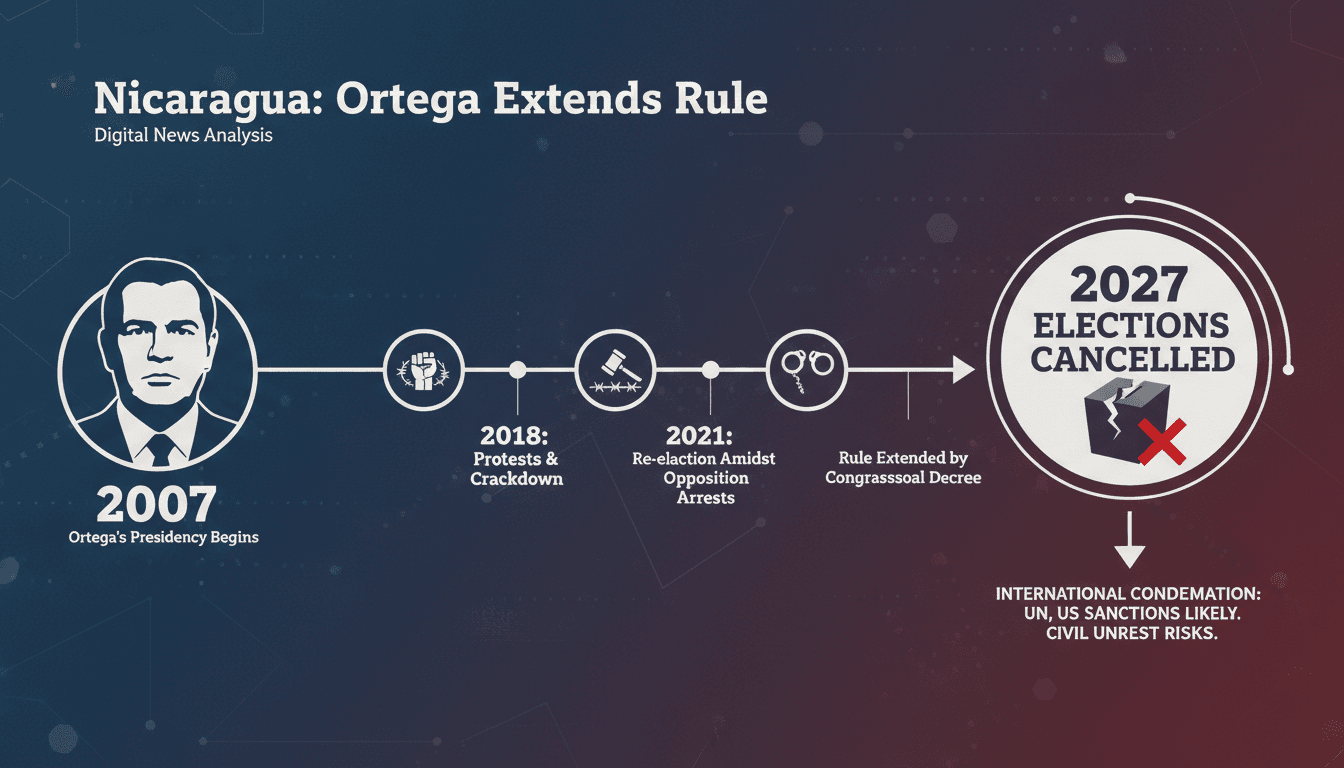
Here's what it means for you.
The cancellation of elections in Nicaragua signifies a troubling shift towards authoritarianism under President Daniel Ortega. This move not only undermines democratic processes but also raises concerns about potential civil unrest as citizens react to the suppression of their political rights. The international community, particularly the UN and the US, is likely to respond with increased pressure and possible sanctions against Ortega's regime. As the political landscape evolves, stakeholders in the region should prepare for heightened tensions and instability. The implications for foreign investment and diplomatic relations could be significant as Nicaragua faces growing isolation.
What happened
Nicaragua's President Daniel Ortega has announced the cancellation of elections originally scheduled for November 2027. This decision follows a directive from Ortega's congress, which has revealed plans to suspend the electoral process. The announcement has drawn widespread condemnation from the international community, including the United Nations and the United States, who view it as a move towards authoritarianism.
Ortega's regime has been in power since 2007, and this latest action is seen as a continuation of his efforts to consolidate authority. The cancellation of elections effectively extends his rule, raising alarms about the future of democracy in Nicaragua.
The Context
Ortega's governance has been marked by significant constitutional changes aimed at entrenching his power. The US Secretary of State has called for international action against Ortega's regime, highlighting the growing concern over human rights and democratic freedoms in Nicaragua. The political climate is tense, with citizens increasingly frustrated by the lack of democratic processes.
The implications of this cancellation are profound, as it not only affects the political landscape but also the social fabric of the nation. With Ortega governing alongside his wife, Rosario Murillo, the concentration of power raises questions about accountability and governance in Nicaragua.
Takeaway
The situation in Nicaragua is poised for escalation as the government faces mounting pressure from both domestic opposition and international actors. Potential sanctions from the US and its allies could further isolate Ortega's regime, while increased protests may emerge as citizens react to the cancellation of elections. The political crisis is likely to shape Nicaragua's future, with implications for regional stability.
As the international community watches closely, the response to Ortega's actions will be critical in determining the trajectory of democracy in Nicaragua. The coming months will be pivotal as the country navigates this challenging political landscape.
International coverage of politics, culture, and current affairs.
"BBC News is widely regarded as a reputable international news organization, known for its impartial tone and public service mandate."
— A47 Editor
Nicaragua's legislature debates barring opposition from elections
Nicaragua's legislature is currently debating a proposal to bar opposition parties from participating in future elections, a move that follows President Daniel Ortega's recent call for a 'wall, a blockade' against these parties. This decision is seen...
Top international stories selected by The Guardian editors.
"The Guardian is known for its progressive editorial stance and in-depth analysis."
— A47 Editor
Nicaragua’s congress announces ‘work plan’ to suspend elections
Nicaragua's congress, under the control of President Daniel Ortega, has announced a 'work plan' to suspend future elections, following Ortega's declaration that the country will no longer hold elections. This decision is seen as a significant step to...
Global political, business, and cultural coverage from WSJ international desks.
"The Wall Street Journal offers extensive international reporting with a reputation for financial insight and a center-right editorial stance."
— A47 Editor
Rubio Says Nicaragua’s Plans to Cancel Elections Threaten U.S. National Security
U.S. Senator Marco Rubio has expressed concerns regarding Nicaragua's President Daniel Ortega's recent announcement to cancel all future elections, a move that solidifies Ortega's long-standing rule and deepens the country's political repression. Thi...
International stories from NPR’s global desk.
"NPR is an American public media organization known for thoughtful reporting and a slightly left-leaning editorial tone."
— A47 Editor
Nicaragua's President Ortega says no more elections, extending his 20-year rule
Nicaragua's President Daniel Ortega has announced that the country will not hold any more elections, effectively canceling the upcoming elections scheduled for November 2027. This decision marks a significant extension of Ortega's rule, which has las...